


Listen to the article
Myanmar’s Military-Backed Party Claims Victory in Disputed Election
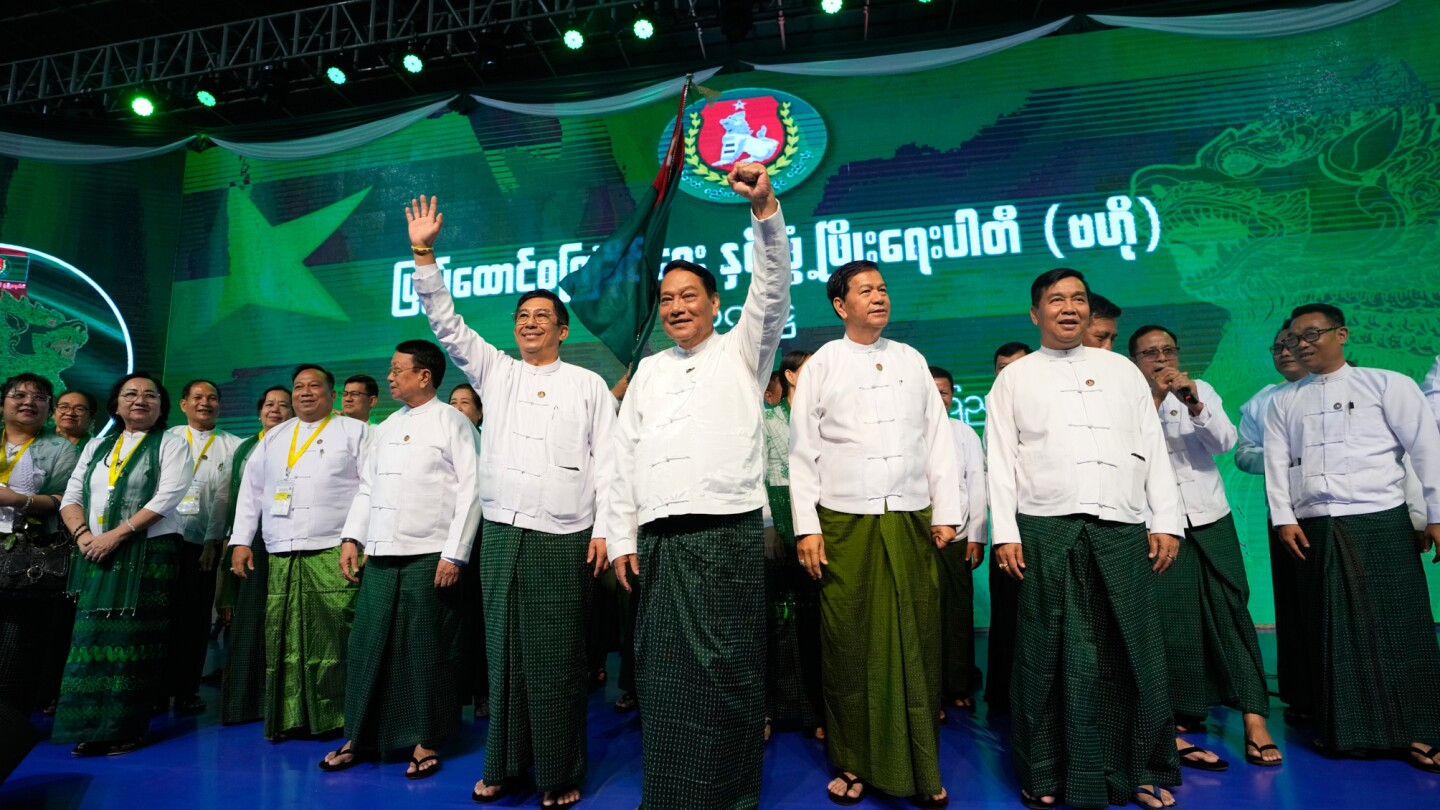
Myanmar’s military-appointed election commission has begun releasing results from the first phase of its controversial three-part general election, with the military-backed Union Solidarity and Development Party (USDP) winning the majority of seats as widely anticipated.
According to official announcements in the state-run Myanma Alinn newspaper on Saturday, the USDP has secured 38 seats in the 330-seat Pyithu Hluttaw lower house, with many constituencies still to be declared. A senior USDP official, speaking anonymously to The Associated Press, claimed the party has actually won 88 of the 102 seats contested in the December 28 vote, including 29 constituencies where they ran unopposed.
The military government reported a turnout of more than 6 million voters—approximately 52% of the 11 million eligible voters in this phase—calling it a “decisive success.” Among the winners announced was USDP leader Khin Yi, a former general and police chief considered a close ally of military ruler Senior General Min Aung Hlaing, who won his constituency in the capital Naypyitaw with 49,006 of 68,681 votes cast.
The Shan Nationalities Democratic Party and the Mon Unity Party each secured one seat, according to the election commission.
Critics and pro-democracy groups have denounced the election as a sham designed to legitimize military rule while lacking any genuine democratic credentials. Opposition groups called for a boycott, arguing the polls are neither free nor fair due to the exclusion of major political parties and ongoing government repression of dissent.
The election takes place against the backdrop of widespread civil conflict that erupted after the February 2021 military coup, when soldiers ousted the democratically elected government of Aung San Suu Kyi. The coup prevented Suu Kyi’s National League for Democracy (NLD) from serving a second term despite its landslide victory in the 2020 election.
The NLD was subsequently dissolved in 2023, along with 39 other political parties, after refusing to register under new regulations imposed by the military junta. This systematic elimination of opposition has created a political landscape heavily tilted in favor of military-aligned factions.
Myanmar’s electoral system includes a two-house national legislature with 664 total seats. The party that secures a combined parliamentary majority can select the new president, who then appoints cabinet members and forms a government. The military automatically receives 25% of seats in each legislative house under the constitution, giving it significant control regardless of election results.
Due to ongoing armed conflicts across the country, voting is being conducted in three phases. The first round covered 102 townships, nearly a third of Myanmar’s 330 townships. The remaining phases will take place on January 11 and January 25, though 65 townships will not participate at all because of fighting between the military and resistance groups.
While the election features more than 4,800 candidates from 57 parties competing for seats in national and regional legislatures, only six parties are competing nationwide with any realistic chance of gaining significant representation. The USDP, with its military connections and advantages, remains by far the strongest contender.
The anonymous USDP official also claimed the party won approximately 85% of contested seats in regional legislatures, though complete results will only be known after all three election phases conclude.
The election occurs amid a devastating civil war that has raged across Myanmar since the coup, with pro-democracy resistance forces and ethnic armed organizations battling military forces across much of the country. The conflict has displaced hundreds of thousands of civilians and created a humanitarian crisis that further complicates any pretense of democratic process.
Fact Checker
Verify the accuracy of this article using The Disinformation Commission analysis and real-time sources.

5 Comments
The military’s heavy-handed tactics to ensure its party’s victory undermine any semblance of a free and fair election. Myanmar deserves a genuine democratic process that allows for open political competition and participation. I fear these results will only deepen the country’s authoritarian backslide.
The military-backed party’s victory in Myanmar’s disputed election is concerning. It suggests the military is tightening its grip on power despite widespread public opposition. I hope the international community pressures the military junta to restore democratic reforms and human rights.
This election appears to be another step backward for Myanmar’s democratic transition. The military’s continued consolidation of power is deeply concerning. I hope the international community takes strong action to pressure the junta to respect human rights and the will of the Myanmar people.
The low voter turnout of just 52% raises questions about the legitimacy of these election results. It seems many eligible voters boycotted the process, rejecting the military’s authoritarian rule. Myanmar deserves free and fair elections that truly reflect the will of the people.
While not unexpected, the military-backed party’s dominance in the early results is disappointing for Myanmar’s democracy. The military’s tight control over the electoral process makes me skeptical these outcomes genuinely represent the people’s choice. Restoring democratic freedoms should be the priority.