


Listen to the article
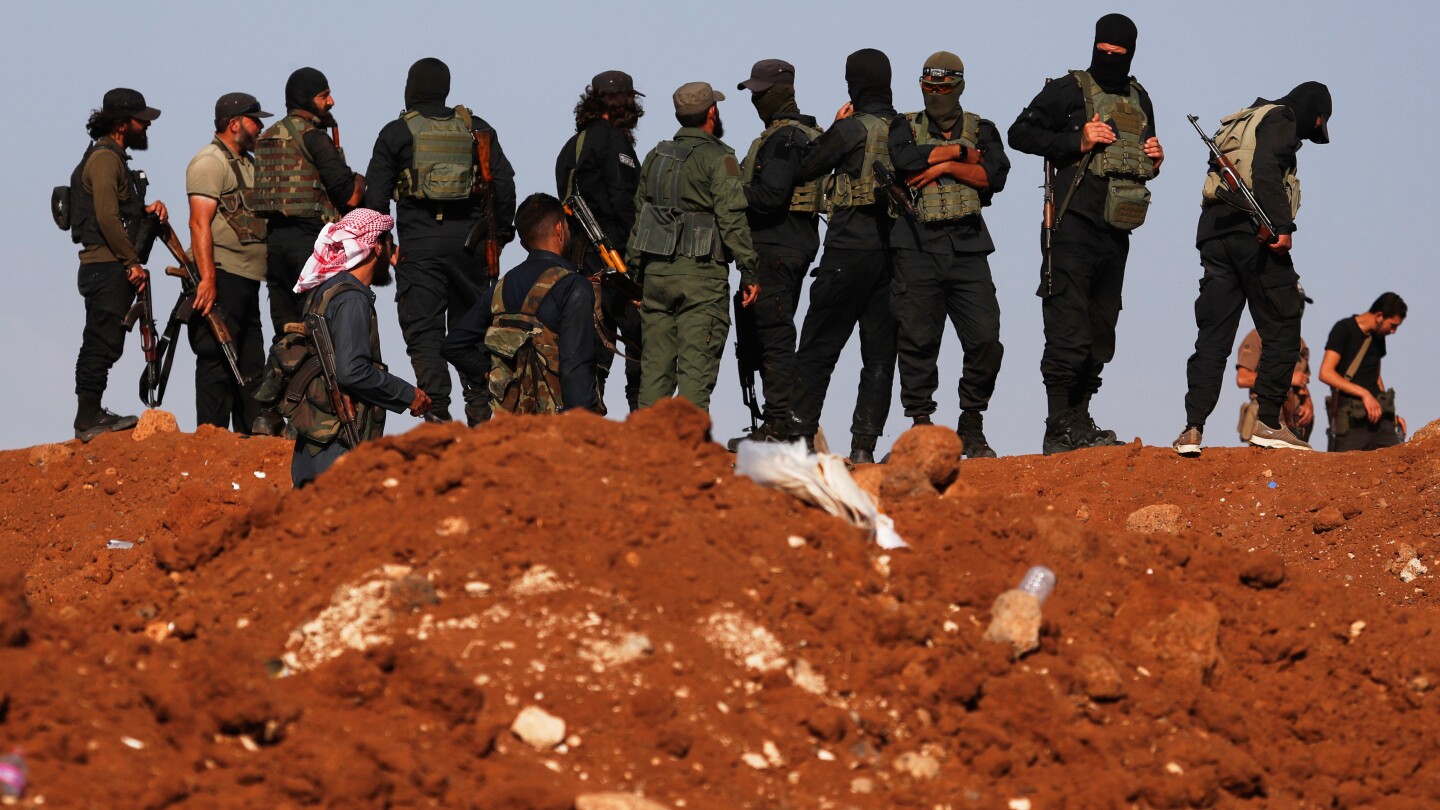
Syrian officials detained members of the country’s security and military services following a probe into deadly sectarian violence that erupted in the southern province of Sweida in July, investigators announced Sunday.
At a news conference in Damascus, Judge Hatem Naasan, who heads the Syrian committee investigating the bloodshed, reported “positive results” in the ongoing inquiry but stopped short of providing a final death toll. The complete report is expected by year’s end.
“Members of security services and the military who were proven to have committed violations based on investigations of the committee and videos posted on social media platforms have been detained,” Naasan told reporters. After questioning, these individuals were referred to judicial authorities, with security personnel being held by the Interior Ministry and military members detained by the Defense Ministry.
The violence began in mid-July when armed groups affiliated with Druze spiritual leader Sheikh Hikmat al-Hijri clashed with local Bedouin clans. Government forces intervened, effectively siding with the Bedouins in the conflict. The resulting bloodshed left hundreds of civilians dead, the majority being members of the Druze minority community.
Graphic videos circulated on social media during the conflict showed armed men executing kneeling Druze civilians in public squares and humiliating elderly men by forcibly shaving their mustaches – acts that sparked outrage both domestically and internationally.
Naasan’s committee has been gathering testimony from witnesses and victims in the affected areas. He downplayed allegations of organized foreign fighter involvement in the violence, stating that while some foreign fighters had been detained and questioned, they had entered Sweida “randomly and individually” and were not members of Syrian armed or security forces.
The sectarian violence has deepened divisions in Syria’s already fractured society. Following the July bloodshed, many residents in Sweida – a predominantly Druze region – have called for some form of autonomy within a federal system, while a smaller contingent advocates for complete partition from the Syrian state.
The Druze, who follow a secretive offshoot of Islam that emerged in the 11th century, constitute a small but significant minority in Syria. Of the approximately one million Druze worldwide, most live in Syria, with smaller communities in Lebanon, Israel, and the Israeli-occupied Golan Heights, which Israel seized from Syria in 1967 and later annexed.
The sectarian violence in Sweida represents one of the most serious internal challenges to President Bashar al-Assad’s government in areas under its control since the civil war began in 2011. While Assad has regained control over much of Syria with backing from Russia and Iran, his government continues to struggle with maintaining security and addressing deep-seated sectarian tensions.
Human rights organizations have previously criticized the Syrian government for failing to protect minority communities and have called for an independent international investigation into the Sweida violence. The formation of the government-led investigative committee was seen by some as an attempt to address international concerns while maintaining control over the narrative.
The detention of security and military personnel marks a rare instance of the Syrian government publicly acknowledging potential wrongdoing by its forces, though critics question whether the investigation will lead to meaningful accountability for those responsible for the civilian deaths.
As the committee continues its work, tensions remain high in Sweida, where local defense groups have strengthened their presence, reflecting a growing distrust of central government protection among the Druze community.
Fact Checker
Verify the accuracy of this article using The Disinformation Commission analysis and real-time sources.

11 Comments
The violence in Sweida highlights the ongoing challenges Syria faces. Detaining security personnel suggests the government is taking the issue seriously, but lasting peace will require more comprehensive efforts to address the root causes of the conflict.
Agreed. Accountability is an important first step, but durable solutions will need to go beyond just punishing individuals to tackle the deeper societal divides.
It’s concerning to see security forces implicated in the deadly sectarian clashes in Sweida. Transparent investigations and fair justice will be crucial to restoring stability and trust. I hope the final report provides a clear path forward.
This is a concerning situation in Syria. Detaining security forces and military personnel for their involvement in the sectarian violence is a serious step. It will be interesting to see the full report on the findings and what actions are taken to address the underlying issues.
The situation in Syria remains complex and volatile. Detaining members of the security forces and military over the Sweida violence indicates the government is trying to hold people accountable. However, lasting peace will require addressing the deeper societal divisions.
You raise a good point. Accountability is important, but sustainable solutions require tackling the underlying drivers of conflict in Syria.
Sectarian violence is always devastating, and I hope the Syrian authorities can get to the bottom of what happened in Sweida and take appropriate action. Detaining security personnel suggests they are taking this matter seriously, which is a positive sign.
The violence in Sweida is troubling, with hundreds of civilians killed. Holding security forces accountable is important, but the root causes of the conflict need to be addressed to prevent further bloodshed. Careful investigation and a balanced approach will be crucial.
The situation in Syria remains highly complex. While holding security personnel accountable for their role in the Sweida violence is a step in the right direction, it is just one piece of a much larger puzzle. Lasting stability will require sustained efforts to address the root causes of the conflict.
Detaining security forces over the Sweida violence is a significant development. It suggests the Syrian authorities are trying to demonstrate they are serious about investigating and addressing the issues. However, the path to lasting peace remains uncertain.
You make a fair point. Accountability is necessary, but the true test will be whether this leads to meaningful reforms and reconciliation efforts to prevent such violence from recurring.