


Listen to the article
In a dramatic courtroom confrontation Tuesday, Gianinna Maradona, daughter of soccer legend Diego Maradona, directed fierce criticism at neurosurgeon Leopoldo Luque during a negligence trial connected to her father’s death in 2020.
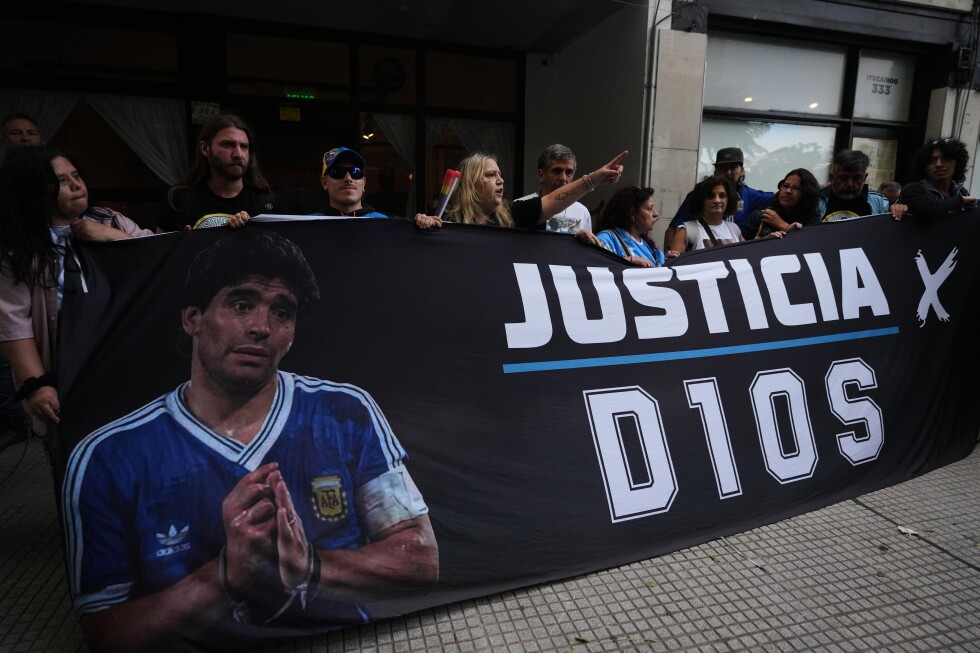
Speaking at the courthouse in San Isidro, a suburb of Buenos Aires, Gianinna testified against the seven medical professionals accused of negligence in the care that preceded the Argentine soccer icon’s death. Her testimony highlighted the family’s ongoing quest for accountability in what they believe was preventable medical negligence.
“I heard on television that he said he wasn’t his doctor, and it makes me very angry that he won’t take responsibility,” Gianinna stated, visibly emotional as she addressed the court. Her testimony underscored the family’s frustration with what they perceive as medical professionals evading responsibility for Maradona’s care.
This trial represents the second attempt to resolve the case after a mistrial was declared in May when Judge Julieta Makintach recused herself following criticism about her participation in a documentary related to the case. The procedural setback further prolonged the Maradona family’s pursuit of justice, nearly three years after Diego’s death.
The soccer legend died on November 25, 2020, at age 60 from cardiac arrest while recovering at a private residence outside Buenos Aires. He had been recuperating from surgery for a blood clot on his brain, an operation performed by Luque just weeks before his death.
In her testimony, Gianinna specifically identified neurosurgeon Luque, psychiatrist Agustina Cosachov, and psychologist Carlos Díaz as bearing principal responsibility for her father’s health and the home-based care arrangement. She alleged that under this arrangement, her father’s condition deteriorated daily without appropriate medical intervention.
The charges against the seven defendants align with culpable homicide under Argentine law, similar to involuntary manslaughter in other legal systems. Prosecutors contend that the medical professionals were aware of the risks posed by their alleged negligence yet proceeded regardless. All seven defendants have denied the accusations.
Maradona’s medical care has come under intense scrutiny since his death. Prosecutors argue that his treatment was “deficient and reckless,” claiming that the medical team abandoned the patient to his fate during a crucial post-operative period when he required close monitoring.
In a strategic counter-narrative, Luque’s defense team has suggested that Gianinna and her sister Dalma – Maradona’s eldest daughters from his relationship with Claudia Villafañe – share responsibility for not acting with sufficient urgency during their father’s progressive health decline.
The case holds particular significance in Argentina, where Maradona remains a national hero whose influence transcended sports. Widely regarded as one of the greatest soccer players of all time, Maradona led Argentina to World Cup victory in 1986 and enjoyed a club career that included stints at Barcelona and Napoli, where he achieved iconic status.
His death sparked nationwide mourning in Argentina, with thousands of fans gathering to pay their respects. The subsequent investigation into potential medical negligence has only intensified public interest in the circumstances surrounding his final days.
The trial continues amid Argentina’s ongoing reckoning with the loss of its most celebrated sports figure. For the Maradona family, particularly his daughters who have been vocal advocates for accountability, the proceedings represent not just a legal process but a deeply personal quest to understand whether their father’s death could have been prevented through proper medical care.
Legal experts note that medical negligence cases of this profile are rare in Argentina and could potentially establish important precedents for medical accountability in high-profile cases.
Fact Checker
Verify the accuracy of this article using The Disinformation Commission analysis and real-time sources.

14 Comments
Negligence in medical care is a serious matter. The Maradona family’s pursuit of accountability is understandable, though the evidence will ultimately determine the outcome.
Agreed. This trial will be closely watched, as Maradona’s legacy means the stakes are high.
Doctors have an ethical duty to provide proper care. If they failed in Maradona’s case, they should face consequences. However, the full facts need to be carefully examined before rushing to judgment.
That’s a fair point. These types of cases are complex, and the legal process should play out thoroughly.
Maradona’s legacy is immense, so this trial carries a lot of weight. The family deserves answers, but the process must be fair and thorough. Rushing to judgment helps no one.
Exactly. This case demands a careful, measured approach to ensure a just outcome, whatever that may be.
Maradona was a global icon, so this case has drawn a lot of attention. The family deserves answers, but the medical professionals also deserve a fair hearing. Hopefully, the truth will emerge.
Well said. High-profile cases like this can be very emotionally charged, but the legal process must be impartial.
This is a tragic case. Maradona was an iconic figure, and it’s understandable the family wants accountability. The medical professionals should not evade responsibility if there was negligence in his care.
I agree, the family deserves answers. This trial could provide important closure, even if it’s painful.
As a fan of Maradona, I’m saddened to see this family tragedy play out in the public eye. Determining responsibility is important, but the human element shouldn’t be overlooked.
Agreed, the human cost of this loss is immense. Hopefully, the trial can provide some closure, even if it’s difficult.
This is a complex case with strong emotions on both sides. While the family’s pursuit of accountability is understandable, the medical professionals deserve a fair hearing. The truth is what matters most.
Well said. Navigating high-profile cases like this requires impartiality and a commitment to justice.