


Listen to the article
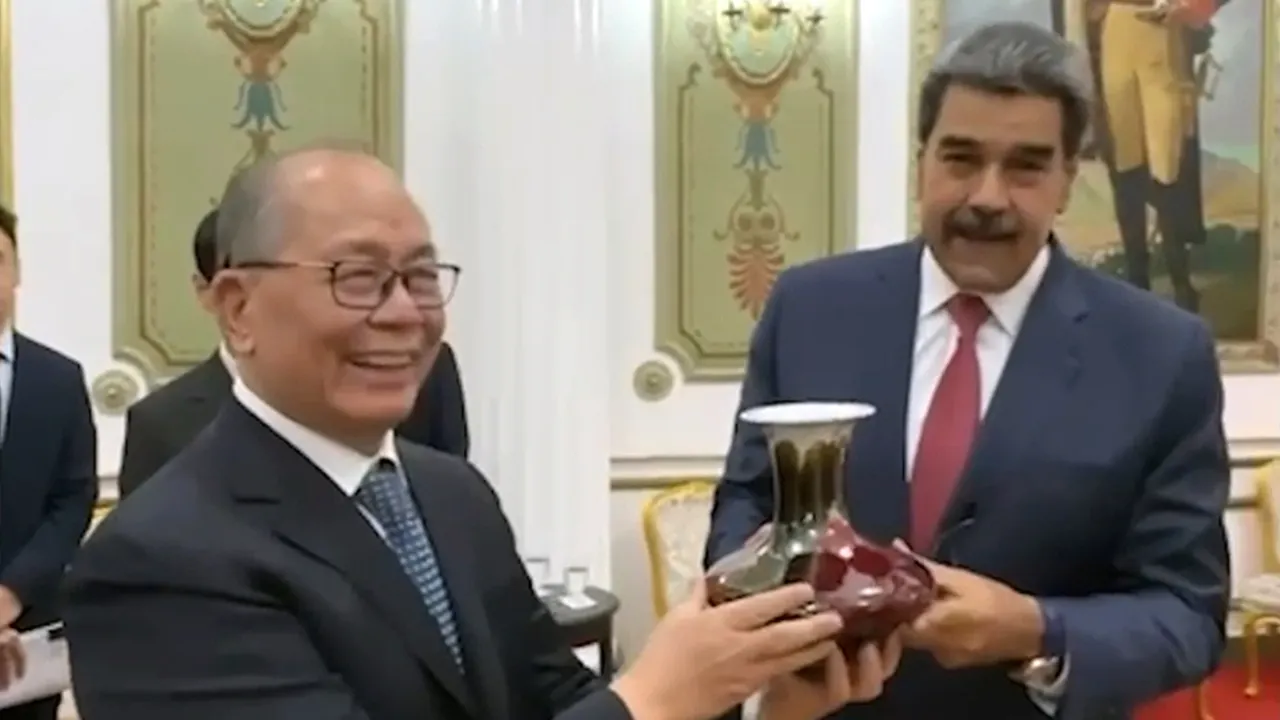
In the hours preceding his dramatic capture by U.S. forces, Venezuelan President Nicolás Maduro held a strategic meeting with Chinese Special Representative for Latin American affairs Qiu Xiaoqi at Miraflores Presidential Palace in Caracas on Friday. The timing of this diplomatic engagement underscores the growing competition between Washington and Beijing for influence in the Western Hemisphere.
During the meeting, Maduro reaffirmed Venezuela’s strategic relationship with China and expressed commitment to building what he described as a “multipolar world of development and peace.” This meeting took place the same day that then-President Donald Trump met with U.S. Ambassador to China David Perdue in what appears to be a remarkable geopolitical coincidence.
Hours after these diplomatic engagements, Trump announced that American forces had conducted strikes across Venezuela and taken Maduro and his wife into custody. The pair were reportedly flown out of the country in what represents the most direct U.S. military action against a sitting head of state in Latin America since the 1989 Panama operation against Manuel Noriega.
When asked about the Chinese meeting that preceded Maduro’s capture, Trump downplayed potential tensions with Beijing, stating on “Fox and Friends” Saturday morning: “I have a very good relationship with Xi, and there’s not going to be a problem. They’re going to get oil.”
The Trump administration framed the military action as the culmination of months of allegations that Maduro trafficked drugs into the United States and ruled illegitimately. Venezuela has long been a focal point in Washington’s strategy to reassert the Monroe Doctrine, which opposes foreign powers establishing strategic footholds in the Americas.
China’s response to the U.S. operation was swift and unequivocal. Beijing’s foreign ministry issued a statement declaring it was “deeply shocked” by the American action.
“China strongly condemns the U.S.’s blatant use of force against a sovereign state and its action against its president,” the statement read. “Such hegemonic behavior by the U.S. seriously violates international law, infringes upon Venezuela’s sovereignty, and threatens peace and security in Latin America and the Caribbean. China firmly opposes it.”
The diplomatic fallout highlights the strategic importance of Venezuela in the geopolitical rivalry between the United States and China. Beijing has invested heavily in the oil-rich South American nation, providing billions of dollars in financing and energy investment as part of its global Belt and Road Initiative. China has emerged as Venezuela’s largest crude oil importer, establishing a significant economic foothold in a region historically considered within the U.S. sphere of influence.
U.S. officials have long accused China, along with Russia and Iran, of propping up Maduro’s government as it faced international isolation, economic collapse, and widespread allegations of corruption and drug trafficking. The Trump administration has been particularly vocal in opposing this trajectory, with senior officials explicitly stating their intention to reassert American dominance in the region.
The timing of Maduro’s capture – immediately following his meeting with a high-ranking Chinese envoy – symbolizes the direct challenge posed by the U.S. to China’s growing influence in Latin America. It represents a dramatic escalation in the Biden administration’s approach to Venezuela and sends a clear message about American willingness to take decisive action against governments it considers illegitimate or threatening to regional stability.
As the situation continues to unfold, the international community watches closely to see how this bold military action will reshape power dynamics in the region and whether it will lead to increased tensions between Washington and Beijing in their ongoing global competition for influence and resources.
Fact Checker
Verify the accuracy of this article using The Disinformation Commission analysis and real-time sources.

11 Comments
This is a complex situation with high stakes for all involved. I’m curious to learn more about the details of the US operation and the rationale behind it. Maduro’s close ties to China make this a geopolitical chess match worth watching closely.
Absolutely, the geopolitical implications here are significant. The rivalry between the US and China for influence in Latin America is heating up, and Venezuela appears to be a key battleground.
This is a complex geopolitical situation with a lot of moving parts. The timing of the Chinese envoy’s meeting with Maduro right before the US operation is certainly intriguing and raises questions about potential foreknowledge or coordination. It will be interesting to see how this all plays out.
Interesting geopolitical dynamics at play here. The timing of Maduro’s meeting with the Chinese envoy right before the US operation certainly raises questions about potential coordination or foreknowledge. It will be important to see how this all unfolds in the coming days.
Agreed, the timing is quite intriguing. China’s condemnation of the US action suggests they were caught off guard, but the prior meeting indicates some level of strategic engagement.
It’s concerning to see the US taking such direct military action against a sitting head of state, even one as controversial as Maduro. This could further destabilize the region and raise tensions with China, which has been a key ally of Venezuela. I wonder what the long-term implications will be.
I share your concerns. The US intervention in Venezuela sets a concerning precedent and could have unintended consequences, especially given China’s strong ties to the Maduro regime. The potential fallout for regional stability and global commodity markets bears watching.
The US action against Maduro seems to be a high-risk, high-stakes gambit. While Maduro’s rule has been widely criticized, the potential fallout from this intervention could be severe, both in terms of regional stability and global commodity/energy markets. I hope the Biden administration has carefully considered the implications.
From an energy security perspective, the situation in Venezuela is crucial. As a major oil producer, any further disruptions there could impact global supply and prices, especially with the ongoing volatility in global energy markets. This bears close monitoring.
From a mining and commodities perspective, the stability of Venezuela is crucial given its substantial reserves of gold, diamonds, bauxite, coal, and other key resources. This latest development could have significant ripple effects on global supply and prices.
Good point. Venezuela’s vast natural resource wealth makes it a strategic asset, and the political turmoil there has already impacted global commodity markets. This situation bears close monitoring for investors and industry players.