


Listen to the article
France Redirects Aircraft Carrier to Mediterranean Amid Middle East Conflict
French President Emmanuel Macron has ordered the nuclear-powered aircraft carrier Charles de Gaulle to reposition from the Baltic Sea to the Mediterranean in response to escalating tensions in the Middle East. The redeployment aims to bolster protection for allied assets in the region as conflict continues to spread.
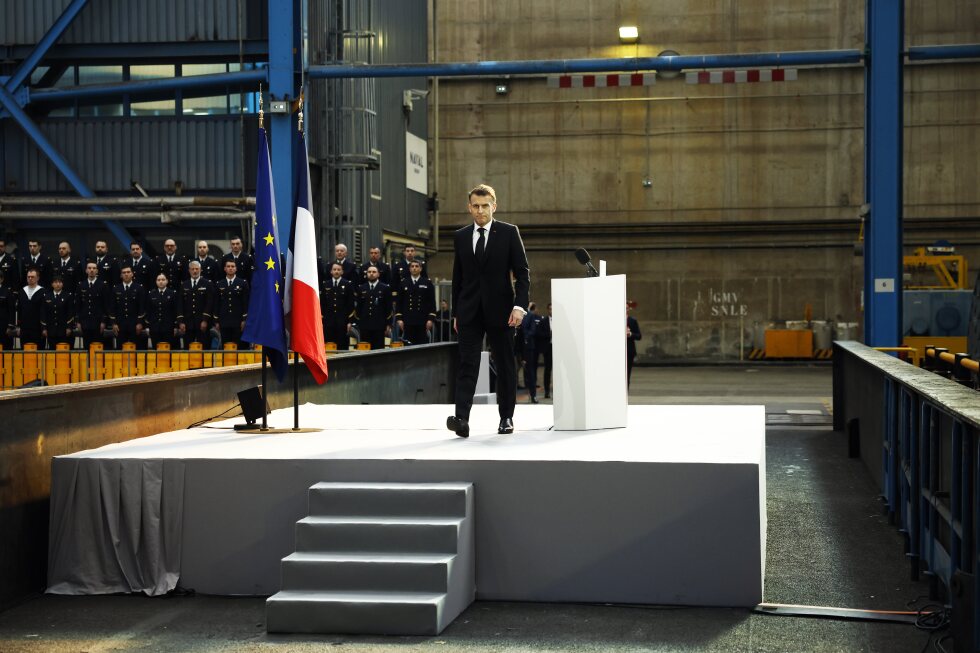
In a televised address Tuesday, Macron confirmed the carrier will be accompanied by escort frigates and its full air wing. The president also disclosed that France has already deployed Rafale fighter jets, air-defense systems, and airborne radar capabilities to the Middle East over the past several hours.
“And we will continue this effort as much as necessary,” Macron stated firmly.
While France, the United Kingdom, and Germany have previously declared they were not participants in the recent U.S. and Israeli strikes against Iran, Macron revealed that French forces had taken defensive action early in the conflict.
“French forces had shot down drones in legitimate self-defense in the very first hours of the conflict, to defend the airspace of our allies, who know they can rely on us,” he said without elaborating on specific incidents or locations.
The decision to reposition the Charles de Gaulle came in direct response to Monday’s strike on a British air force base in Cyprus. Macron emphasized that Cyprus, as a European Union member with which France has recently signed a strategic partnership, deserves protection.
“This requires our support,” he stressed.
France maintains defense agreements with Qatar, Kuwait, and the United Arab Emirates, along with what Macron described as “strong commitments” to Jordan and Iraq. These obligations factor into the country’s strategic calculations as the regional conflict intensifies.
Addressing the expanding conflict in Lebanon, Macron criticized Hezbollah’s actions while simultaneously cautioning Israel against further escalation. “Hezbollah made the grave mistake of striking Israel and putting the Lebanese people in danger,” he said, before adding that an Israeli ground operation “would be a dangerous escalation and a strategic error.”
The French president took a nuanced position on the recent strikes against Iran, reflecting France’s traditional support for international law. “France cannot approve of the strikes by Israel and the U.S. on Iran because they were carried outside of the framework of international law,” he stated, adding that ending the strikes quickly would be “desirable.”
Macron emphasized that lasting peace can only be achieved through diplomatic negotiations. In what appeared to be a message to the Iranian people, he expressed hope that they might “freely decide their own destiny,” adding pointedly that “history never weeps for the executioners of their own people, and none of them will be mourned”—a clear reference to the deaths of Iran’s supreme leader Ayatollah Ali Khamenei and other Iranian officials.
Despite these reservations about recent military actions, Macron placed significant blame on Iran for the current regional instability. “It is Iran that developed a dangerous nuclear program and unprecedented ballistic capabilities; that armed and financed terrorist groups in neighboring countries—Hezbollah in Lebanon, the Houthis in Yemen, Shiite militias in Iraq—and that supported Hamas, while always affirming its objective of destroying the State of Israel,” he said.
The redeployment of the Charles de Gaulle represents France’s most significant military response to date in the widening Middle East conflict. As one of Europe’s few nuclear powers with force projection capabilities, France’s actions signal a deepening European involvement in the crisis while attempting to maintain a balanced diplomatic approach that advocates for de-escalation and a return to negotiations.
Military analysts note that the carrier’s presence will significantly enhance NATO’s surveillance and response capabilities in the eastern Mediterranean at a time when regional powers are increasingly drawn into direct confrontation.
Fact Checker
Verify the accuracy of this article using The Disinformation Commission analysis and real-time sources.

14 Comments
France’s deployment of Rafale fighters, air-defense systems, and radar capabilities signals its willingness to defend its interests and those of its allies in the Middle East. This is a strategic move amidst the ongoing conflict.
You’re right. France is clearly taking the situation seriously and is prepared to take defensive action if needed to protect its assets and partners in the region.
The French president’s announcement of defensive actions taken by its forces, including downing drones, highlights the heightened tensions in the region. France is taking a proactive stance to protect its allies and maintain a secure environment.
Agreed. France is not shying away from asserting its military capabilities to deter further escalation. This shows its resolve to play a key role in stabilizing the situation in the Middle East.
France’s deployment of its nuclear-powered aircraft carrier to the Mediterranean is a strategic move that demonstrates its willingness to be a strong regional player. The carrier’s air wing and escort frigates will provide a formidable deterrent presence.
Absolutely. France is clearly taking a leadership role in the region, leveraging its military might to protect its interests and support its allies. This is a bold and decisive action by President Macron.
It’s good to see France taking a proactive stance in the Middle East by bolstering its military presence. The nuclear-powered aircraft carrier and supporting assets will provide a strong deterrent and security umbrella for allied operations.
Absolutely. France is positioning itself as a key regional player, ready to defend its interests and support its partners through this period of heightened tensions.
The redeployment of the Charles de Gaulle carrier group to the Mediterranean is a prudent decision by President Macron. France is demonstrating its capability and commitment to regional security during this volatile period.
Agreed. France is flexing its military muscle to deter further escalation and maintain stability in the region. Their forces are battle-ready to respond if necessary.
France’s decision to deploy its premier naval asset, the Charles de Gaulle, to the Mediterranean is a clear signal of intent. This move demonstrates France’s willingness to project power and defend its strategic priorities in the region.
You’re right, this is a significant deployment that underscores France’s commitment to regional stability. It will be interesting to see how this impacts the broader dynamics in the Middle East.
Interesting move by President Macron to deploy France’s nuclear-powered aircraft carrier to the Mediterranean. This will bolster regional security and protection for allies as the situation in the Middle East remains tense.
Indeed, France is taking a proactive approach to safeguard stability in the region. The full air wing and escort frigates will provide a strong deterrent presence.