


Listen to the article
The MacArthur Foundation announced Tuesday a landmark $100 million award to Sentinel, a pan-African infectious disease surveillance network, at a critical time when global health funding faces significant cuts from major donor countries.
The award comes through the foundation’s 100&Change competition, which seeks to fund ambitious solutions to pressing global challenges. Sentinel’s approach creates cost-effective pathogen detection tests, deploys real-time outbreak tracking tools, and trains local scientists to implement community-led responses to disease threats.
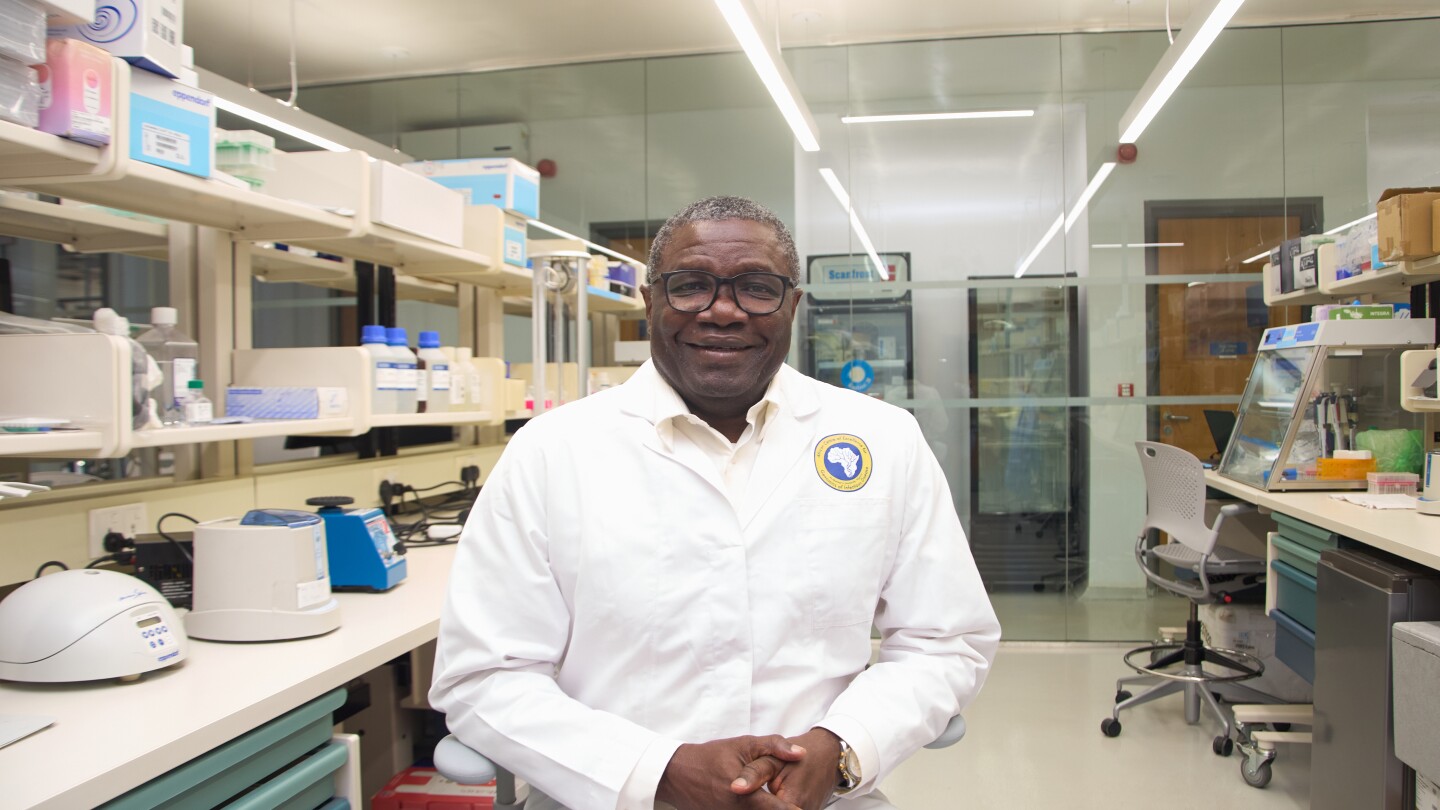
“This investment affirms that solutions to global health challenges can be led from Africa,” said Christian Happi, Sentinel co-director and leader of the Institute of Genomics and Global Health at Redeemer’s University in Nigeria. “Sentinel is about trust, collaboration, and building the systems that allow every country to respond swiftly and confidently to disease threats.”
The network has already trained more than 3,000 public health workers from 53 of Africa’s 54 countries. With this substantial funding, Sentinel plans to expand its geographic reach over the next five years, creating a more robust early warning system for previously undetected diseases.
By recognizing an African-led initiative that empowers public health officials from the ground up, the MacArthur Foundation aims to inspire similar bold investments from other philanthropic organizations.
Chris Cardona, managing director of Exploration, Discovery and Programs at the MacArthur Foundation, noted that in the ten years since launching 100&Change, they’ve seen increased interest in both larger philanthropic grants and greater attention to global health.
“This grant is further wind in those sails, I’d say,” Cardona explained. “But given the scale of the challenge and the size of the funding gaps, there’s much more to be done.”
The award comes at a precarious moment for global health programs. Major donor countries, particularly the United States, have been stepping back from multilateral efforts. Gavi, the public-private alliance that has funded vaccinations for over a billion children, faces a significant replenishment shortfall as the Trump administration reduces U.S. support.
Additionally, U.S. Centers for Disease Control and Prevention staff were recently instructed to stop working with the World Health Organization, a move experts warn will hamper responses to outbreaks like the current mpox epidemic in Africa. While the Trump administration has pledged to prioritize disease surveillance in its reshaping of U.S. foreign assistance, it has simultaneously proposed canceling $500 million for infectious disease and maternal health activities, plus another $400 million dedicated to addressing global HIV.
The uncertainty surrounding global development commitments has become so pronounced that even the Gates Foundation, one of the most influential institutions in global health, delayed the release of its annual progress report on global development goals.
“This work in Africa would be important because, as the U.S. and European nations pull out from support globally, we will have less visibility of what’s going on overseas,” said Dr. Ali S. Khan, dean of the University of Nebraska Medical Center College of Public Health.
Sentinel began as a collaboration between Happi’s lab in Nigeria and Dr. Pardis Sabeti’s lab at the Broad Institute in Cambridge, Massachusetts, initially focusing on Lassa fever. Their fieldwork in affected villages provided crucial insights they couldn’t have gained without deep community engagement.
Now, their mission has expanded to equip local communities with the necessary diagnostic technologies and professional connections to identify, control, and provide early warnings about emerging health threats.
Dr. Sabeti described the award as “transformative” in a time when public health infrastructure faces “existential crises” and is being “decimated” by funding cuts. As traditional international support mechanisms weaken, empowering local frontline responders becomes increasingly vital.
“By giving people in communities the information that they need, they end up becoming sentinels for an emerging outbreak,” Sabeti said. “And it’s really allowing every person on the planet to participate in stopping the next pandemic.”
Nidhi Bouri, former USAID Deputy Assistant Administrator for Global Health, emphasized that pandemic surveillance requires consistent, uninterrupted monitoring. The current funding landscape highlights the need for diverse financing sources beyond traditional government channels.
“There is a collective responsibility — but more so a collective interest globally — for a range of stakeholders to evaluate how they can support different investments with the shared goal of mitigating the spread of diseases across the globe,” Bouri said. “Because it impacts everyone.”
Fact Checker
Verify the accuracy of this article using The Disinformation Commission analysis and real-time sources.

8 Comments
It’s encouraging to see the MacArthur Foundation directing resources towards this critical global health initiative. Sentinel’s work in training local scientists and implementing cutting-edge pathogen detection tools can make a real difference in Africa’s preparedness for future outbreaks. This investment is a step in the right direction.
I agree, this is a welcome development. By strengthening Africa’s capacity to monitor and respond to infectious disease threats, Sentinel is helping to safeguard public health not just on the continent, but worldwide.
This is an encouraging development in global health preparedness. Building a robust outbreak surveillance network in Africa is critical, especially as funding for global health initiatives has faced challenges. Sentinel’s approach of empowering local scientists and communities is a smart strategy.
I agree, equipping African countries with the tools and knowledge to rapidly detect and respond to disease threats is key. The $100M investment from the MacArthur Foundation will go a long way in strengthening these crucial capabilities.
While global health funding has faced headwinds, this substantial investment in Sentinel is a positive sign. Strengthening Africa’s ability to detect and respond to disease outbreaks is vital for protecting public health worldwide. I hope this sets an example for other donors to follow.
Infectious disease outbreaks pose a major threat, as we’ve seen with COVID-19. Proactive surveillance and early warning systems are essential for mitigating the impact of future pandemics. This grant to Sentinel is a welcome step in the right direction.
Absolutely. Building local capacity and resilience is the best way to tackle global health challenges. I’m glad to see the MacArthur Foundation recognizing the importance of this approach.
This is an impressive commitment from the MacArthur Foundation. Investing in community-led disease surveillance and response is a smart strategy that can yield significant returns. Hopefully this grant will inspire more funders to support initiatives that empower local experts and build resilient health systems.