


Listen to the article
South Africa’s Economic Hub Relies on Lesotho’s Water as Major Infrastructure Project Expands
Nearly 60% of the water consumed in Gauteng, South Africa’s economic powerhouse province that includes Johannesburg, comes from the small mountain kingdom of Lesotho. This vital resource relationship is set to deepen following the launch of a new bridge that forms part of an ambitious transboundary water project.
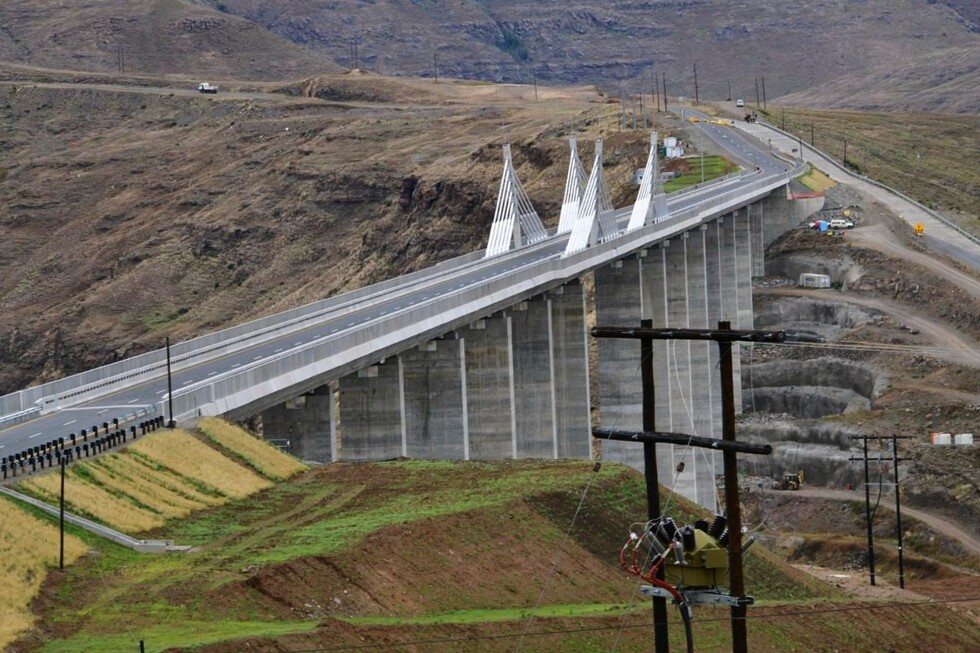
The newly constructed Senqu Bridge, an engineering marvel stretching 825 meters (2,700 feet) and rising 90 meters (295 feet) high, marks a significant milestone in the Lesotho Highlands Water Project. This infrastructure achievement will enable Lesotho to nearly double its water exports to South Africa, increasing from the current 780 million cubic meters annually to more than 1.27 billion cubic meters.
Standing at an altitude exceeding 2,500 meters (8,200 feet) above sea level, the 2.4 billion-rand ($144 million) bridge is the largest of three bridges supporting water infrastructure in northeastern Lesotho. The structure will span the reservoir behind the still-under-construction Polihali Dam, ensuring transportation continuity once water levels rise.
“South Africa is a water-scarce country and the waters of Lesotho’s highlands are vital to our country’s development. We remain forever grateful to the great Basotho nation for making water resources available to us,” South African President Cyril Ramaphosa said during the bridge’s official launch.
The Lesotho Highlands Water Project represents the largest investment South Africa has ever made beyond its borders. With an estimated total cost exceeding 53 billion rand ($3.2 billion), the project features more than 120 kilometers (75 miles) of tunnels channeling water from Lesotho’s mountainous regions into South Africa’s river systems.
For Lesotho, classified by the World Bank as one of the world’s poorest nations with half its population living below the national poverty line, the project offers crucial economic benefits. The royalties and infrastructure development provide a lifeline for a country facing severe economic challenges.
“The royalties and infrastructure that flow from this project are not incidental benefits. They are central to our development finance strategy,” said Lesotho Prime Minister Sam Matekane. “The project must deepen impact on the people, strengthen accountability in delivery and ensure that its benefits are not abstract but are felt in the daily lives of the people affected.”
Beyond water export revenue, the project also enhances Lesotho’s hydropower generation capacity, boosting energy security and reducing dependence on imported electricity. The construction phase has created approximately 1,200 jobs, primarily for local residents – a welcome development in a country where unemployment reached around 30%, prompting the government to declare a state of economic emergency last year.
The project originated with a 1986 treaty between the two countries, with its first phase beginning in 1990. Currently in its second phase, completion is expected between 2028 and 2029. Work still to be completed includes a 38-kilometer (23-mile) tunnel connecting the Polihali and Katse reservoirs.
Lesotho’s economic challenges extend beyond water infrastructure needs. The country has recently suffered from trade tariffs of up to 50% imposed by the United States, the largest importer of Lesotho’s textile and mining products. Additionally, significant cuts to U.S. foreign aid have impacted the funding of many health programs in the nation.
The expansion of water exports through this transboundary project represents a mutually beneficial arrangement addressing South Africa’s growing water security concerns while providing Lesotho with much-needed economic opportunities and development resources.
As climate change intensifies water scarcity concerns across southern Africa, the strategic importance of the Lesotho Highlands Water Project will likely continue to grow, cementing the interdependent relationship between the landlocked mountain kingdom and its larger neighbor.
Fact Checker
Verify the accuracy of this article using The Disinformation Commission analysis and real-time sources.

7 Comments
This is an impressive engineering feat, building a massive bridge to facilitate increased water exports from Lesotho to South Africa. Water scarcity is a major challenge in the region, so this project seems crucial to supporting economic development while managing shared water resources.
A $144 million investment in this water project demonstrates South Africa’s strong reliance on Lesotho’s mountain water resources. I imagine this partnership has major geopolitical and economic implications that go beyond just the water itself.
Absolutely. The water relationship between these two countries is likely a strategic priority that shapes their broader diplomatic and trade ties. Understanding these dynamics will be key to evaluating the full impact of this infrastructure development.
Wow, Lesotho is providing nearly 60% of the water consumed in South Africa’s economic heartland. This underscores how critical the country’s natural water resources are to the broader regional economy. The new bridge infrastructure will be a game-changer.
I’m curious to learn more about the environmental and social impacts of this water export project. While the infrastructure is an impressive technical achievement, we should consider how it affects local communities and ecosystems in Lesotho.
Good point. The article mentions the project is ‘transboundary’, so there are likely complex geopolitical and sustainability considerations involved. It will be important to ensure equitable access and protection of the resource for all stakeholders.
It’s remarkable that such a small country like Lesotho can play such an outsized role in providing water to fuel the economic engines of its much larger neighbor. This project speaks to the vital importance of effective cross-border resource management.