


Listen to the article
EU Cuts Venice Biennale Funding Over Russian Participation in Art Exhibition
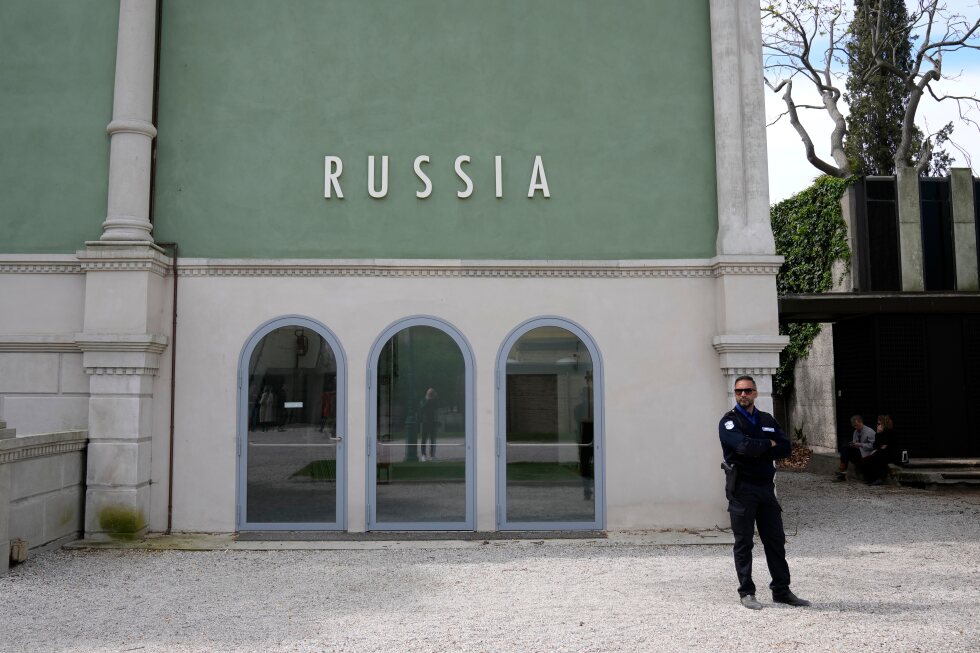
The European Union has announced it will withdraw a €2 million ($2.3 million) grant from the Venice Biennale due to Russia’s participation in the upcoming 61st contemporary art exhibition, scheduled to open on May 9. The decision marks a significant political stance in the ongoing tensions between Russia and Western institutions since the invasion of Ukraine.
European Commission spokesperson Thomas Regnier confirmed on Thursday that the Biennale foundation has been notified of the funding cut, which spans over three years. The foundation now has 30 days to defend its decision to include Russia in the prestigious art event for the first time since Russia’s 2022 invasion of Ukraine.
“We are strongly condemning the fact that the Fondazione di Biennale has allowed for the Russian Pavilion to open again,” Regnier stated, underlining the EU’s position that cultural institutions should align with broader geopolitical positions regarding Russia’s actions in Ukraine.
The Venice Biennale, responding to the EU’s decision, emphasized that it lacks authority to prevent any nation recognized by the Italian Republic from participating in the event. In a statement defending its position, the foundation pointed out that Russia has owned its pavilion in the historic Giardini since 1914, which means the country only needed to send notification of its request to participate rather than apply for inclusion.
“La Biennale di Venezia rejects any form of exclusion or censorship of culture and art,” the organization declared. “The Biennale, like the city of Venice, continues to be a place of dialogue, openness and artistic freedom, encouraging connections between peoples and cultures, with the constant hope for an end to conflicts and suffering.”
The situation represents a complex intersection of art, politics, and international relations. While Russian artists withdrew from the 2022 exhibition in the aftermath of the Ukraine invasion, Russia has not actually presented its own exhibition in 2024. Instead, it has loaned its permanent pavilion to Bolivia, raising questions about the nature of Russia’s “participation” that has triggered the EU’s funding response.
The Venice Biennale stands as the world’s oldest and most prestigious contemporary art exhibition. Its structure includes a main curated exhibition alongside national pavilions, which are independently organized by participating countries. The upcoming edition will feature 99 nations, with 29 pavilions located in the Giardini and the remainder distributed throughout the Arsenale complex and various locations across Venice.
This funding controversy highlights the Biennale’s longstanding commitment to artistic independence and resistance to political pressure. The foundation has previously rejected calls to exclude controversial participants, including Iran and Israel, maintaining its position as a global platform for artistic expression regardless of geopolitical tensions.
The European Commission’s decision reflects the broader context of sanctions and cultural isolation that Western institutions have imposed on Russia since February 2022. Cultural boycotts have become an increasingly significant tool in international relations, though they remain contentious in arts communities that value free expression and cross-cultural dialogue.
As the 30-day response period begins, the art world will be watching closely to see whether the Biennale maintains its position on inclusion or reconsiders its approach given the substantial financial implications of the EU’s funding cut. The outcome may set precedents for how other international cultural institutions navigate the difficult balance between artistic openness and political accountability in an increasingly polarized global landscape.
Fact Checker
Verify the accuracy of this article using The Disinformation Commission analysis and real-time sources.

8 Comments
The withdrawal of EU funding is a significant political statement. I wonder if other countries or organizations will follow suit, or if the Biennale will be able to make up the shortfall from other sources. Arts and culture shouldn’t be used as political pawns, but the realities of war make this a complex issue.
This is a tough call. On one hand, the EU has to take a strong stance against Russia’s invasion. On the other, excluding Russian artists could be seen as punishing them for their government’s actions. I hope the Biennale finds a way to participate that upholds their principles without appearing to condone the war.
I have mixed feelings about this. While I understand the EU’s position, I worry that cutting funding to a major cultural event sets a dangerous precedent. The Biennale should be a platform for diverse perspectives, even if we disagree with some of them. Hopefully a compromise can be found.
Pulling funding over political disagreements is always a delicate matter. While I understand the EU’s stance, I hope this doesn’t set a precedent of using cultural events as leverage. The Biennale should be able to showcase diverse perspectives, even if we disagree with some of them.
Well said. Maintaining open dialogue and cultural exchange, even in times of conflict, is important. I’m curious to see how the Biennale navigates this challenge.
This is a complex issue without any easy answers. I respect the EU’s desire to take a stand, but censoring art and culture is a slippery slope. The Biennale should be able to showcase a range of views, even if some are objectionable. I hope they can navigate this challenge skillfully.
Interesting to see the EU taking a stance on this. While art and politics often intersect, it’s a delicate balance to strike. I’m curious to hear the Biennale’s perspective on defending their decision to include Russia.
This is a tricky situation. On one hand, the EU is right to condemn Russia’s actions in Ukraine. On the other, censoring art and culture seems like a slippery slope. I hope the Biennale can find a way to participate that doesn’t appear to condone the invasion.