


Listen to the article
Israeli Strikes Target Hezbollah Media Hub as Conflict Intensifies Across Lebanon
The Israeli military struck a building housing Hezbollah’s Al-Manar television studios in southern Beirut on Tuesday, following evacuation warnings issued to civilians. The attack comes amid a dramatic escalation in the conflict between Israel and the Iran-backed Lebanese militant group.
Israeli officials stated they targeted “Hezbollah command centers and weapons storage facilities in Beirut.” Smoke billowed over the skyline following the strike, though no immediate details on casualties were available. This marks the first time Al-Manar’s headquarters and transmission facilities in Beirut have been hit since the 2006 Israel-Hezbollah war.
The assault follows a deadly weekend exchange that began when Hezbollah launched missile and drone attacks on northern Israel after midnight Sunday, triggering waves of Israeli airstrikes across Lebanon. The violence represents the most significant escalation in hostilities since the two sides reached a ceasefire in late 2024.
Lebanon’s Health Ministry reported at least 52 people killed and 154 wounded in overnight strikes targeting Beirut’s southern suburbs and areas in southern Lebanon. The Ministry of Education announced school closures on Tuesday due to the deteriorating security situation.
During daylight hours Monday, Israel carried out dozens of airstrikes across Beirut’s southern suburbs and various locations in southern and eastern Lebanon. The Israeli military claimed to have struck more than 70 weapons storage facilities, launch sites and missile launchers belonging to Hezbollah. They also announced the killing of Hussein Mokaled, described as a senior Hezbollah intelligence official.
In a significant expansion of targets, Israel also struck multiple branches of al-Qard al-Hasan, a Hezbollah-linked microfinance institution that Israel claims is being used to fund the group’s military operations.
The Palestinian Islamic Jihad group confirmed that the commander of its military wing in Lebanon was killed in an Israeli airstrike south of Beirut overnight, further expanding the list of militant leaders targeted in the operation.
Lebanese Government Condemns Hezbollah Actions
In an unprecedented development, the Lebanese government issued harsh criticism of Hezbollah, condemning its decision to engage in military action against Israel. Lebanon’s leaders called the militant group’s actions illegal and demanded it surrender its weapons.
“There is a side that wants to drag the country to matters that we have nothing to do with,” Lebanese President Joseph Aoun was quoted as saying during an emergency cabinet meeting, clearly referring to Hezbollah.
Prime Minister Nawaf Salam took the extraordinary step of announcing that Hezbollah’s military activities were banned going forward. He instructed security agencies to prevent the firing of missiles or drones from Lebanese territory and detain those responsible. This represents the strongest stance the Lebanese government has ever taken against Hezbollah, which maintains both a powerful armed wing and a political party with representation in parliament.
Hezbollah defended its actions in a statement early Tuesday, describing “confrontation as a legitimate right” and its rocket attacks toward Israel as “a reaction to the aggression.” The group insisted it had “repeatedly warned that Israeli attacks could not continue without a response,” referencing Israel’s near-daily strikes in southern Lebanon since the ceasefire reached in late 2024.
Civilians Flee as Displacement Crisis Grows
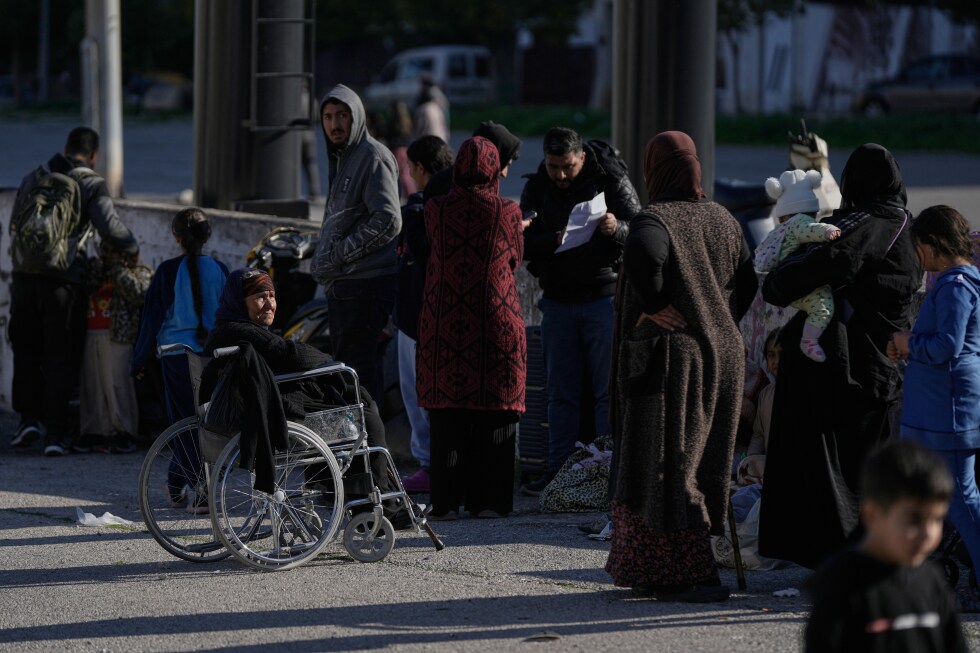
The intensified violence prompted a mass exodus from southern Lebanon and Beirut’s southern suburbs, with civilians seeking safety in the Lebanese capital and other regions. Highways were jammed with people fleeing what has been Israel’s deadliest barrage on Lebanon in more than a year.
Ali Hamdan described being stuck in traffic for seven hours on what should have been a 30-minute journey from his village to the port city of Sidon. “I’m headed toward Beirut, but I don’t know where yet. We don’t have a place to stay,” he said.
In Beirut, public schools were hastily converted into temporary shelters where families arrived carrying mattresses and belongings. Volunteers registered names as families filled classrooms and gathered in school courtyards.
Lebanon’s Minister of Social Affairs Hanin al-Sayed told reporters that 171 shelters have been opened throughout the country, currently housing around 29,000 displaced persons. The scale of displacement, while significant, remains below the peak of the 2024 Israel-Hezbollah war, when over one million people were forced to flee their homes.
The Israeli military has issued evacuation warnings for approximately 50 communities across southern and eastern Lebanon. Israeli military spokesman Brig. Gen. Effie Defrin warned that “all options are on the table,” including a potential ground invasion of Lebanon, and threatened that “Hezbollah will pay a very heavy price.” He added that Israel has called up more than 100,000 reservists since the broader regional conflict expanded on Saturday.
As the situation continues to deteriorate, Prime Minister Salam has called on the international community to secure a “clear and final commitment” from Israel to halt its strikes on Lebanon, though immediate prospects for de-escalation remain uncertain.
Fact Checker
Verify the accuracy of this article using The Disinformation Commission analysis and real-time sources.

8 Comments
This is a very concerning development. The conflict between Israel and Hezbollah has serious implications for Lebanon’s stability and the broader regional dynamics. I hope the parties can find a way to deescalate tensions and prioritize the safety of civilians.
The targeting of Hezbollah’s media hub is a troubling sign of the conflict’s escalation. While Hezbollah’s actions are controversial, I worry about the broader impact on Lebanon’s fragile political and economic situation. Deescalation and protection of civilians should be the top priority.
This conflict seems to be escalating rapidly, with deadly consequences for the people of Lebanon. I hope the international community can encourage a ceasefire and diplomatic resolution before more lives are lost.
The strikes on Hezbollah targets in Beirut are a serious escalation. While Hezbollah’s role is controversial, I worry about the broader impact on Lebanon’s fragile political and economic situation. Deescalation and protection of civilians should be the priority.
I agree, the stakes are high. Lebanon’s leaders will need to demonstrate strong, responsible leadership to navigate this crisis and prevent further destabilization.
This is a concerning development. It seems the conflict between Israel and Hezbollah has escalated significantly, with airstrikes hitting Beirut. I hope the parties can deescalate tensions and prioritize the safety of civilians.
The targeting of Hezbollah’s media hub is a worrying sign. While the group’s actions are controversial, I worry about the broader impact on Lebanon’s fragile stability. I hope the government can maintain control and protect its people.
You raise a good point. Lebanon’s leaders will need to navigate this crisis carefully to avoid further destabilization. The civilian toll is deeply troubling.