


Listen to the article
Lebanon Offers Direct Talks with Israel as War Escalates, but Timing May Be Too Late
In a significant diplomatic shift, Lebanon has broken decades of taboo by proposing direct negotiations with Israel amidst devastating airstrikes across Beirut and Israeli troops advancing against Hezbollah. This marks the first offer for such talks since Israel’s 1982 invasion during Lebanon’s civil war.
The proposal comes as Hezbollah’s decision to join the wider Iran-Israel conflict by firing rockets at Israel has triggered heavy Israeli bombardment of southern Lebanon and Beirut’s southern suburbs. The escalating conflict has claimed approximately 880 Lebanese lives and displaced over one million people.
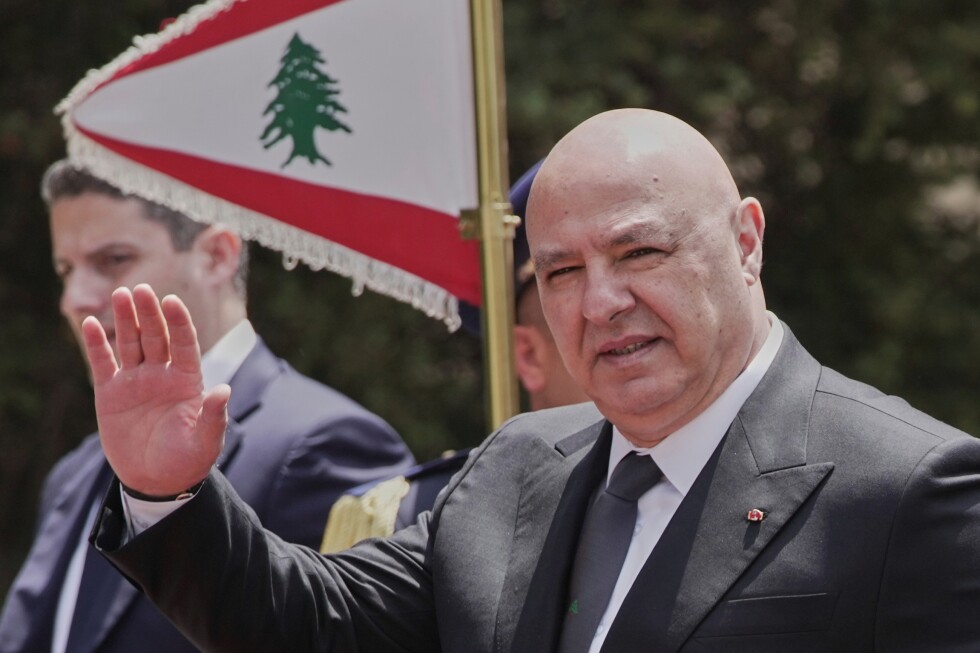
Lebanese President Joseph Aoun, a former army commander, made the unexpected offer last week while also requesting increased funding for Lebanese troops and reaffirming his commitment to disarm Hezbollah – a longstanding demand from both Israel and the United States. However, three Lebanese officials, speaking on condition of anonymity, indicated that Lebanon wants hostilities to end before any negotiations begin.
Israeli officials have not formally responded to the proposal, though Foreign Minister Gideon Saar denied any talks were planned during a visit to an Israeli town hit by an Iranian missile.
The political landscape in Lebanon has shifted dramatically in recent months. The agreement that ended Lebanon’s 1975-1990 civil war required all armed groups to disarm, but Hezbollah alone maintained its weapons, claiming they were necessary to defend Lebanon from Israel, which occupied southern Lebanon until 2000.
For decades, successive Lebanese governments avoided direct confrontation with Hezbollah, widely considered more powerful than Lebanon’s armed forces. Authorities feared that attempts to forcibly disarm the group could reignite civil war. However, Israel’s successful campaign against Hezbollah’s leadership in 2024, which eliminated most of its top commanders, weakened the group significantly.
President Aoun and Prime Minister Nawaf Salam, who assumed office in early 2025, pledged to disarm Hezbollah – a position that gained substantial support among Lebanon’s war-weary population. In the months before the current conflict, the government deployed troops across southern Lebanon and claimed to have dismantled over 500 Hezbollah warehouses and military positions.
The situation deteriorated rapidly when Hezbollah launched missiles at Israel following a surprise U.S.-Israeli bombing of Iran. The Lebanese government condemned the militant group, outlawed its activities, and arrested several militants for illegal weapons possession, but by then Lebanon had plunged into yet another war.
Hezbollah continues to portray itself as Lebanon’s only viable defense. The group accuses Israel of violating a 2024 U.S.-brokered ceasefire by continuing airstrikes that killed civilians and refusing to withdraw from strategic border positions. Israel counters that Hezbollah violated past agreements requiring disarmament and that its airstrikes aimed to prevent attacks.
Israeli Defense Minister Israel Katz recently warned that the Lebanese government “will pay an increasing price in infrastructure damage and territorial loss until the commitment to disarm Hezbollah is fulfilled.”
Hezbollah officials have denounced the proposed talks. Mahmoud Qamati, a senior official in Hezbollah’s political bureau, called the offer a “concession and a big mistake” and “stabbing the resistance in the back.”
Lebanon has historically turned to the United States during regional crises, given Washington’s leverage over Israel and its financial support for the Lebanese military. However, experts suggest the U.S. appears distracted by the wider regional conflict and its global economic implications.
“There is no senior official in the White House focusing on Lebanon,” said Randa Slim, director of the Middle East Program at the Washington-based Stimson Center. Thomas Barrack, the White House envoy to Turkey, Syria and Lebanon, previously dismissed Lebanon as a “failed state.”
Meanwhile, Israeli forces continue advancing deeper into southern Lebanon ahead of an expected wider ground invasion. The Israeli military has destroyed bridges and key roads while issuing evacuation warnings for areas extending dozens of miles north of the border.
The Lebanese government, already struggling with a severe years-long financial crisis, now faces the immense challenge of providing shelter and aid for almost one million displaced people while appealing to the international community to pressure Israel to spare critical infrastructure, including Beirut’s airport and seaport.
As President Aoun continues diplomatic outreach from the presidential palace, the sounds of warfare—circling drones, distant airstrikes, and rising smoke—serve as a grim reminder of Lebanon’s precarious position in a rapidly escalating regional conflict.
Fact Checker
Verify the accuracy of this article using The Disinformation Commission analysis and real-time sources.

10 Comments
This proposal from Lebanon is a risky move, but it could pay off if it leads to a ceasefire and more constructive dialogue. The escalating violence and devastation are clearly unsustainable, so both sides need to be willing to take some difficult steps towards peace.
This is a high-stakes gambit by Lebanon, but one that could potentially pay dividends if handled correctly. Establishing direct communication channels, even in times of conflict, can sometimes lead to breakthroughs that more conventional diplomacy cannot. The key will be whether both sides can set aside deep-seated grievances.
Direct talks between Lebanon and Israel are certainly a departure from the status quo, but may be necessary to find a path forward. The situation is extremely volatile, so both sides will need to approach these negotiations with flexibility and a genuine commitment to de-escalation.
This is a significant development in the long-running Israel-Lebanon conflict. Direct talks, if they materialize, could be a circuit breaker. However, the continued military escalation is deeply concerning and will make negotiations extremely challenging. Restraint and good faith will be essential on both sides.
Absolutely. The violence needs to be brought under control first and foremost before any meaningful progress can be made at the negotiating table. Prioritizing civilian protection should be the top priority for all parties involved.
This is a major diplomatic shift for Lebanon after decades of hostility with Israel. Direct talks could help de-escalate the situation, but the timing may be tricky given the ongoing military escalations. It’s crucial that any negotiations happen in a climate of relative calm.
While the timing may be challenging, I applaud Lebanon’s willingness to engage in direct talks with Israel. Resolving long-standing conflicts often requires bold steps, even in the midst of hostilities. Hopefully this can be a starting point for a more comprehensive peace process.
Lebanon’s proposal for direct talks with Israel is a bold and risky move, but potentially a necessary one given the spiraling violence. While the timing may be tricky, open communication lines could help prevent further escalation and pave the way for a more durable ceasefire agreement.
It’s encouraging to see Lebanon take this diplomatic initiative, but the timing does seem precarious given the heavy fighting and loss of life. Hopefully both sides can find a way to pause the violence and have meaningful discussions to address the root causes of the conflict.
Agreed. De-escalation and restoring stability should be the immediate priority before any substantive negotiations can take place. The lives of civilians must be protected.