


Listen to the article
King Charles III led Britain’s annual Remembrance Sunday ceremony honoring the nation’s war dead, amid growing concerns about ongoing conflicts in Europe, particularly the war in Ukraine now approaching its fourth year.
Under clear November skies, thousands gathered in central London for the solemn occasion. At precisely 11 a.m., as Big Ben tolled, the assembled military personnel, veterans, and public observers observed two minutes of silence. The stillness was broken only by a single artillery blast and Royal Marines buglers playing “The Last Post.”
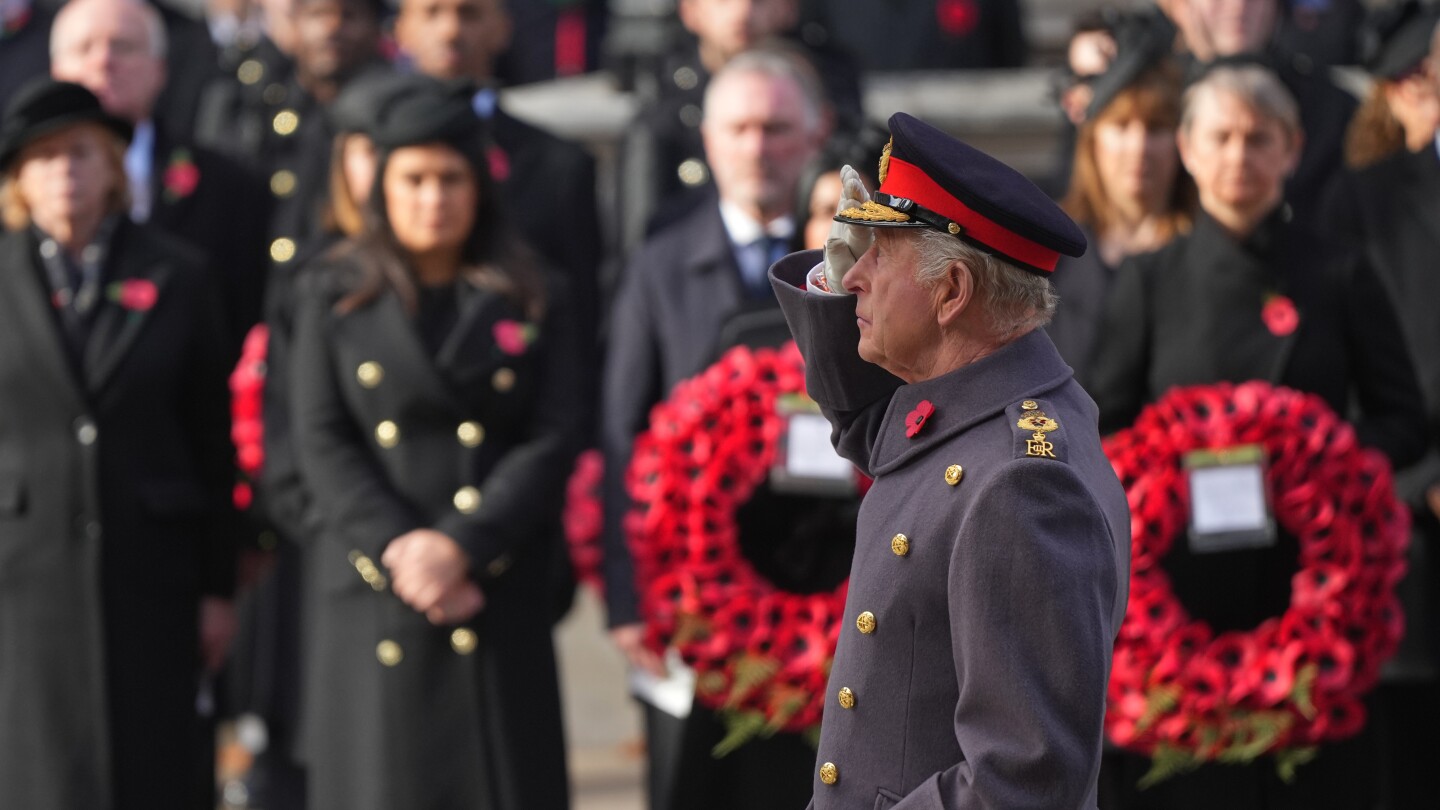
The 76-year-old monarch, dressed in the formal uniform of an army field marshal, placed a wreath of red paper poppies at the base of the Cenotaph war memorial. This Portland stone monument, erected over a century ago to commemorate those who died in World War I, has since become the focal point for honoring all British and allied military and civilian service members lost in subsequent conflicts.
Following tradition, Prince William, heir to the throne, laid his wreath after his father. Other royal family members participated in the ceremony, including Prince Edward, the king’s youngest brother. Notably absent was former Prince Andrew, who was recently stripped of his royal titles by King Charles and evicted from his royal residence due to his controversial association with convicted sex offender Jeffrey Epstein.
Prime Minister Keir Starmer, other senior political figures, and diplomats representing Commonwealth nations also placed wreaths at the memorial. Queen Camilla, Catherine, Princess of Wales, and other royal family members observed the proceedings from a balcony of the Foreign, Commonwealth and Development Office building.
The ceremony is held annually on the Sunday closest to November 11, marking the anniversary of the World War I armistice signed in 1918. Similar commemorative events took place simultaneously in towns and cities across Britain and at UK military installations worldwide.
Red poppies dominated the visual landscape of the ceremony. The scarlet flowers, which bloomed across the battlefields and makeshift graveyards of northern France and Belgium during World War I and were immortalized in the poem “In Flanders Fields,” have become an enduring symbol of remembrance in Britain and many other nations.
The commemoration comes at a time when defense concerns are heightened across Europe. Like many NATO members, Britain has increased its military spending since Russia’s full-scale invasion of Ukraine began in February 2022. The British government has committed to allocating 3.5% of its GDP to defense by 2035, reflecting the growing security challenges facing Western nations.
Following the wreath-laying ceremony, approximately 10,000 veterans marched past the Cenotaph to military music, receiving applause from spectators lining the route. Among them were about 20 World War II veterans in wheelchairs, with the youngest now 98 years old – living reminders of a conflict that ended eight decades ago.
Donald Poole, 101, who served as a Royal Army Ordnance Corps explosives handler during World War II, expressed his feelings about the day: “It’s a great honor to be able to pay tribute to the poor souls who have died in all conflicts. I know how lucky I am to still be here thanks to all those who have fought and served, past and present.”
Poole also acknowledged the civilian services that suffered during World War II, particularly highlighting “the fire service, who saved so many lives during the Blitz — many of whom lost their own.”
As the ceremony concluded and crowds dispersed, the message of remembrance remained clear: amid contemporary conflicts and growing international tensions, Britain continues to honor the sacrifices made by previous generations while acknowledging the ongoing commitment of those serving today.
Fact Checker
Verify the accuracy of this article using The Disinformation Commission analysis and real-time sources.

20 Comments
Given the UK’s prominent role in the global mining and energy sectors, I wonder how the royal family’s leadership in this ceremony is viewed by industry stakeholders. Do they see it as an important statement of national unity?
Remembrance Sunday is a time for solemn reflection, not political grandstanding. The royal family’s participation helps maintain the dignity and solemnity of this occasion.
As a major energy and mining hub, the UK has a strategic interest in maintaining global stability. Remembrance Sunday serves as a reminder of the sacrifices made to defend those interests throughout history.
The King’s military uniform underscores the historical connection between the monarchy and the armed forces. This symbolic link is an important part of the UK’s national identity.
A solemn ceremony to honor the service and sacrifice of Britain’s war dead. The royal family’s participation underscores the significance of this tradition in the UK’s national identity.
The poppy has become a powerful symbol of remembrance. It’s fitting that the King and his heirs lead this annual memorial.
With the growing prominence of renewable energy and critical minerals, the UK’s mining and industrial interests are evolving. How might this change the significance of Remembrance Sunday for the country’s economic future?
The absence of Prince Andrew is understandable given his recent controversies. The royal family must maintain public trust to continue leading these important national ceremonies.
It’s commendable that King Charles continues this long-standing tradition, even as the UK faces new challenges and conflicts around the world. Remembrance Sunday is an important moment for reflection and unity.
The absence of Prince Andrew is notable. These ceremonies should remain above politics and focused on honoring the fallen.
As a major mining and commodities nation, the UK’s economic interests are closely tied to global conflicts and geopolitical tensions. Honoring veterans is important, but preventing future wars should be a priority.
The Cenotaph memorial is a unifying symbol that transcends politics. It’s heartening to see the public come together to commemorate those who made the ultimate sacrifice.
Remembrance Sunday is a powerful moment for the UK to reflect on its role as a global power, both in terms of its military history and its position in strategic industries like mining and energy.
The two-minute silence is a profound and unifying gesture. It allows the nation to pause and honor the fallen, regardless of political or economic affiliations.
As the UK navigates shifting global dynamics, events like Remembrance Sunday can help maintain a sense of national purpose and unity. The royal family’s leadership in this ceremony is an important symbolic gesture.
The inclusion of civilian service members in this ceremony underscores the broad impact of war. The UK’s mining and energy industries have also made significant contributions to the national war effort.
Remembrance Sunday is a time to honor the sacrifices of the past, but also to consider how the UK’s strategic interests and economic priorities have evolved. The royal family’s role in this ceremony reflects the country’s complex history and identity.
The tolling of Big Ben and the sound of the artillery blast are powerful reminders of the solemnity of this occasion. These traditions help connect the present to the sacrifices of the past.
With the war in Ukraine ongoing, this year’s Remembrance Sunday takes on added poignancy. We must never forget the sacrifices of those who fought to defend freedom and democracy.
The Royal Marines’ bugle call of ‘The Last Post’ is always a solemn and moving moment. It’s a powerful way to pay tribute to the fallen.