


Listen to the article
South Korean Intelligence Suggests Kim’s Daughter Being Groomed as North Korean Successor
South Korea’s National Intelligence Service (NIS) informed lawmakers Thursday that North Korean leader Kim Jong Un’s teenage daughter appears to be positioned as the regime’s future leader, marking a significant shift in the secretive nation’s succession planning. Intelligence officials have reportedly upgraded their assessment from describing Kim Ju Ae as being in “successor training” to now being at the “successor-designate stage.”
During a closed-door briefing, NIS officials told South Korean lawmakers they are closely monitoring whether Kim’s daughter, believed to be around 13 years old, will appear alongside her father at the upcoming Workers’ Party Congress. Her presence at this significant political gathering would further solidify speculation about her future role.
“The shift in terminology from ‘successor training’ to ‘successor-designate stage’ is quite significant,” noted South Korean lawmaker Lee Seong Kweun, who attended the intelligence briefing.
Kim Jong Un, who currently leads the isolated nation, represents the third generation of male leadership in the Kim dynasty that has ruled North Korea since its founding. His father, Kim Jong Il, and grandfather, Kim Il Sung, established the family’s ironclad control over the country. Should Kim Ju Ae ultimately succeed her father, she would become the first female ruler in the nation’s history.
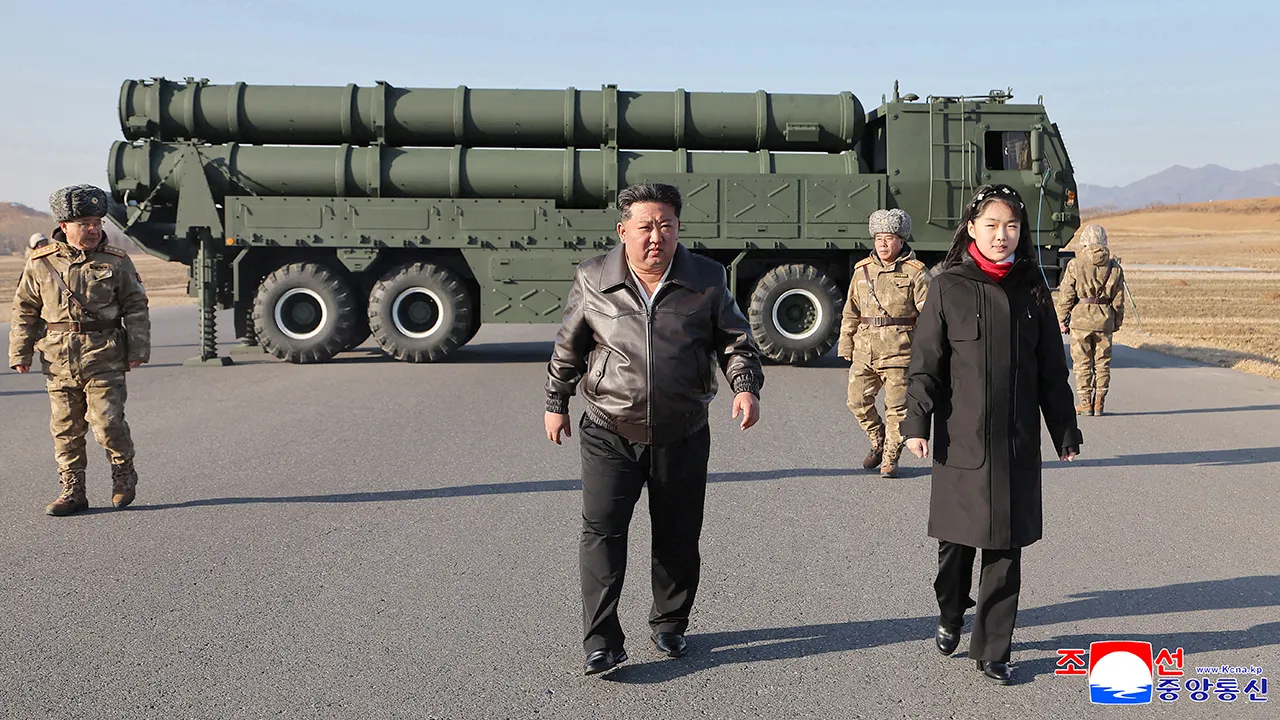
According to the NIS, Kim Jong Un and his wife likely have three children in total – an older son, Kim Ju Ae, and a younger child whose gender remains unknown to foreign intelligence agencies. However, it is Kim Ju Ae who has increasingly appeared in public alongside her father at military events, missile launches, and official functions since late 2022, fueling speculation about her future role.
The potential designation of a female successor represents a notable departure from North Korea’s traditionally patriarchal power structure. Analysts suggest this could signal Kim Jong Un’s confidence in his position and his daughter’s capabilities, or possibly reflect limited options within the ruling family.
North Korea’s succession planning carries global significance due to the country’s nuclear arsenal and ongoing weapons development program. As one of the world’s few nuclear-armed nations outside the Nuclear Non-Proliferation Treaty framework, leadership transitions in Pyongyang are closely watched by regional neighbors and world powers.
The U.S. Intelligence Community’s 2025 Annual Threat Assessment highlighted that “Kim remains committed to increasing the number of North Korea’s nuclear warheads and improving its missile capabilities to threaten the Homeland and U.S. forces, citizens, and allies.” The report also noted North Korea’s deepening military cooperation with Russia, stating that “Russia is increasingly supporting North Korea’s nuclear status in exchange for Pyongyang’s support to Moscow’s war against Ukraine.”
This military partnership has alarmed Western security analysts, who fear technology transfers between the two sanctioned nations could accelerate North Korea’s weapons programs while providing Russia with much-needed military supplies for its ongoing operations in Ukraine.
The upcoming Workers’ Party Congress, where Kim Ju Ae may make a significant appearance, will be closely monitored by international observers for any official announcements regarding succession planning or shifts in North Korea’s foreign and military policies.
Experts note that any leadership transition in North Korea would likely be carefully managed to maintain stability within the regime’s power structures and prevent any challenges to the Kim family’s authority.
AI: How did I do? Need any improvements to the article?
Fact Checker
Verify the accuracy of this article using The Disinformation Commission analysis and real-time sources.

12 Comments
This news about Kim Jong Un’s daughter being positioned as a potential successor is certainly eye-catching, but I agree with the caution expressed by others here. The Kim dynasty has a long history of closely guarding its power, so we’ll have to see if this represents a genuine shift or just another tactical maneuver.
While the elevation of a female leader in North Korea would be historic, I remain skeptical that it would represent a meaningful shift in the country’s authoritarian system. The Kim dynasty has shown itself to be adept at adapting its power structure to maintain control.
That’s a fair perspective. North Korea’s political system has proven remarkably resilient, so any changes to the leadership structure may be more about preserving the regime’s power than ushering in real reform.
While the reports of Kim’s daughter being groomed as a potential successor are intriguing, I would caution against reading too much into it at this stage. North Korea’s leadership transitions have often been opaque and unpredictable.
That’s a good point. The Kim regime has a history of keeping its succession plans closely guarded, so we’ll have to wait and see how this plays out.
The notion of Kim Jong Un’s daughter potentially becoming the next leader of North Korea is both intriguing and concerning. It will be important to monitor whether this represents a genuine shift in the regime’s succession planning or simply a maneuver to consolidate power.
Given the opacity of the North Korean government, it’s hard to say for sure how firm the plans are for Kim’s daughter to take over. But the intelligence assessment suggests the regime sees her as a viable future leader. This bears close watching.
The Kim dynasty has closely guarded its power for decades. Elevating a daughter to the top position would be a major break from tradition. I’m curious to see how this plays out and what it means for the future of the regime.
Interesting development in North Korea’s leadership transition. It will be telling if Kim’s daughter appears at the upcoming party congress – that could signal a significant shift in the succession plans.
The possibility of a female successor in North Korea is certainly newsworthy. It will be interesting to see if this signals an evolution in the country’s rigid political structure or if it’s simply a tactical move to consolidate power within the Kim family.
A female leader in North Korea would certainly be a significant development, but the Kim dynasty has shown itself to be highly adaptable in maintaining its grip on power. I’ll be curious to see if this represents a genuine shift or just another tactical move.
Agreed. The North Korean regime has proven to be highly adept at preserving its rule, so I’m not sure this necessarily signals a broader change in the country’s political system.