


Listen to the article
Former Bangladeshi Prime Minister Khaleda Zia Dies at 80
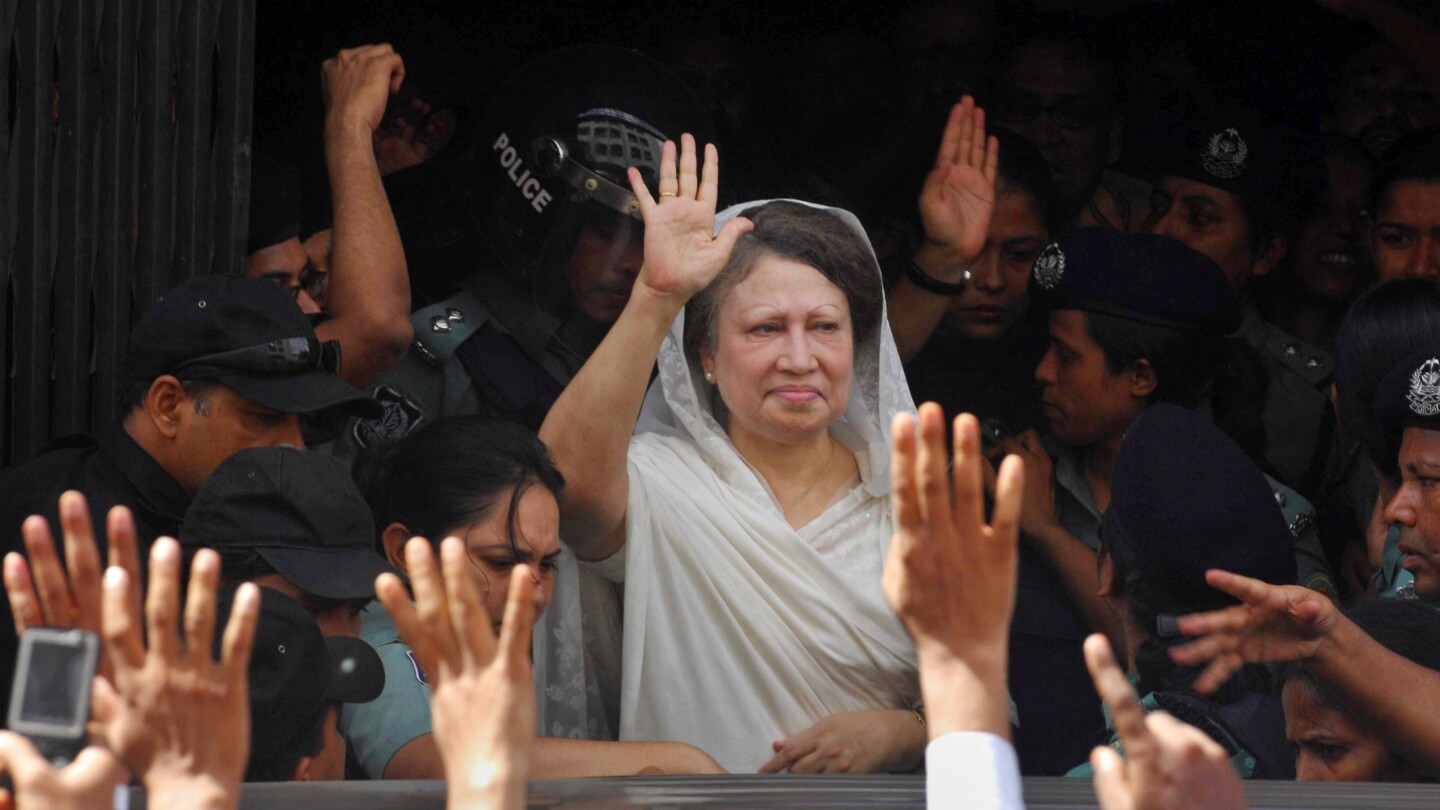
Khaleda Zia, Bangladesh’s first female prime minister whose fierce rivalry with Sheikh Hasina shaped the country’s political landscape for decades, died Tuesday at age 80, her Bangladesh Nationalist Party (BNP) announced.
The interim government declared three days of mourning and a national holiday on Wednesday when funeral prayers will be held in front of Bangladesh’s Parliament building in Dhaka.
Interim leader Muhammad Yunus praised Zia’s contributions in a statement: “Her role in the struggle to establish democracy, a multi-party political culture, and the rights of the people in Bangladesh will always be remembered forever.”
Indian Prime Minister Narendra Modi offered condolences, noting that “as the first woman Prime Minister of Bangladesh, her important contributions toward the development of Bangladesh, as well as India-Bangladesh relations, will always be remembered.”
Even Sajeeb Wazed, son of Zia’s greatest political rival Sheikh Hasina, acknowledged her death “will leave a deep impact on the country’s democratic transition.”
Hasina herself, currently in exile in India following her ousting last August, called Zia’s death “an irreparable loss” for Bangladesh politics and recognized her contributions to establishing democracy.
A Political Pioneer in Bangladesh’s Turbulent History
Zia’s political career began in the shadow of tragedy after her husband, President Ziaur Rahman, was assassinated in a 1981 military coup. He had previously taken power as a military chief in 1977 and established the Bangladesh Nationalist Party (BNP).
She emerged as a powerful political force in her own right, playing a crucial role in Bangladesh’s democratic transition. Her uncompromising stance against military rule helped build a mass movement that ousted dictator H.M. Ershad in 1990.
In 1991, Zia made history as Bangladesh’s first female prime minister, a remarkable achievement in the Muslim-majority nation. Her tenure was marked by pro-investment, open market policies that maintained the confidence of the business community.
She returned to power in 2001, forming a government with the Islamist Jamaat-e-Islami party. Zia was known for her pro-Pakistan stance and delivered anti-Indian rhetoric in political speeches. India alleged that insurgents were allowed to use Bangladesh’s soil to destabilize India’s northeastern states during her 2001-2006 term.
A Defining Rivalry with Sheikh Hasina
For three decades, Bangladesh’s political landscape was dominated by the intense rivalry between Zia and Sheikh Hasina, daughter of independence leader Sheikh Mujibur Rahman.
Their bitter animosity reached a flashpoint in 2004 when Hasina blamed Zia’s government and her son Tarique Rahman for grenade attacks in Dhaka that killed 24 Awami League party members. Hasina narrowly escaped what she characterized as an assassination attempt.
After Hasina came to power in 2008, Zia faced mounting legal troubles. She was sentenced to 17 years in prison in two corruption cases that her supporters claimed were politically motivated. The BNP boycotted elections in 2014 and 2024, enabling Hasina to maintain power until her overthrow last year.
Health Struggles and Final Years
After her 2018 imprisonment, Zia’s health deteriorated significantly. In 2020, she was released from jail due to illness and moved to a rented home, regularly visiting a private hospital. Her family made at least 18 requests for her to receive medical treatment abroad, all rejected by Hasina’s administration.
Only after Hasina was ousted in August 2024 did the Yunus-led interim government finally permit Zia to travel for medical care. She went to London in January 2025 before returning to Bangladesh in May.
In her final months, Zia was largely absent from politics, though she retained her position as BNP chairperson. Her son Tarique Rahman has served as the party’s acting chair since 2018. She was last seen in public on November 21 at a Bangladesh military function in Dhaka, appearing frail in a wheelchair.
Zia is survived by Rahman. Her younger son, Arafat, died in 2015.
The Supreme Court had acquitted Zia in her final corruption case in January 2025, which would have allowed her to run in February’s general election had her health permitted.
As Bangladesh continues its democratic transition following decades of political turbulence, Zia’s death marks the end of an era for a nation still striving for stability after years of authoritarian rule.
Fact Checker
Verify the accuracy of this article using The Disinformation Commission analysis and real-time sources.

7 Comments
Khaleda Zia was a pioneering female leader who shaped Bangladeshi politics for decades. Even her political rivals acknowledged her important contributions to the country’s democratic development. Her passing will certainly leave a lasting impact on Bangladesh’s political landscape.
As the first female PM of Bangladesh, Zia was a trailblazer. Her story is a reminder that women can achieve the highest levels of political power, even in traditionally patriarchal societies. Her passing is a significant moment in Bangladeshi history.
The outpouring of condolences from Indian and Bangladeshi leaders, even Zia’s political rivals, speaks to her enduring influence. Her role in shaping Bangladesh’s democratic institutions will be an important part of her legacy.
It’s interesting to see how Zia’s relationships with other prominent figures like Sheikh Hasina evolved over time. Their rivalry highlighted the complexities of Bangladeshi politics, but also the potential for statesmanship and compromise.
You raise a good point. Political rivalries can often overshadow the shared interests and values that leaders should uphold. Zia’s legacy will likely be assessed more holistically in the years to come.
Zia’s time in power was marked by both progress and controversy. It will be important for historians to examine her full record objectively, evaluating both her accomplishments and the criticisms she faced. Her life and career deserve a balanced assessment.
You make a fair point. Political legacies are often complex, with both positive and negative aspects. A nuanced understanding of Zia’s time in office will be essential as Bangladesh reflects on this chapter of its history.