


Listen to the article
Jury selection begins Monday in the federal trial of five men accused of orchestrating the 2021 assassination of Haitian President Jovenel Moïse, a case that has shed light on alleged South Florida connections to the high-profile killing.
Arcangel Pretel Ortiz, Antonio Intriago, Walter Veintemilla, Christian Sanon and James Solages face potential life sentences if convicted of conspiracy to kidnap or kill Haiti’s leader. All five defendants have pleaded not guilty to the charges.
The trial, originally scheduled for last year, was postponed by U.S. District Judge Jacqueline Becerra in Miami due to the complex nature of the case and the substantial volume of evidence that needed to be processed.
Five other individuals have already pleaded guilty to their roles in the conspiracy and are currently serving life sentences. A sixth person, who prosecutors believe was unaware of the assassination plot, received a nine-year prison term after pleading guilty to providing body armor to the conspirators.
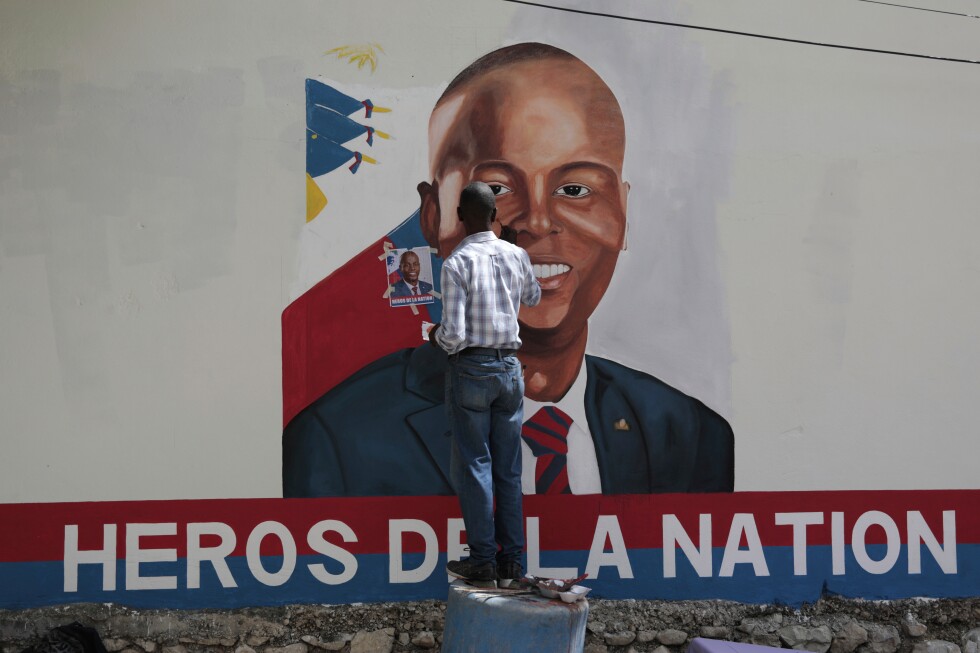
Moïse was killed on July 7, 2021, when approximately two dozen foreign mercenaries, primarily from Colombia, stormed his residence near Port-au-Prince. During the attack, the president’s wife, Martine Moïse, was seriously wounded and required emergency medical evacuation to the United States for treatment.
Court documents reveal that South Florida served as the hub for planning and financing the plot to remove Moïse from power and install a leader who would favor the conspirators’ interests. The case highlights the troubling intersection of U.S.-based private security firms, financial interests, and political instability in Haiti.
Two of the defendants, Ortiz and Intriago, operated Counter Terrorist Unit Federal Academy and Counter Terrorist Unit Security (collectively known as CTU), while Veintemilla headed Worldwide Capital Lending Group. Both companies were based in South Florida and allegedly instrumental in the conspiracy.
Sanon, who holds dual Haitian-American citizenship, was initially positioned as the preferred replacement for Moïse, according to investigators. Solages reportedly acted as CTU’s representative in Haiti, coordinating between Sanon and other co-conspirators.
Prosecutors allege that in April 2021, the conspirators met in South Florida and formulated a plan wherein Sanon, once installed in power, would award lucrative infrastructure, security, and military equipment contracts to CTU. Worldwide Capital allegedly agreed to finance the operation, providing a $175,000 credit line to CTU and transferring funds to co-conspirators in Haiti for ammunition purchases.
The plot initially involved recruiting approximately 20 Colombian nationals with military backgrounds, ostensibly to provide security for Sanon. However, by June 2021, the conspirators reportedly realized Sanon lacked both the constitutional qualifications and popular support to assume the presidency. They subsequently shifted their backing to Wendelle Coq Thélot, a former Haitian Superior Court judge, who remained a fugitive until her death in January 2025.
The U.S. prosecution represents only part of a broader legal response to the assassination. In Haiti, another 20 individuals—including 17 Colombian soldiers and three Haitian officials—face charges related to the killing. However, the Haitian investigation has stalled amid rampant gang violence, death threats against officials, and the country’s deteriorating judicial system.
The assassination exacerbated Haiti’s already fragile political situation, contributing to a power vacuum that has been exploited by armed gangs who now control significant portions of the country. The ongoing instability has hampered efforts to fully investigate Moïse’s killing within Haiti, making the U.S. prosecution a crucial avenue for accountability.
As the trial begins in Miami, it promises to reveal further details about the international conspiracy that led to one of the most significant political assassinations in recent Caribbean history, while potentially exposing deeper connections between U.S.-based actors and Haitian political instability.
Fact Checker
Verify the accuracy of this article using The Disinformation Commission analysis and real-time sources.

12 Comments
The assassination of a head of state is always a grave matter. I’m curious to learn more about the alleged roles of the 5 defendants and how they may have been connected to the broader conspiracy. Thorough investigations and a fair judicial process are essential to ensure justice is served.
This is a complex and troubling case with major geopolitical implications. The alleged South Florida connections are particularly concerning, given the region’s history of involvement in Latin American affairs. I’ll be following this trial closely to see what new information comes to light.
Agreed. Unraveling all the potential ties and motivations behind this assassination will be crucial, not just for Haiti but for regional stability as a whole. A transparent and impartial process is vital.
This is a complex and high-profile case with alleged connections to South Florida. It will be interesting to see what emerges during the jury selection and trial process. I’m curious to learn more about the alleged roles of the 5 defendants and the broader conspiracy behind the assassination of the Haitian president.
Yes, the details around this case seem murky and there are likely many layers that will need to be unraveled. Prosecutors will have their work cut out for them to build a convincing case.
This case highlights the volatility and complex geopolitics in Haiti. The alleged South Florida connections are intriguing, as that region has long been associated with illicit activities related to Latin America. I’ll be following this trial closely to see what new information emerges.
Yes, the potential South Florida links are concerning. That area has a history of involvement in shadowy operations targeting Latin American leaders and governments. Unraveling all the connections will be crucial.
This is a very high-stakes case with major implications for Haiti and regional geopolitics. The alleged involvement of foreign mercenaries and possible South Florida connections add an additional layer of complexity. I’ll be interested to see how the prosecutors build their case and what new details emerge.
Absolutely. With so many moving parts, this trial has the potential to shed light on some very murky and potentially destabilizing activities. The outcome could have far-reaching consequences.
The assassination of a sitting president is a very serious crime. I hope justice is served, regardless of where the connections may lead. It’s crucial that all the facts come to light through a fair and thorough judicial process.
Agreed. Given the high-profile nature of this case, transparency and accountability will be essential for restoring stability and trust in Haiti.
The assassination of a sitting president is a shocking and destabilizing event. I hope the jury selection and trial process can provide some clarity on the motives and planning behind this crime. It’s important that the truth comes out, no matter where the evidence leads.