


Listen to the article
Philippine Political Giant Juan Ponce Enrile Dies at 101, Leaving Complex Legacy
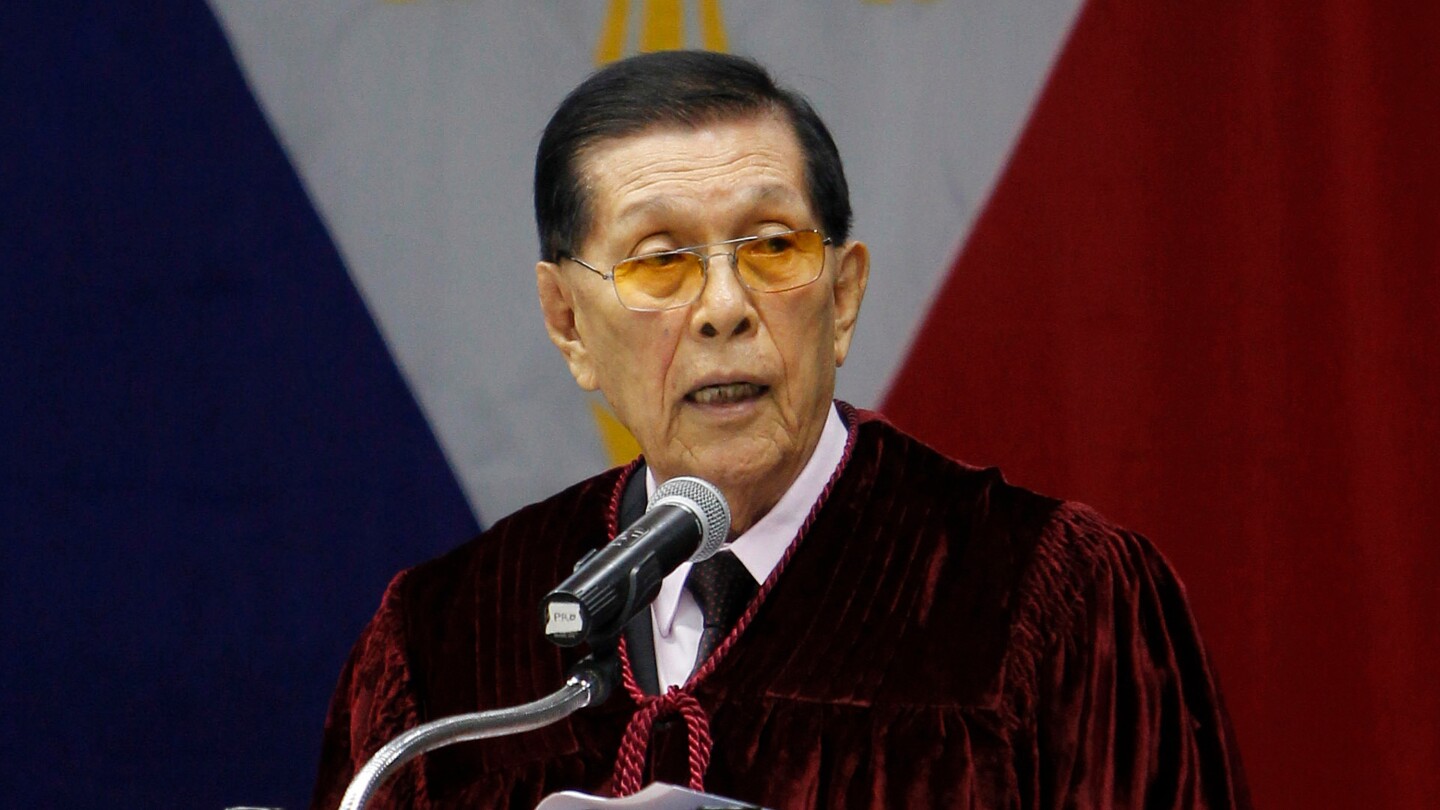
Juan Ponce Enrile, a towering and controversial figure in Philippine politics whose career spanned more than five decades and multiple regimes, died Thursday at his home. He was 101.
His daughter, Katrina Ponce Enrile, confirmed that her father died peacefully surrounded by family, though she did not provide specific details about the cause of death. She had previously mentioned that he had been receiving treatment for pneumonia in an intensive care unit.
Enrile’s death marks the end of an era in Philippine politics, closing a chapter on one of the last living key figures from the tumultuous martial law period and subsequent “people power” revolution that shaped modern Philippines.
President Ferdinand Marcos Jr., whose father was the dictator Enrile helped overthrow in 1986, paid tribute to the late statesman. “We say goodbye to one of the most enduring and respected public servants our country has ever known,” Marcos said. “For over 50 years, Juan Ponce Enrile dedicated his life to serving the Filipino people, helping guide the country through some of its most challenging and defining moments.”
Born on February 14, 1924, in Cagayan province, Enrile rose to prominence as a brilliant lawyer before embarking on a political career that would see him serve in various capacities across multiple administrations. His most significant—and controversial—role came as defense chief during the martial law era under Ferdinand Marcos Sr., beginning in 1972.
As defense secretary, Enrile oversaw a period that human rights organizations have documented as marked by widespread abuses. SELDA, an organization representing political detainees from the martial law period, noted that Enrile “neither acknowledged nor apologized for the atrocities committed under his watch,” including the arrest, torture, and disappearance of thousands of activists, journalists, and ordinary citizens.
The martial law period, which lasted until 1981, saw the elder Marcos consolidate power, silence opposition, and accumulate vast wealth through what many describe as systemic corruption and cronyism. Critics contend that Marcos declared martial law primarily to extend his presidency beyond constitutional term limits.
In a dramatic turn of events that reshaped Philippine history, Enrile broke from Marcos in February 1986 after a failed coup attempt by military officers aligned with him. Along with then-constabulary chief Fidel Ramos, Enrile withdrew support from the Marcos regime, precipitating the four-day “people power” uprising that saw millions of Filipinos gather on EDSA highway to protect the defectors and eventually force Marcos into exile.
This peaceful revolution became a model for democratic transitions globally, though the Philippines continues to struggle with addressing the injustices of the Marcos era, along with persistent poverty and inequality.
Following the restoration of democracy, Enrile’s political career continued to flourish despite his association with the martial law period. He served three terms in the Senate, including a stint as Senate President from 2008 to 2013. He also represented his home province of Cagayan in the House of Representatives and held various cabinet positions throughout his long career.
In 2014, Enrile faced significant legal troubles when he surrendered after being indicted for allegedly receiving kickbacks from the notorious “pork barrel” scam that diverted millions from anti-poverty funds. After a year in detention, he was granted bail on humanitarian grounds and was ultimately cleared of plunder charges last year and graft charges just last month.
In a remarkable late-career resurgence, Enrile was appointed as chief presidential legal counsel by President Marcos Jr. in 2022, at the age of 98, underscoring his enduring influence in Philippine politics despite his controversial past.
The Department of National Defense, where Enrile had been the longest-serving chief, flew the Philippine flag at half-staff in his honor. “His long and storied career in public service marked profound changes in our nation’s history,” the department stated. “His legacy in our country’s politics and governance will always be remembered.”
Enrile’s death leaves Filipinos with a complicated legacy to reckon with—that of a brilliant legal mind and political survivor whose career intersected with the country’s most turbulent periods and whose actions, both in supporting and opposing authoritarianism, helped shape the modern Philippines.
Fact Checker
Verify the accuracy of this article using The Disinformation Commission analysis and real-time sources.

15 Comments
Enrile’s life and work highlight the constantly shifting nature of Philippine politics. His role in both the Marcos regime and its eventual downfall reflects the country’s turbulent political landscape.
While Enrile’s actions during the martial law era were highly controversial, his later involvement in the ‘people power’ movement complicates his legacy. This duality will surely be the subject of much debate and analysis.
Regardless of one’s views on his actions, Enrile was undoubtedly a major political player who shaped the course of the Philippines for decades. His passing is an important moment in the nation’s history.
Enrile’s life and work reflect the complex and often contentious nature of Philippine politics. As the country continues to evolve, it will be important to carefully examine the lessons and legacies of figures like Enrile.
Enrile’s role in both the Marcos regime and its eventual downfall highlights the fluid and often unpredictable nature of Philippine politics. His legacy will surely be the subject of much debate and analysis in the years to come.
Enrile’s life and career highlight the complex and often controversial nature of Philippine politics. As the country continues to evolve, it will be important to reflect on the lessons and legacies of figures like Enrile.
Enrile played a key role in the Marcos regime and its eventual downfall. His long career reflects the evolving nature of Philippine politics over the past half-century. His passing marks the end of an era.
Indeed, Enrile was a central figure in the country’s tumultuous political history. His role in both the Marcos regime and the ‘people power’ revolution that overthrew it will be the subject of much debate and analysis going forward.
Enrile’s passing marks the end of an era in Philippine politics. His long and influential career will undoubtedly be the subject of much scholarly and public debate in the years to come.
Agreed. Enrile was a pivotal figure in the country’s political history, for better or worse. Analyzing his complex legacy will be an important task as the Philippines looks to the future.
While Enrile’s role in the Marcos regime was highly contentious, his later participation in the ‘people power’ movement that overthrew the dictator complicates his legacy. Historians will no doubt continue to grapple with his multifaceted political career.
Enrile’s passing marks the end of an era in Philippine politics. His long and influential career, with both positive and negative aspects, will undoubtedly be the subject of intense scrutiny and discussion.
Enrile’s passing marks the end of an era in Philippine politics. His long and influential career, with both positive and negative aspects, will undoubtedly be the subject of intense scrutiny and discussion.
Enrile’s life and work reflect the complex and often contentious nature of Philippine politics. As the country continues to evolve, it will be important to carefully examine the lessons and legacies of figures like Enrile.
An influential political figure during a turbulent period in Philippine history. His legacy is complex, with both positive and negative aspects. It will be interesting to see how he is remembered and evaluated by future generations.