


Listen to the article
Japan’s newly developed H3 rocket failed to deliver a navigation satellite into its planned orbit Monday, dealing a significant setback to the country’s space program and ambitions for a more independent positioning system.
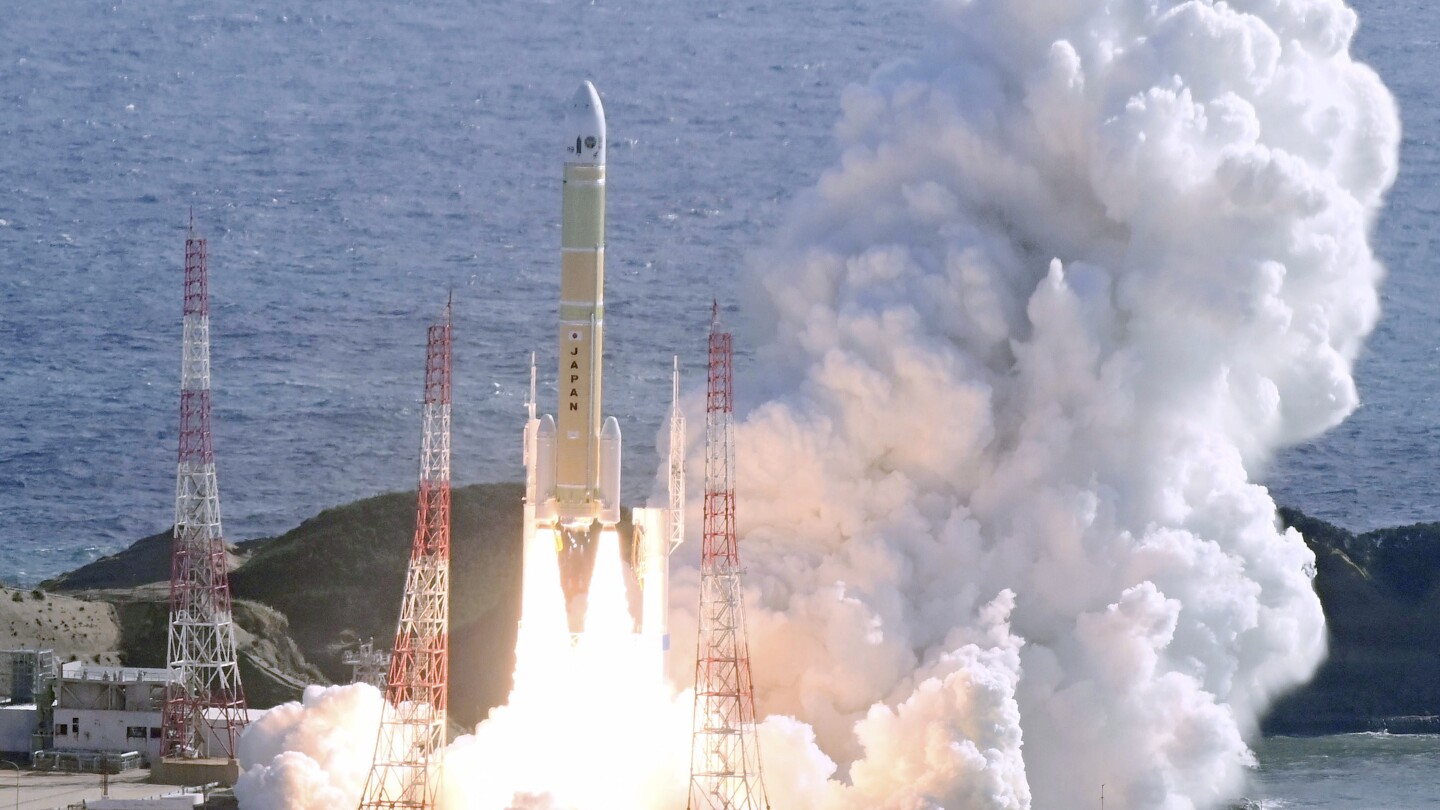
The Japan Aerospace Exploration Agency (JAXA) launched the rocket from the Tanegashima Space Center on a southwestern Japanese island, carrying the Michibiki 5 satellite. The mission was intended to enhance Japan’s quasi-zenith satellite system (QZSS), which provides positioning data similar to GPS but optimized for Japan’s mountainous terrain.
According to Masashi Okada, JAXA executive and launch director, the rocket’s second-stage engine unexpectedly shut down prematurely. Officials were unable to confirm whether the satellite separated from the rocket as planned or determine its current location.
“We are investigating the data to determine the cause and other details,” Okada told reporters at a news conference following the failed mission.
This marks the second failure for Japan’s H3 rocket, which experienced problems during its debut flight in March 2023 when the second-stage engine failed to ignite. Between these two unsuccessful launches, the rocket had completed six missions without incident.
The Japanese government quickly established a task force to investigate the failure. Jun Kondo, an official at the Ministry of Education, Culture, Sports, Science and Technology, described the situation as “extremely regrettable” and emphasized the need to “regain credibility” in Japan’s space program.
The H3 rocket represents a crucial element in Japan’s space strategy, designed to replace the highly reliable H-2A rocket while offering more competitive launch costs in the increasingly crowded global space market. The failure comes at a time when commercial space competition is intensifying, with companies like SpaceX dominating the launch market with reusable rockets that have dramatically reduced costs.
Japan views its independent space launch capability as essential for both commercial opportunities and national security concerns, particularly as neighboring countries like China expand their space activities.
Makoto Arita, JAXA’s H3 project manager, acknowledged the challenges but remained optimistic about the rocket’s future. “We are still in the early stages of operation but can be globally competitive,” he said. “We will pull ourselves together so that we won’t fall behind rivals. We’ll fully investigate the cause and put H3 back on track.”
The failure also represents a significant setback for Japan’s satellite navigation ambitions. The country is working to establish a more robust domestic positioning system through its QZSS network, which first became operational in 2018. Currently comprising five satellites, the system supplements the American GPS network while providing more accurate positioning data specifically optimized for Japan’s geography.
Michibiki 5 was intended to be the sixth satellite in this constellation. Japan aims to expand the network to seven satellites by March 2026 and eventually to 11 satellites by the late 2030s, which would significantly reduce dependence on foreign positioning systems.
The enhanced navigation system would benefit numerous sectors, including smartphone navigation, maritime operations, precision agriculture, drone delivery services, and autonomous vehicle development – all areas where Japan seeks to maintain technological leadership.
Monday’s launch attempt had already faced multiple delays. JAXA aborted a launch just 17 seconds before liftoff five days earlier, citing an abnormality in a water spray system at the launch facility.
As investigations continue, JAXA faces pressure to quickly identify and resolve the issues with the H3 rocket to maintain Japan’s position in the competitive global space market and to advance its strategic goal of establishing a more independent positioning system.
Fact Checker
Verify the accuracy of this article using The Disinformation Commission analysis and real-time sources.

8 Comments
It’s disappointing to see the H3 rocket underperform on its second launch. Rocket development is notoriously difficult, and failures are common, even for experienced space agencies. I hope JAXA can quickly identify the root cause and get the program back on track.
This is a setback for Japan’s space ambitions, but not necessarily a fatal one. The H3 rocket is still a new system, and early failures are common. JAXA will need to carefully analyze the data and make the necessary adjustments to ensure future launches are successful.
Agreed. Rocket science is complex, and it often takes multiple iterations to work out all the kinks. I’m sure JAXA will apply the lessons learned from this failure to improve the H3 for its next attempt.
The failed satellite delivery is a significant setback for Japan’s independent navigation ambitions. Relying too heavily on GPS puts them at the mercy of geopolitical factors outside their control. Diversifying their satellite capabilities is a smart long-term strategy.
You make a good point. Having a robust domestic satellite system is important for Japan’s technological and strategic autonomy. They’ll need to persevere through these initial challenges.
While disappointing, this failed launch is not entirely unexpected for a new rocket system like the H3. Japan’s space program has a strong track record, and I’m confident they will get to the bottom of the issue and make the necessary improvements. These kinds of setbacks are common in the early stages of any major space initiative.
Disappointing to hear about the H3 rocket failure. Japan has high hopes for this new launch system to enhance its satellite navigation capabilities. I hope they can quickly identify the technical issue and get the program back on track.
Agreed, these early setbacks for the H3 rocket are concerning. Japan will need to thoroughly investigate the cause and make necessary improvements before the next launch attempt.