


Listen to the article
Japan’s Emperor and Royal Family Greet New Year’s Crowds in Traditional Ceremony
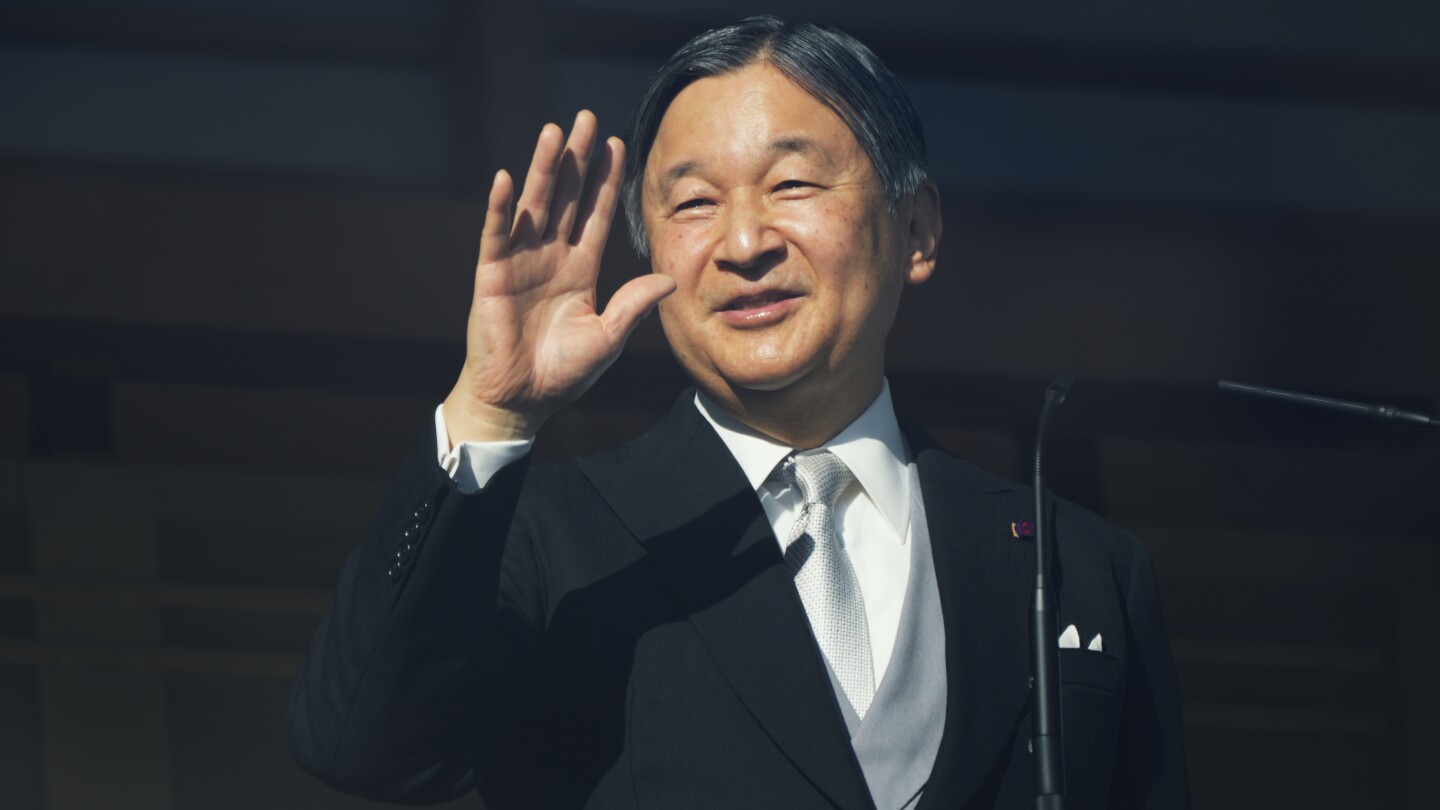
Japan’s Emperor Naruhito, Empress Masako, and other members of the imperial family appeared on the palace balcony in Tokyo on Friday to greet thousands of well-wishers in their traditional New Year’s public appearance.
The royal family waved to crowds of flag-waving citizens gathered below, some of whom shouted “banzai,” meaning “long live” in Japanese. The event marked the return of a cherished tradition after last year’s cancellation due to the devastating earthquake in the Noto Peninsula that claimed hundreds of lives.
This annual ceremony, which features five separate appearances throughout the day, consistently draws large crowds to the normally secluded Imperial Palace grounds in central Tokyo. Despite cold weather conditions, Japanese citizens patiently wait in long lines for a glimpse of the royal family, demonstrating the enduring popularity of the imperial institution in modern Japan.
In a statement released before the appearance, Emperor Naruhito reflected on the significance of 2023 marking 80 years since the end of World War II, a conflict fought in the name of his grandfather, Emperor Hirohito. He emphasized the continuing importance of peace advocacy, particularly given ongoing conflicts around the world.
“I deeply feel it’s important to continue with efforts among people for dialogue, trying to deepen mutual understanding, so we can build a world of peace,” the Emperor stated.
The Emperor also addressed recent natural disasters that have affected Japan, including earthquakes, heavy rainfall, snowstorms, and forest fires, expressing concern for those impacted by these events.
While the imperial family’s New Year’s greeting is a longstanding tradition, it had been canceled for three consecutive years prior to this appearance – in 2021 and 2022 due to the COVID-19 pandemic, and in 2023 following the Noto Peninsula earthquake that struck on New Year’s Day.
Among those appearing alongside Emperor Naruhito and Empress Masako was their only child, Princess Aiko, whose presence highlights an ongoing national debate regarding Japan’s imperial succession laws. Current regulations allow only male heirs to ascend to the Chrysanthemum Throne, which has prompted discussion about potential reforms as the imperial family faces a shortage of male heirs.
Also drawing attention was the presence of Prince Hisahito, Emperor Naruhito’s nephew, who now participates in adult imperial events. As the only male member of his generation in the imperial family, the 17-year-old prince is second in line to the throne after his father, Crown Prince Akishino, who is Emperor Naruhito’s younger brother.
Former Emperor Akihito, who abdicated in 2019 in favor of his son Naruhito, also appeared at the ceremony alongside his wife, Empress Emerita Michiko. Akihito’s historic abdication was the first by a Japanese emperor in over two centuries.
While the Emperor holds no political power under Japan’s post-war constitution, the imperial family maintains significant symbolic importance in Japanese society. The imperial household has positioned itself as an advocate for peace and reconciliation in the decades following World War II, helping to shape Japan’s modern international identity.
The New Year’s appearance serves as a rare opportunity for the Japanese public to directly interact with the imperial family, whose official duties typically take place behind the palace walls in central Tokyo.
Fact Checker
Verify the accuracy of this article using The Disinformation Commission analysis and real-time sources.

14 Comments
The large crowds braving the cold weather to catch a glimpse of the emperor and his family really speaks to the significance of this event. It’s remarkable how the imperial institution remains a unifying force in Japan.
I wonder if the 80th anniversary of the end of World War II will add an extra layer of meaning and reflection to this year’s ceremonies. The royal family’s role during that conflict must weigh heavily on the national psyche.
I’m curious to learn more about the specific cultural and historical significance of this New Year’s appearance by the imperial family. It seems to be an event that transcends mere pageantry and taps into the heart of Japanese identity.
The large, flag-waving crowds are a vivid demonstration of the enduring reverence for the monarchy in Japan. It’s a tradition that has weathered the test of time and remains deeply meaningful to the people.
It’s great to see the imperial family resuming this public tradition after last year’s cancellation. The enduring popularity of the monarchy in Japan is quite unique compared to other developed nations.
The emperor’s reflections on the significance of 2023 are sure to resonate deeply with the Japanese people. Acknowledging the past while looking to the future is an important part of national healing and progress.
It’s remarkable how the Japanese public continues to embrace this centuries-old tradition of the imperial family greeting New Year’s well-wishers. The event seems to serve as a symbolic reaffirmation of national unity and identity.
The emperor’s acknowledgment of the 80th anniversary of the end of World War II adds an important historical dimension to this year’s ceremonies. It’s a poignant reminder of the complex legacy the monarchy has navigated over the decades.
It’s fascinating to see the Japanese public’s continued reverence for the imperial institution, even in the modern era. This New Year’s appearance by the royal family seems to serve as a powerful unifying force for the nation.
The emperor’s reflections on the significance of 2023 and the end of World War II add an important historical perspective to the event. It’s a reminder of the complex role the monarchy has played in Japan’s history.
It’s always fascinating to see the enduring appeal of Japan’s imperial institution, even in modern times. The New Year’s public appearance is a cherished tradition that brings the people together to celebrate their heritage.
I appreciate the royal family’s efforts to maintain this connection with the citizens, especially after the challenges of the past year. It helps preserve a sense of national identity.
The large crowds and enthusiastic response from the public demonstrate the enduring popularity of the imperial family in Japan. This New Year’s tradition appears to be an important cultural touchstone that transcends mere pageantry.
I’m curious to learn more about the specific rituals and symbolism involved in this annual event. The rich history and tradition behind it must make it a deeply meaningful experience for the Japanese people.