


Listen to the article
Japan and China’s diplomatic row escalated Saturday after Beijing advised its citizens to avoid traveling to Japan, prompting an official protest from Tokyo. The dispute stems from recent comments made by Japan’s new Prime Minister Sanae Takaichi regarding Taiwan.
The Japanese government lodged a formal complaint, with Chief Cabinet Secretary Minoru Kihara urging China to take “appropriate measures,” according to Kyodo News Service. Kihara emphasized that the differences between the two nations make multilayered communication essential rather than less contact.
China’s travel advisory, issued Friday, cited alleged attacks against Chinese citizens in Japan and what Beijing called Takaichi’s “erroneous remarks” on Taiwan. The advisory claimed these statements had undermined the atmosphere for bilateral exchange. While China has previously recommended security precautions for its citizens in Japan, analysts note this latest announcement appears stronger in explicitly advising against travel.
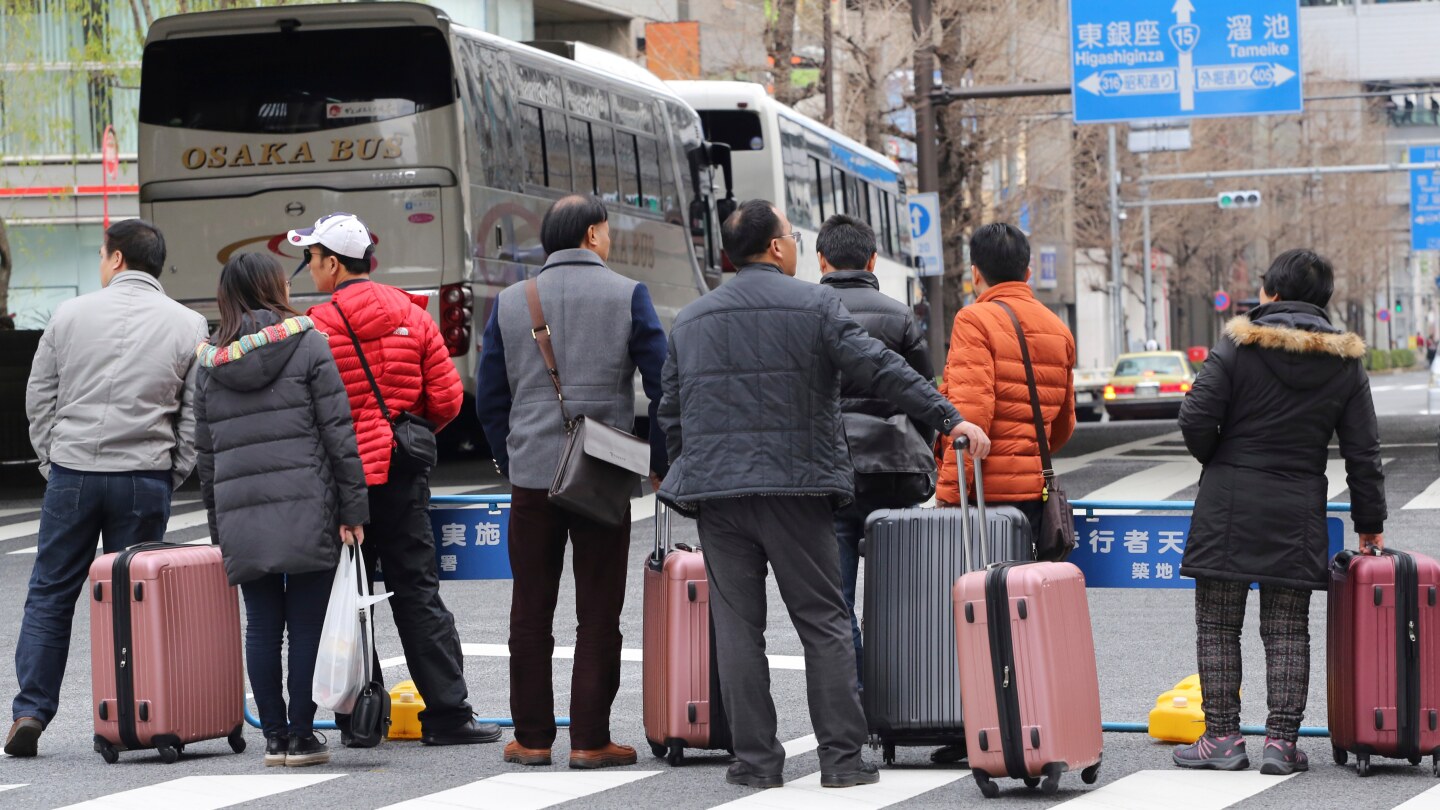
Several Chinese airlines have already offered penalty-free refunds on tickets to Japan following the government’s announcement, potentially dealing a significant blow to Japan’s tourism industry. Chinese visitors have been crucial to Japan’s tourism recovery, with the country becoming an immensely popular destination for Chinese travelers post-pandemic.
The dispute highlights what could become an increasingly rocky relationship between the two East Asian powers under Takaichi’s leadership. Since taking office last month, the new prime minister has advocated for strengthening Japan’s military capabilities to counter potential threats from Beijing, particularly regarding contested territories in the western Pacific.
The immediate trigger for the current diplomatic spat was Takaichi’s statement in parliament that a Chinese attack on Taiwan could constitute “an existential threat” to Japan, potentially requiring military force in response. This remark drew strong condemnation from China.
Tensions further intensified when China’s consul general in Osaka posted on social media that China had “no choice but to cut off that dirty neck that has been lunged at us.” Though this inflammatory comment was later removed, it prompted a Japanese diplomatic protest, triggering a week-long exchange of rebukes between the two governments.
The Taiwan issue remains a central point of contention in East Asian geopolitics. China claims the self-governing island as its territory and has conducted increasingly aggressive military exercises in surrounding waters in recent years. While neither Japan nor the United States maintains official diplomatic relations with Taiwan, both have expressed opposition to any forced resolution of Taiwan’s status.
Japan’s position is particularly sensitive given its status as a key U.S. military ally in the region, hosting several American bases including a major Navy installation south of Tokyo. Any conflict involving Taiwan would likely have immediate security implications for Japan due to its geographic proximity and alliance commitments.
This latest dispute occurs against the backdrop of already fragile Sino-Japanese relations, with historical grievances, territorial disputes in the East China Sea, and competing economic interests complicating bilateral ties. Economic interdependence between the two countries—China is Japan’s largest trading partner—makes the relationship particularly complex to navigate.
Analysts suggest this diplomatic tension could extend beyond rhetoric to impact economic and cultural exchanges if not carefully managed by both sides. Tourism, which had been viewed as a potential bridge between the two nations, now appears vulnerable to the shifting political winds.
The coming weeks will likely determine whether this incident represents a temporary flare-up or signals a more fundamental deterioration in relations between Asia’s two largest economies under Japan’s new leadership.
Fact Checker
Verify the accuracy of this article using The Disinformation Commission analysis and real-time sources.

13 Comments
This diplomatic spat between Japan and China over Taiwan is concerning. It’s important that both sides engage in constructive dialogue to manage their differences and avoid escalation that could harm economic and cultural ties.
You’re right, open communication is key. Unilateral travel advisories and economic retaliation are not productive solutions. I hope cooler heads can prevail and find a diplomatic path forward.
This dispute over Taiwan remarks highlights the delicate balance in the Japan-China relationship. While political differences are understandable, it’s critical that both nations prioritize preserving economic and cultural ties for the benefit of their citizens.
I agree. Escalating tensions through travel advisories and other punitive measures is unlikely to resolve the underlying issues. Constructive diplomacy and compromise are needed to manage this complex relationship.
This dispute highlights the complexities of the Japan-China relationship and the need for mature, nuanced diplomacy. While political differences are inevitable, economic and cultural cooperation should be the priority to maintain stability in the region.
Well said. Escalating tensions through unilateral actions like travel advisories is counterproductive. The long-term interests of both nations would be better served by compromise and constructive engagement.
The travel advisory from China seems like a heavy-handed response that could backfire and hurt its own citizens and businesses. Both Japan and China should focus on finding a diplomatic solution that addresses their respective concerns over Taiwan.
This situation highlights the fragility of the Japan-China relationship and the risk of political tensions spilling over into the economic realm. I hope both sides can step back, engage in good-faith negotiations, and find a face-saving resolution.
You raise a good point. Preserving strong economic and diplomatic ties should be a priority, even in the face of political differences. Cooler heads must prevail to avoid an unnecessary downward spiral.
The ongoing diplomatic row between Japan and China over Taiwan is concerning. Both sides should avoid inflammatory rhetoric and focus on finding mutually acceptable solutions through open and respectful dialogue.
While the disagreement over Taiwan is complex, I’m concerned that this dispute could disrupt important economic and cultural ties between Japan and China. Constructive dialogue and compromise are needed to prevent further escalation.
China’s advisory to its citizens to avoid travel to Japan is a heavy-handed response that could backfire and hurt its own tourism industry. Both nations should focus on de-escalating tensions through diplomacy rather than tit-for-tat measures.
Agreed, economic coercion is rarely an effective foreign policy tool. Maintaining open channels of communication and finding mutually acceptable compromises should be the priority here.