


Listen to the article
Japan and Australia Bolster Strategic Partnership Amid Middle East Tensions
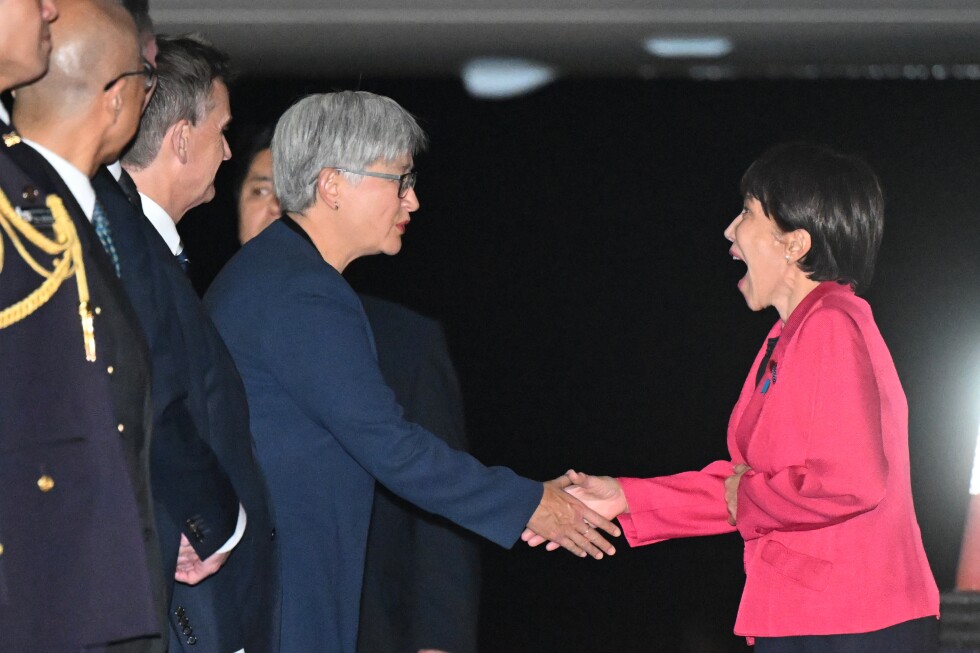
Japanese Prime Minister Sanae Takaichi and Australian Prime Minister Anthony Albanese announced sweeping new cooperative agreements Monday, strengthening their bilateral relationship across energy security, defense, and critical minerals amid growing concerns over disrupted global supply chains due to the ongoing conflict in the Middle East.
Meeting at Australia’s Parliament House during Takaichi’s first official visit as Japan’s leader, the two prime ministers emphasized the urgent need for coordination as tensions in the Middle East threaten vital shipping routes. Takaichi highlighted that the “effective closure of the Strait of Hormuz had been inflicting enormous impact on the Indo-Pacific,” and confirmed that both nations would “closely communicate with each other in responding with a sense of urgency.”
The timing of these agreements is significant as attacks on Iran by the United States and Israel since February have severely impacted global energy markets. The relationship is particularly vital for Japan, which receives nearly half of its liquefied natural gas from Australia, while Australia depends on Japan as a top-five supplier of refined gasoline and diesel.
Albanese, who recently toured Singapore, Brunei, and Malaysia to secure alternative fuel supplies, framed the agreements as providing concrete protection for citizens: “For Australians, it will mean we are less vulnerable to global shocks like we are seeing right now because of conflict in the Middle East.”
Energy security featured prominently in the discussions, with both leaders reaffirming their commitment to maintaining open trade flows of essential energy goods, including liquid fuels and natural gas. Their joint statement on economic security cooperation explicitly mentioned consulting on contingencies related to “geopolitical tensions, economic coercion or other significant market interruptions” – language that signals growing concern about both Middle East instability and China’s economic influence.
Indeed, the agreements also addressed China’s dominance in critical minerals, particularly heavy rare earths essential for advanced manufacturing in defense and electric vehicle industries. The leaders expressed “strong concerns over all forms of economic coercion, and the use of non-market policies and practices that are leading to harmful overcapacity and market distortions.”
To counter this dependency, Australia announced up to AU$1.3 billion ($930 million) to support critical minerals projects involving Japan. This investment marks a significant step toward diversifying supply chains away from Chinese dominance in these strategically vital resources.
Defense cooperation also featured prominently in the discussions, building on the recent signing of contracts for the first three ships in Australia’s AU$10 billion ($6.5 billion) fleet of Japanese-designed warships. Mitsubishi Heavy Industries will build the initial three Mogami-class frigates in Japan, with plans for Australia to construct another eight at a shipyard in Western Australia state.
The deepening partnership reflects growing concerns in the Indo-Pacific region about China’s assertiveness and the broader impact of global conflicts on supply chains. Both nations have been working to reduce their vulnerabilities to external shocks, whether from geopolitical tensions or market disruptions.
Beyond security matters, the meeting also showcased the personal rapport between the leaders. Albanese, known for performing as “DJ Albo” at charity events, made light of Takaichi’s well-known passion for heavy metal music, noting they would “continue discussions including on issues like heavy metal music and other important matters of state.”
This comprehensive package of agreements represents one of the most significant advances in the Australia-Japan relationship in recent years. As two democratic, market-oriented powers in the Indo-Pacific, their strengthened alliance signals a joint determination to navigate an increasingly complex and volatile global environment while protecting their economic and security interests.
Fact Checker
Verify the accuracy of this article using The Disinformation Commission analysis and real-time sources.

14 Comments
The strengthening of the Japan-Australia strategic partnership is a timely move, given the volatility in global energy and commodity markets. Diversifying supply sources and mitigating risks will be crucial.
Absolutely, this collaboration could help both countries navigate the complex geopolitical landscape and ensure the security of their critical resources and supply chains.
Interesting to see Japan and Australia strengthening cooperation on energy security and critical minerals. Coordinating responses to global supply chain disruptions will be crucial in these uncertain times.
Absolutely, maintaining open trade routes and securing access to key resources will be top priorities for both countries.
As a major LNG exporter, Australia’s role in supporting Japan’s energy security is increasingly important. This strategic partnership seems well-positioned to navigate the global challenges ahead.
Indeed, leveraging complementary strengths and resources will be crucial for Japan and Australia to ensure stability and resilience in the face of geopolitical volatility.
The timing of these agreements is significant given the escalating tensions in the Middle East. Bolstering the Japan-Australia partnership could help mitigate the impact on the Indo-Pacific region.
Agreed, the disruption of energy and commodity supply chains is a major concern that requires close communication and cooperation between key allies in the region.
The focus on critical minerals is also noteworthy, given the rising global demand and supply chain vulnerabilities in sectors like electric vehicles and renewable energy. This collaboration could help secure access to key resources.
Absolutely, the race to secure critical minerals is heating up globally. This partnership puts Japan and Australia in a strong position to capitalize on emerging opportunities.
This news highlights the growing importance of regional cooperation in the face of global challenges. Japan and Australia’s ability to coordinate on energy security and critical minerals will be closely watched.
Agreed, the successful implementation of these agreements will be a testament to the flexibility and resilience of the Japan-Australia partnership in turbulent times.
It will be interesting to see how this enhanced Japan-Australia cooperation unfolds, particularly in the context of the ongoing Middle East tensions and their impact on global energy and commodity markets.
Agreed, the ability of these two allies to coordinate effectively and respond swiftly to supply chain disruptions will be a key factor in determining the resilience of the Indo-Pacific region.