


Listen to the article
Analysts Urge Trump to Pressure Lebanon on Disarming Hezbollah as Conflict Escalates
Amid renewed fighting between Israel and Hezbollah, security experts are calling on the Trump administration to increase pressure on Lebanon to fulfill its longstanding commitment to disarm the Iran-backed militant group that continues to draw the country into conflict with Israel.
David Schenker, who served as U.S. Assistant Secretary of State for Near Eastern Affairs during the first Trump administration, emphasized the urgency of the situation. “The U.S. should make clear to Lebanon that it is time for the state to honor its ceasefire commitment to disarm Hezbollah,” he told Fox News Digital, warning that if Beirut “doesn’t pursue disarmament, it will remain a failed state.”
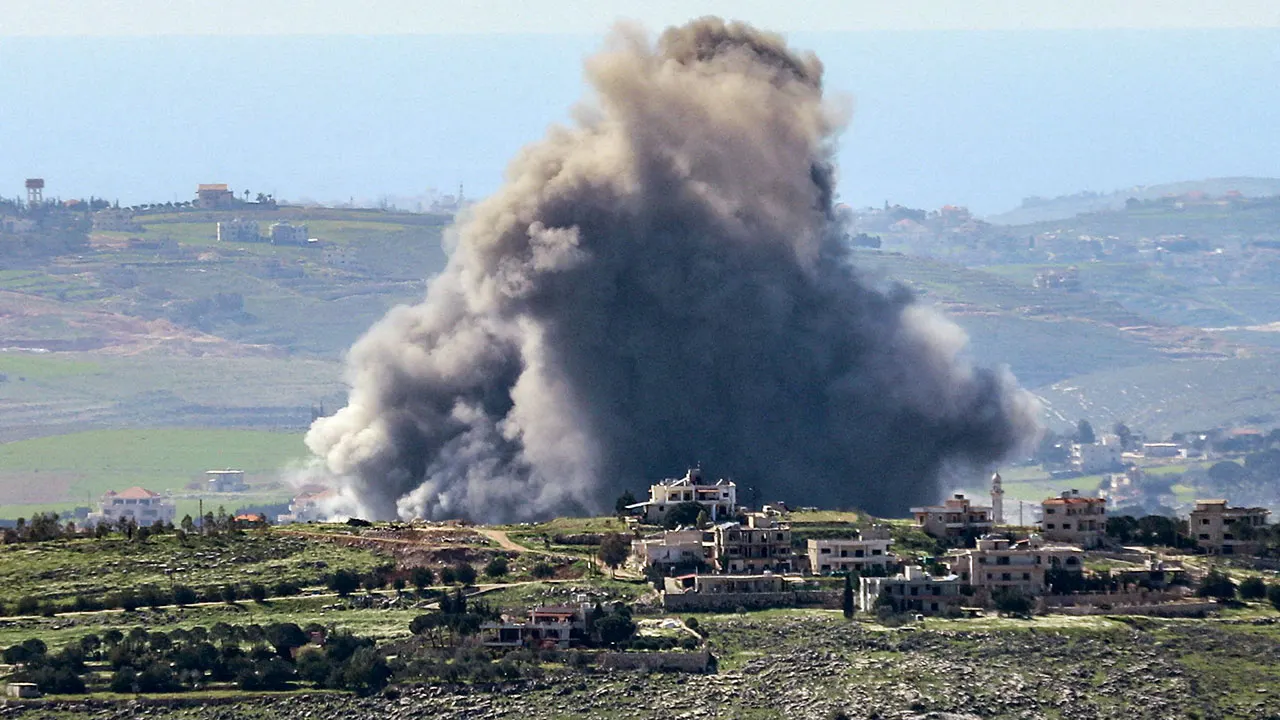
The Israeli Defense Forces (IDF) has intensified its military campaign against Hezbollah, launching multiple strikes on Friday in response to the group’s March 2 rocket and drone attacks on Israel. This marked Hezbollah’s first major assault since a November 2024 ceasefire briefly halted hostilities.
According to an analysis by the Foundation for Defense of Democracies’ Long War Journal, Israel has conducted over 200 strikes across Lebanon targeting Hezbollah’s military assets, media operations, and financial infrastructure. Israeli Defense Minister Israel Katz has also issued direct threats to Hezbollah Secretary-General Naim Qassem.
The conflict has exposed deep divisions within Lebanon’s government, which recently took the extraordinary step of formally calling on Hezbollah to disarm and instructing security agencies to prevent attacks on Israel from Lebanese territory.
However, Schenker remains skeptical about whether this represents a fundamental shift in Lebanon’s approach. “The Government of Lebanon’s latest cabinet vote on Hezbollah disarmament is nothing new,” he explained. “It is a reiteration of the cabinet decision last August mandating the disarmament of Hezbollah. The language is perhaps more strident, but the message is the same.”
The former U.S. official described the move as “a reflection of the Government’s frustration and desperation over Hezbollah dragging Lebanon into yet another war with Israel,” adding that it also highlights “the Lebanese Armed Forces’ failure to date to take its mission of disarmament seriously.”
Reports suggest Hezbollah’s latest attacks caught Lebanese officials off guard, as the group had previously assured them it would not intervene in a broader regional conflict involving Iran. This disconnect underscores the reality that Schenker describes: “The government of Lebanon has never tried to control Hezbollah. The few months that the LAF devoted to disarmament in south Lebanon was performed with Hezbollah’s consent and coordinated with the militia.”
Public sentiment in Lebanon appears to be shifting against Hezbollah as the costs of the conflict mount. In one clip circulated by the Center for Peace Communications, a Lebanese citizen told Jusoor News: “If Hezbollah leader Naim Qassem wants to commit suicide, let him go do it in Tehran, not Lebanon.”
Schenker believes this growing frustration could create new opportunities. “Given the population’s growing anger toward Hezbollah now, the political environment should be more conducive for the LAF to confront Hezbollah,” he said.
“The fear of ‘civil war’—i.e., Hezbollah perpetrating violence against the Government—remains,” Schenker added. “But increasingly, Lebanese prefer taking that risk and possibly gaining sovereignty than being in a state of perpetual war with Israel.”
The crisis has drawn international attention, with French President Emmanuel Macron calling for urgent measures to prevent Lebanon from sliding deeper into conflict. “Everything must be done to prevent this country, so close to France, from once again being drawn into war,” Macron wrote in a statement after speaking with Donald Trump, Benjamin Netanyahu, and Lebanese leaders.
Macron called on Hezbollah to “immediately cease its fire toward Israel” while urging Israel to avoid expanding military operations inside Lebanon.
David Daoud, senior fellow at the Foundation for Defense of Democracies, notes that Hezbollah’s decision to attack Israel despite the ceasefire demonstrates the group’s willingness to escalate the conflict even as Lebanon’s government attempts to avoid further warfare.
Security analysts believe the outcome may ultimately depend on whether Lebanon’s government finds the political will to confront Hezbollah directly after decades of tolerating Iran’s proxy operating outside governmental control – a step that would require significant international support and internal resolve.
Fact Checker
Verify the accuracy of this article using The Disinformation Commission analysis and real-time sources.

20 Comments
This is a concerning escalation between Israel and Hezbollah. The Lebanese government needs to assert control over Hezbollah and prevent the group from drawing the country into further conflict with Israel.
Agreed. Disarming Hezbollah should be a top priority for Lebanon to avoid becoming a “failed state” as the US official warned.
This is a complex geopolitical situation with no easy solutions. But Lebanon needs to prioritize the disarmament of Hezbollah to prevent the country from being used as a proxy battlefield.
Agreed. The stakes are too high for Lebanon to continue allowing Hezbollah to operate with impunity. Tough choices lie ahead for the government in Beirut.
Hezbollah’s continued attacks on Israel are extremely destabilizing for the region. The group’s ties to Iran only make the situation more complex and dangerous.
You’re right. Lebanon has a responsibility to rein in Hezbollah and uphold its ceasefire commitments. Inaction will only lead to more violence.
This conflict highlights the delicate balance in the region and the need for Lebanon to exercise its sovereignty. Failure to disarm Hezbollah as required will only lead to further escalation and instability.
Agreed. Lebanon must take concrete steps to fulfill its ceasefire obligations and prevent Hezbollah from drawing the country into an unwanted conflict with Israel.
It’s concerning to see Hezbollah continuing to provoke Israel despite the ceasefire. Lebanon must take steps to rein in the group and prevent the country from being dragged into a wider regional conflict.
You’re right. Lebanon’s government needs to demonstrate its authority and control over Hezbollah’s activities. Allowing the group to operate freely is a recipe for disaster.
This conflict highlights the fragility of the situation in Lebanon and the need for the government to take decisive action against Hezbollah. Continued inaction will only lead to more violence and instability.
Absolutely. Lebanon’s failure to fulfill its commitments under the ceasefire is extremely problematic. Disarming Hezbollah should be the top priority to avoid further escalation.
The continued fighting between Israel and Hezbollah is extremely worrying. Lebanon needs to assert control over the group and prevent it from destabilizing the region through its actions.
Absolutely. Lebanon’s inability to disarm Hezbollah as required is a major problem that needs to be addressed urgently to avoid further escalation.
Hezbollah’s continued aggression against Israel is a major threat to regional stability. Lebanon must take concrete steps to rein in the group and prevent further escalation of the conflict.
You make a good point. Lebanon’s failure to disarm Hezbollah as required by the ceasefire is only exacerbating the situation. Decisive action is needed.
Increased pressure from the US on Lebanon to disarm Hezbollah seems warranted given the group’s refusal to honor the ceasefire. Lebanon needs to take firm action to avoid being dragged into a wider conflict.
Absolutely. Lebanon must demonstrate it has control over Hezbollah’s actions if it wants to avoid further punitive measures from Israel and the international community.
The situation is deeply concerning, with Hezbollah’s ties to Iran adding an extra layer of complexity. Lebanon needs to demonstrate its sovereignty and control over all armed groups within its borders.
I agree. Lebanon’s inability to assert control over Hezbollah is a major weakness that threatens the country’s stability and its relations with neighbors like Israel.