


Listen to the article
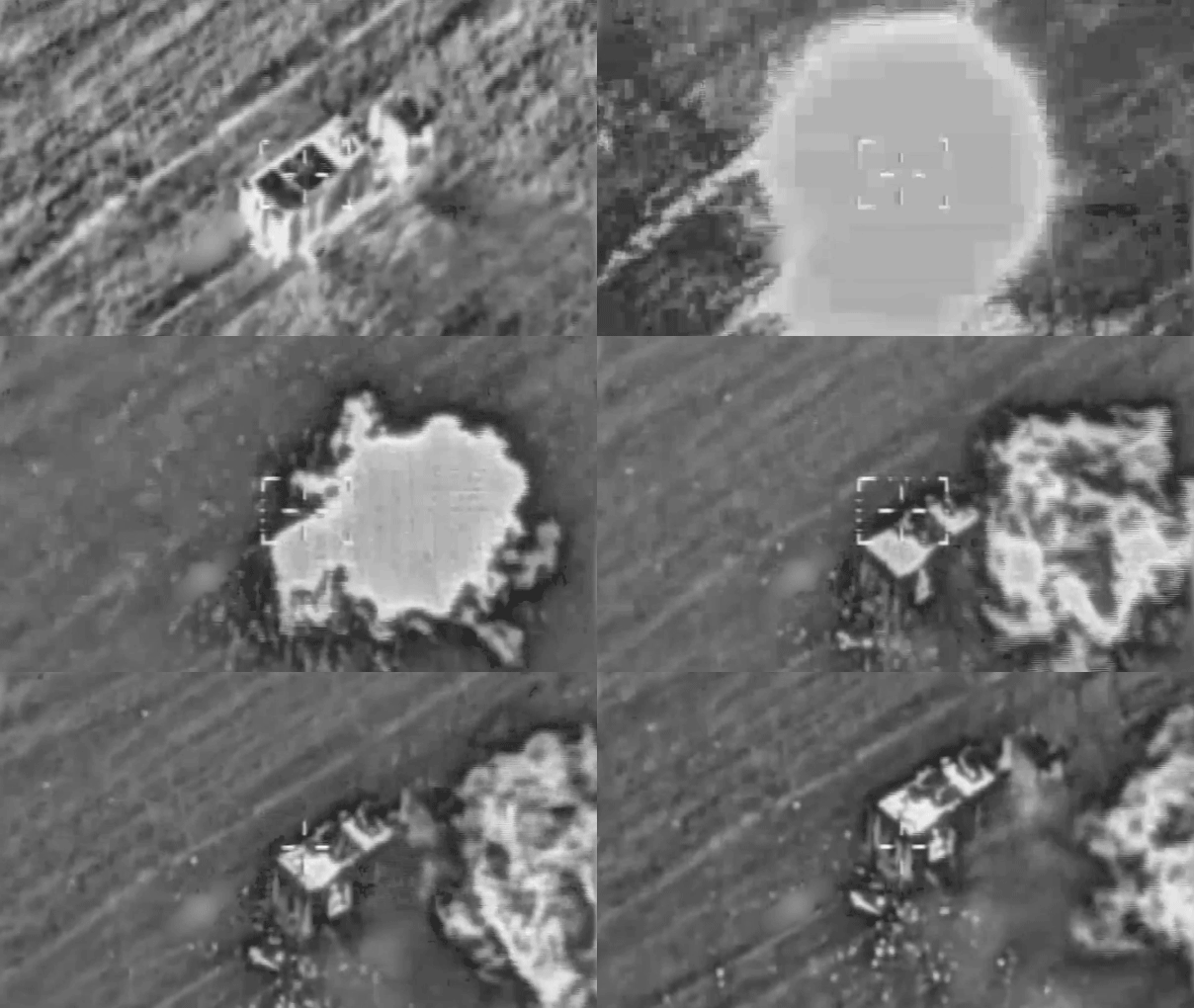
The Israel Defense Forces (IDF) released footage on Tuesday showcasing Israeli Air Force operations against Iranian military assets, part of a broader escalation between the two adversaries. According to IDF statements, more than 60 strikes were executed in waves across western Iran, targeting missile launchers, defense systems, and other military infrastructure.
The aerial campaign specifically hit vehicles carrying ballistic missiles, unmanned aerial vehicles (UAVs), and loaded missile launchers positioned in Iran’s western regions. IDF international spokesperson Lt. Nadav Shoshani described the operations as an ongoing effort to degrade Iran’s military capabilities.
This military action comes as Iran fired missiles containing cluster sub-munitions toward central Israel on Tuesday, according to the IDF. “The Iranian regime’s war crimes continue,” Shoshani stated on social media platform X.
The escalation represents the latest chapter in the increasingly direct confrontation between Israel and Iran, which has historically been conducted through proxy forces. The current exchange of fire marks a significant shift toward more open hostilities between the two regional powers.
Shoshani also emphasized that Israeli forces are cooperating with U.S. armed forces in operations against Iranian military capabilities. This collaboration underscores the strategic importance Washington places on supporting Israel’s security interests while attempting to contain Iran’s regional influence.
The conflict extends beyond the Israel-Iran axis, with Lebanon-based Hezbollah, described by Shoshani as “Iran’s main terrorist proxy,” launching dozens of rockets and UAVs from southern Lebanon toward northern Israel. These attacks have prompted Israel to reinforce its northern border defenses.
“We are preparing for the possibility of Hezbollah expanding their attacks against Israeli civilians,” Shoshani warned. “This includes reinforcing aerial defense systems and troops presence.”
In what the IDF described as a tactical measure rather than a ground invasion, Israeli troops were positioned overnight at several points near the Lebanese border. Shoshani clarified that “this is not a ground maneuver into Lebanon. It is a tactical step to create an additional level of security for the residents of northern Israel.”
The military spokesperson referenced historical context to explain the current positioning, noting that after the October 7 attacks last year, “Hezbollah took control of vantage points near the northern border and fired RPGs and missiles indiscriminately towards Israeli civilians in the northern border.” These actions led to the evacuation of approximately 60,000 Israeli civilians from northern communities for several months.
“We will not let that happen again,” Shoshani asserted. The IDF reported conducting “a series of preventative strikes on Hezbollah military infrastructure across Lebanon in order to neutralize the continuous fire towards our civilians.”
Satellite imagery shared in news reports shows evidence of the strikes’ impact, with visible damage to Iranian naval facilities and infrastructure across multiple locations. The images reveal fires and structural damage consistent with precision airstrikes on military targets.
The current escalation represents one of the most direct military confrontations between Israel and Iran in decades, with both U.S. and Israeli officials indicating that operations are specifically targeting Iran’s military capabilities rather than civilian infrastructure.
Regional observers note that the situation remains highly volatile, with potential for further escalation across multiple fronts in the Middle East. The direct exchange of fire between Israel and Iran marks a significant departure from the historical pattern of conflict through proxies and could reshape regional security dynamics in the coming weeks.
Fact Checker
Verify the accuracy of this article using The Disinformation Commission analysis and real-time sources.

9 Comments
Interesting to see the escalating tensions between Israel and Iran play out in the open. These strikes seem designed to degrade Iran’s military capabilities, though the retaliation with cluster munitions is concerning. I wonder what the broader geopolitical implications will be.
The release of this footage by the IDF is a clear attempt to demonstrate Israel’s military capabilities and willingness to take direct action against Iran. However, the use of cluster munitions by Iran is a concerning and potentially indiscriminate tactic that could further inflame the conflict.
This exchange of strikes represents a significant shift in the decades-long conflict between Israel and Iran. The willingness of both sides to conduct direct military operations against each other’s assets is a concerning development that could have far-reaching regional implications. Careful diplomacy will be essential to prevent further escalation.
While the details of these strikes are still emerging, it’s clear that the conflict between Israel and Iran is intensifying. The use of direct military action, rather than just proxy forces, is a concerning development that could have far-reaching implications for regional stability.
This exchange of strikes represents a significant escalation in the ongoing tensions between Israel and Iran. I’m curious to see how the international community, particularly key players like the US and European nations, will respond to this latest development. Maintaining regional stability will be crucial.
This is a significant shift from the usual proxy warfare between Israel and Iran. The direct attacks on each other’s military assets represent a dangerous escalation that could have wider regional consequences. I hope cooler heads can prevail to de-escalate the situation.
The release of this footage by the IDF is likely intended to send a message to Iran and the international community about Israel’s capabilities and resolve. However, this escalation raises the risks of miscalculation and unintended consequences that could destabilize the entire region.
While the details of these strikes are still emerging, it seems Israel is ramping up its campaign to degrade Iran’s missile and drone capabilities. The use of cluster munitions by Iran is particularly worrying from a humanitarian standpoint. This tit-for-tat dynamic could spiral out of control if not managed carefully.
The release of footage from these strikes provides a rare window into the covert conflict between Israel and Iran. It’s clear that both sides are willing to take more overt action, raising the risks of miscalculation and unintended escalation. Diplomatic solutions will be crucial going forward.