


Listen to the article
Tensions Escalate Between Israel and Turkey Over Gaza Reconstruction Plans
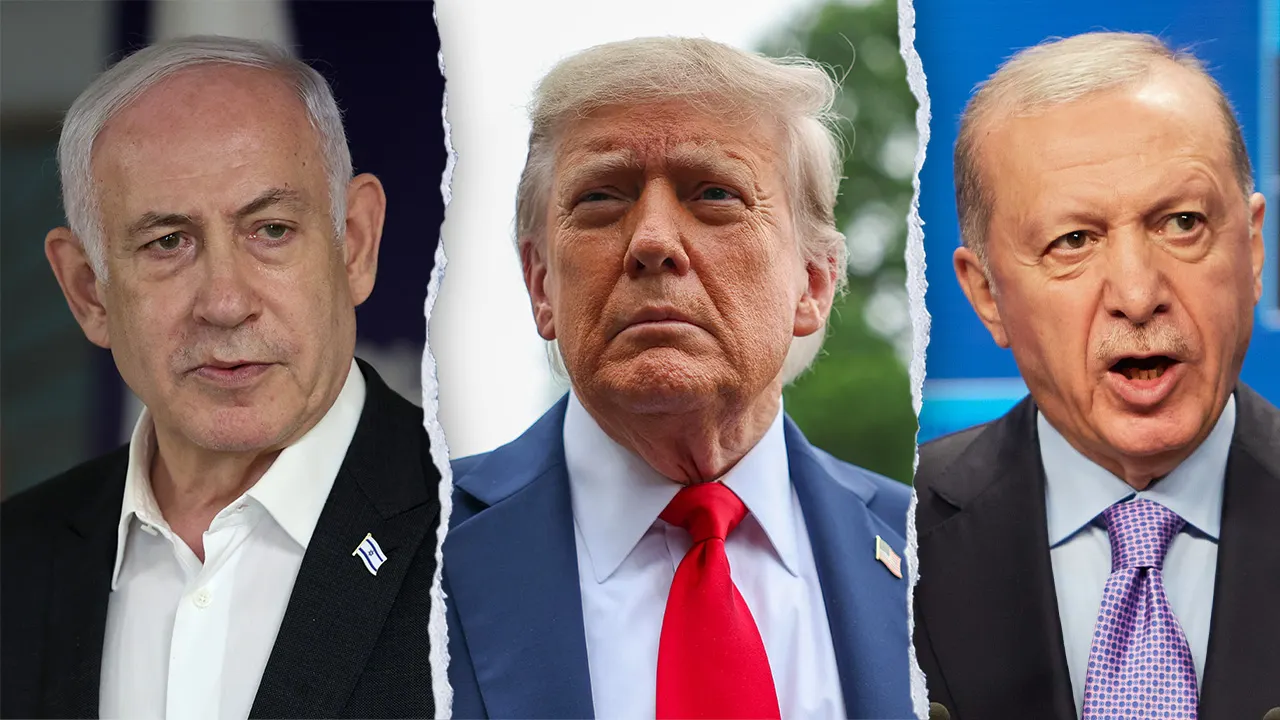
Tensions are rising between Israel and Turkey as both countries push competing visions for Gaza’s reconstruction, creating a diplomatic challenge for President Trump’s ceasefire framework in the region.
Israel has firmly rejected any Turkish military presence in Gaza, viewing Ankara as a destabilizing force despite Turkey’s public positioning as a reconstruction partner. Turkish officials maintain they seek only to provide humanitarian aid and infrastructure support rather than deploy troops.
“From Israel’s point of view, Turkey is the arsonist behaving like the firefighter in Gaza,” said Dan Diker, president of the Jerusalem Center for Security and Foreign Affairs. “If Turkey is allowed to enter Gaza with several thousand armed men, you can guarantee that this Muslim Brotherhood country will destabilize Gaza and dismantle the very 20-point plan that President Trump has bet the farm on.”
The disagreement highlights growing strategic friction between the two regional powers, extending beyond Gaza into Syria and the broader Eastern Mediterranean. Turkey maintains significant influence across northern Syria, while Israel continues air operations against Iranian targets in the area.
At his Mar-a-Lago press conference with Israeli Prime Minister Benjamin Netanyahu, President Trump attempted to downplay concerns about potential Israel-Turkey confrontations. “I know President Erdogan very well… he’s a very good friend of mine,” Trump said. “Bibi respects him… They’re not going to have a problem. Nothing’s going to happen.” Netanyahu notably remained silent on the matter.
Trump simultaneously reinforced Israel’s position on Hamas disarmament, stating: “They made an agreement that they were going to disarm. If they’re not going to disarm, those same countries will go and wipe out Hamas.”
According to Diker, Trump is deliberately managing regional tensions by keeping potential adversaries engaged within his diplomatic framework. “President Trump is very, very good at keeping adversaries close, together with allies,” Diker explained. “That’s why he keeps saying that he likes Erdogan. He wants to keep Erdogan in the party. He wants to keep him close.”
The standoff places Netanyahu in a difficult position, trying to maintain Israel’s security red lines while not undermining Trump’s broader peace initiatives. “Israel will not allow Turkish Armed Forces in Gaza. It’s not going to happen,” Diker emphasized, though he suggested Israel may still face pressure for limited compromises to preserve Trump’s support on other issues, particularly regarding Iran.
Beyond Gaza, maritime disputes in the Eastern Mediterranean have further strained relations. Sinan Ciddi, a senior fellow at the Foundation for Defense of Democracies, points to a recent trilateral summit between Israel, Greece, and Cyprus as a flashpoint that Turkey views as resistance to its “Blue Homeland” doctrine and broader maritime claims.
Following the summit, pro-Erdogan media outlets characterized Israel as a major threat, while Turkey increased military activities, including reported airspace violations near Greece and efforts to expand radar coverage in Syria that could potentially hinder Israeli operations.
Adding another dimension to this regional rivalry is Israel’s recent recognition of Somaliland, which gives Israel a strategic foothold along a vital maritime corridor. “Israel then has a strategic base, a forward base in Somaliland on the Red Sea,” Diker noted. “Very, very important, because it checkmates Turkey.” The move was reportedly viewed in Ankara as a direct challenge to Turkish ambitions in the Horn of Africa.
Despite Erdogan’s harsh public rhetoric toward Israel and vocal support for Palestinians, Turkish diplomatic sources suggest Ankara is taking a more pragmatic approach behind closed doors. While Turkey sees both financial and political opportunities in Gaza’s reconstruction, these sources indicate Erdogan recognizes limited domestic support for deploying Turkish troops to the enclave.
Analysts expect this gap between rhetoric and policy to continue as Trump works to preserve his diplomatic framework while Israel attempts to contain what it perceives as Turkey’s expanding regional influence. “Trump does not want to topple the apple cart,” Diker concluded. “He wants to try to keep everyone together so that they can move to stage two of the 20-point plan in Gaza.”
Fact Checker
Verify the accuracy of this article using The Disinformation Commission analysis and real-time sources.

8 Comments
This dispute illustrates the challenges Trump faces in mediating between these two regional powers with competing interests. Balancing Israeli security concerns with Turkey’s desire for influence will require deft diplomatic maneuvering.
Absolutely. Trump will need to tread carefully to avoid escalating the tensions further while still preserving the ceasefire framework. Navigating these complex regional dynamics will test his negotiating skills.
Interesting geopolitical tensions playing out over the reconstruction of Gaza. Israel seems wary of Turkey’s influence in the region and the potential for further destabilization. It will be challenging for Trump to balance the competing interests and visions for the post-ceasefire recovery.
The clash over Turkish aid and involvement in Gaza reconstruction is symptomatic of the broader strategic rivalry between Israel and Turkey in the Eastern Mediterranean. Trump will have to work hard to find a compromise that satisfies both sides.
This dispute over Turkish aid and involvement in Gaza speaks to the larger strategic rivalry between Israel and Turkey in the Eastern Mediterranean. It’s a complex situation with significant implications for regional stability that Trump will need to navigate carefully.
Agreed. The tensions extend well beyond just Gaza, into Syria and the broader regional dynamics. Navigating this will require delicate diplomacy from the US administration.
From Israel’s perspective, allowing Turkey a military presence in Gaza could undermine the fragile ceasefire framework that Trump is banking on. But Turkey seems intent on asserting its influence as a regional power. Finding a compromise will be crucial.
The disagreement over the reconstruction of Gaza highlights the ongoing strategic competition between Israel and Turkey. It will be interesting to see how Trump tries to broker a resolution that satisfies both sides and maintains stability in the region.