


Listen to the article
Israel Moves Forward with Controversial E1 Settlement Near Jerusalem
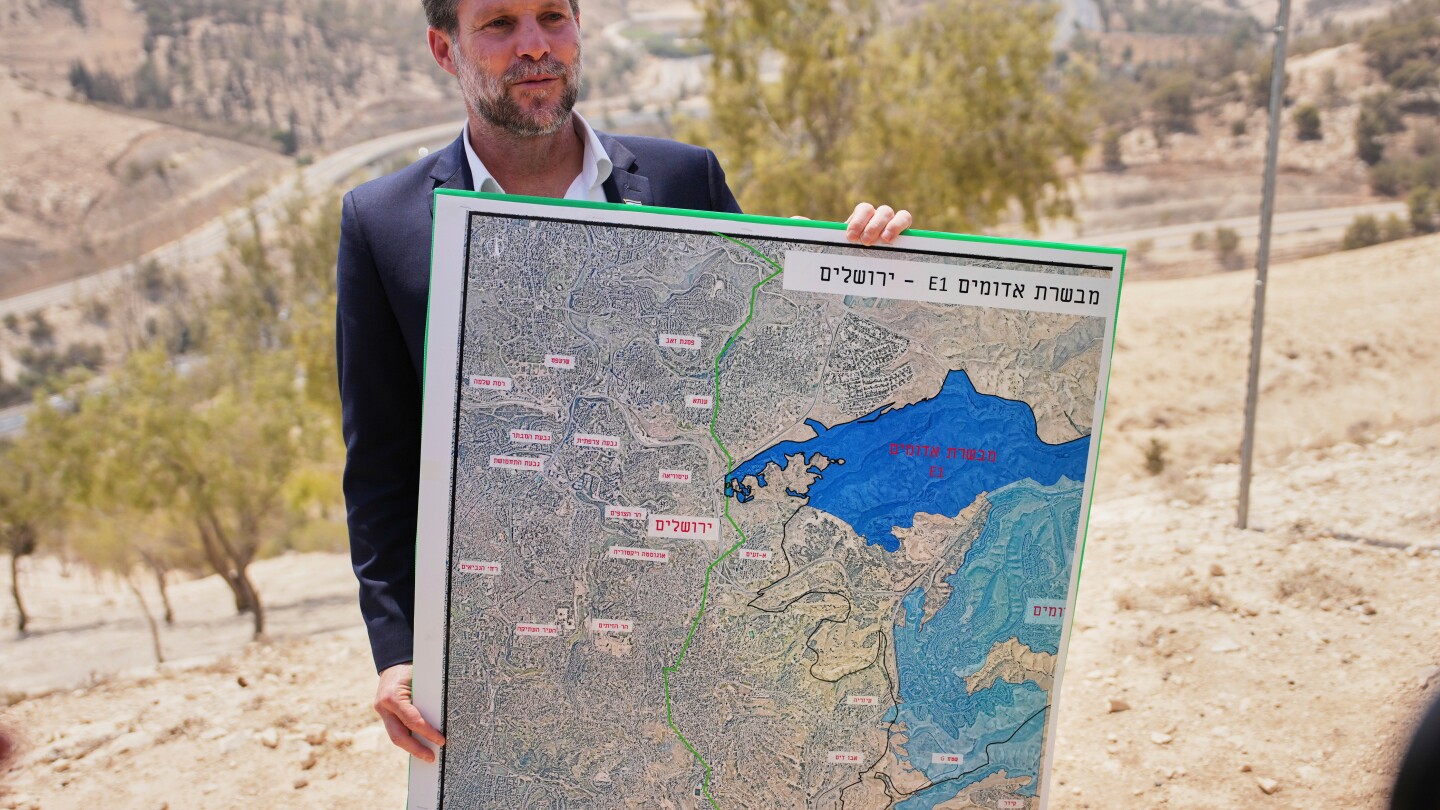
Israel has cleared the final hurdle before beginning construction on the contentious E1 settlement project near Jerusalem, a development that critics say would effectively divide the West Bank in two. According to a government tender reported by the anti-settlement monitoring group Peace Now, the project is now seeking bids from developers, with construction potentially beginning within a month.
The E1 project, which has been under consideration for more than two decades, was previously frozen due to pressure from previous U.S. administrations. The international community largely considers Israeli settlements in the West Bank illegal and an obstacle to peace negotiations.
What makes the E1 development particularly controversial is its strategic location, extending from Jerusalem’s outskirts deep into the occupied West Bank. Critics argue it would create a significant barrier to establishing a contiguous Palestinian state, effectively cutting Palestinian territories in half.
Israeli Finance Minister Bezalel Smotrich, a far-right politician who oversees settlement policy, has championed the project. “The Palestinian state is being erased from the table not with slogans but with actions,” Smotrich stated in August when Israel gave final approval to the plan. “Every settlement, every neighborhood, every housing unit is another nail in the coffin of this dangerous idea.”
According to the tender published on Israel’s Land Authority website, the project calls for the development of 3,401 housing units. Peace Now says this publication “reflects an accelerated effort to advance construction in E1.”
Meanwhile, Syrian and Israeli officials met Tuesday in Paris for U.S.-mediated talks aimed at reducing tensions between the two countries. A joint statement indicated the discussions centered on “respect for Syria’s sovereignty and stability, Israel’s security, and prosperity for both countries.” The parties agreed to establish a joint communication cell to facilitate intelligence sharing, military de-escalation, and diplomatic engagement under U.S. supervision.
The talks come after Ahmad al-Sharaa, Syria’s interim president, led insurgents who ousted longtime leader Bashar Assad in December 2024. Though al-Sharaa has expressed no desire for conflict with Israel, Israeli authorities remain wary of the new Islamist-led leadership. Israel has already seized control of a U.N.-patrolled buffer zone in southern Syria established under a 1974 disengagement agreement.
Syrian officials have prioritized the withdrawal of Israeli forces and a return to the 1974 agreement. Israeli Prime Minister Benjamin Netanyahu emphasized “the importance of ensuring security for its citizens and preventing threats on its border” while protecting Syria’s Druze minority.
In Gaza, the United Nations reported that aid groups have sufficient food supplies to sustain the population for the first time since the Israel-Hamas war began more than two years ago. “The January round is the first since October 2023 in which partners had sufficient stock to meet 100% of the minimum caloric standard,” said U.N. spokesperson Stéphane Dujarric.
Aid flow has improved since the ceasefire took effect on October 10, though challenges remain following Israel’s recent decision to revoke licenses for over three dozen organizations, including Doctors Without Borders, the Norwegian Refugee Council, and Oxfam. The European Union’s foreign policy chief, Kaja Kallas, urged Israel to lift these restrictions to prevent deaths from exposure, hunger, and medicine shortages.
Elsewhere in the West Bank, the Palestinian Red Crescent reported that 11 people were injured during an Israeli raid at Birzeit University. University president Talal Shahwan described the incident as a display of “clear brutality” after approximately 20 Israeli military vehicles entered the campus. Israeli officials claimed they were breaking up an anticipated gathering and faced a crowd throwing rocks, prompting them to use “targeted fire toward the main violent individuals.”
The Foreign Press Association, representing major international media organizations, criticized Israel’s continued refusal to allow foreign journalists into Gaza despite the three-month ceasefire. Israel has maintained a ban on foreign media entering Gaza since the war began in October 2023. The association has petitioned Israel’s Supreme Court to end the ban, expressing “profound disappointment” with the government’s latest opposition, which cited security concerns.
Fact Checker
Verify the accuracy of this article using The Disinformation Commission analysis and real-time sources.

22 Comments
The E1 settlement project is a concerning development that could significantly impact the prospects for a two-state solution. I hope the international community can press Israel to reconsider this plan.
Agreed, this is a highly contentious issue with major geopolitical implications. Diplomacy and compromise will be essential to navigating a path forward.
Contentious development that could significantly impact the prospects for a two-state solution. Curious to see how the international community responds to this move by Israel.
The strategic location of the E1 project is certainly concerning. It’s a complex issue with major geopolitical implications.
Concerning development that could undermine the prospects for a two-state solution. Israel should carefully weigh the long-term consequences of this settlement expansion.
I share your concerns about the E1 project’s strategic location and its impact on the viability of a future Palestinian state. This is a troubling development.
While I understand Israel’s perspective, the E1 project appears to prioritize politics over pragmatic solutions. I hope all parties can work together to find a compromise that respects international law.
Absolutely, the strategic location of the E1 settlement is deeply troubling. This move risks further inflaming tensions and undermining the peace process.
The E1 settlement project is a highly contentious issue with major geopolitical implications. I hope the parties can find a way to move the peace process forward constructively.
Agreed, this is a complex and sensitive situation. Diplomacy and compromise will be essential to navigating a path forward that respects international law.
The E1 settlement project is a highly contentious issue with major implications for the peace process. I hope Israel and the international community can find a way to move forward constructively.
Agreed, this is a complex situation with significant geopolitical consequences. Diplomacy and compromise will be critical to finding a just and lasting solution.
This settlement expansion is disappointing news. The international consensus is clear that Israeli settlements in the West Bank are illegal. I hope cooler heads prevail.
I agree, the E1 project seems ill-advised and counterproductive to the peace process. It’s a concerning development.
While Israel has the right to develop its territory, this project appears to prioritize politics over pragmatic solutions. I hope the parties can find a compromise that respects international law.
The potential for the E1 settlement to divide the West Bank is very troubling. This seems like a regressive step in the peace process.
While Israel has the right to develop its territory, the E1 project appears to be a politically motivated move that could further destabilize the region. I hope cooler heads prevail.
This is a concerning development that risks undermining the prospects for a two-state solution. The international community should pressure Israel to reconsider this plan.
This appears to be a provocative and counterproductive move by the Israeli government. I hope the international community can pressure them to reconsider this plan.
The E1 project’s potential to divide the West Bank is deeply concerning. Israel should prioritize a just and lasting peace solution.
The E1 development is sure to be a flashpoint. Israel should carefully consider the long-term consequences for regional stability and its international standing.
Agreed, this move by Israel risks further inflaming tensions in the region. Diplomacy and compromise will be critical going forward.