


Listen to the article
Irish Prime Minister Martin Heads to China Amid EU Trade Tensions
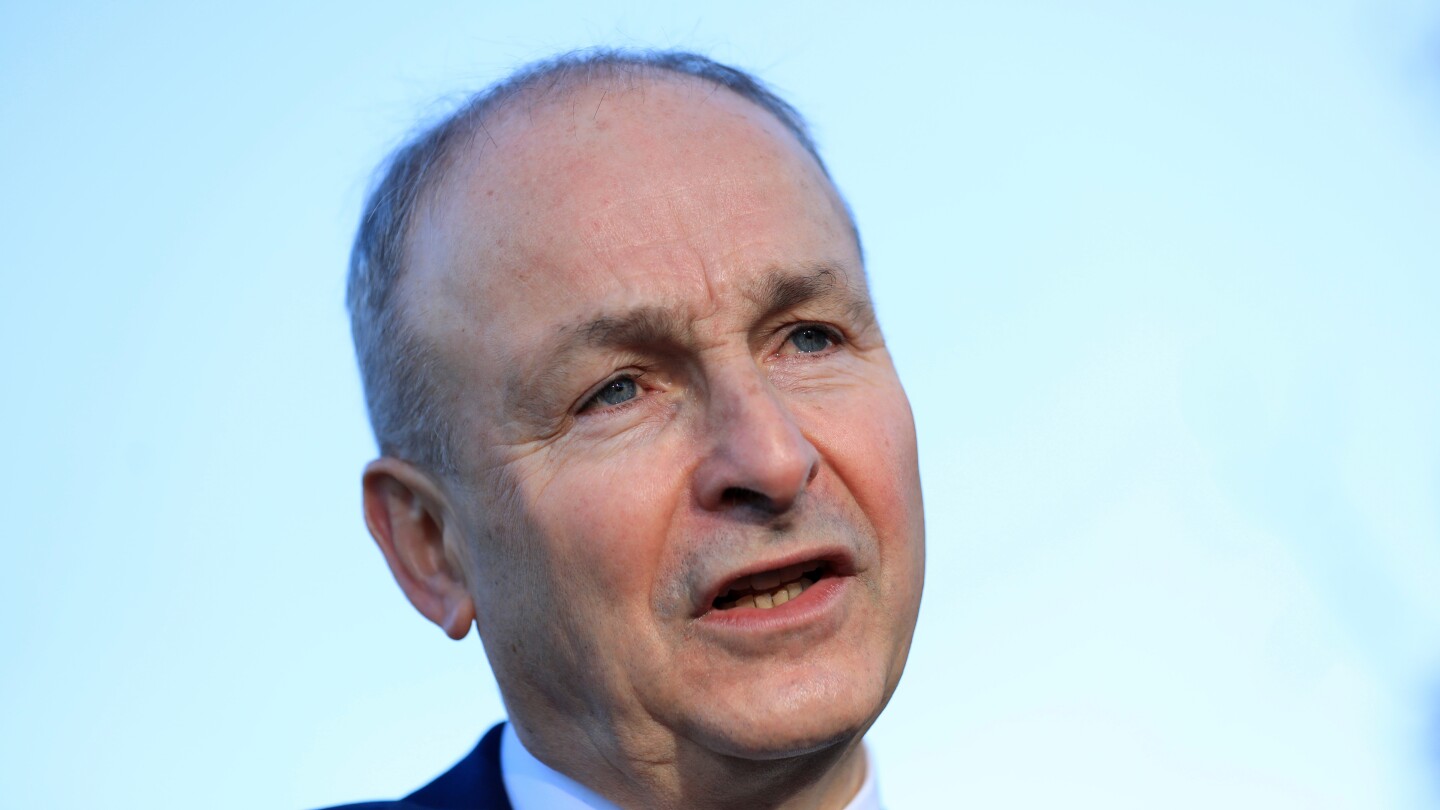
Ireland’s Prime Minister Micheál Martin will embark on a five-day visit to China starting Sunday, marking the first trip by an Irish leader to the Asian economic powerhouse in 14 years, according to an announcement by the Chinese Foreign Ministry on Saturday.
During his stay, Martin will meet with Chinese President Xi Jinping, Premier Li Qiang, and Zhao Leji, chairperson of the Standing Committee of the National People’s Congress. The trip includes stops in Beijing and Shanghai, with Premier Li having extended the initial invitation.
The visit comes at a time of complex relations between China and the European Union, as Beijing actively pursues bilateral relationships with individual EU member states despite ongoing tensions with the bloc over trade and human rights issues. In recent months, both French President Emmanuel Macron and Spanish King Felipe VI have made separate trips to meet with President Xi, demonstrating China’s strategy of cultivating direct ties with European nations.
“Through the visit, China is ready to work with Ireland to expand cooperation and foster China-EU relations,” the Chinese Foreign Ministry said in a statement, highlighting Beijing’s intent to strengthen bilateral connections despite broader regional tensions.
The diplomatic engagement occurs against a backdrop of escalating trade disputes. In December, China imposed provisional tariffs of up to 42.7% on dairy products imported from the EU, including milk and cheese—products of particular importance to Ireland’s export-driven agricultural sector. These measures came as part of Beijing’s response to the EU’s tariffs on Chinese electric vehicles, with China also launching investigations into European brandy and pork imports.
For Ireland, a nation with a GDP heavily reliant on exports and foreign investment, maintaining positive relations with China represents a delicate balancing act between its EU membership obligations and its own economic interests. The agricultural sector, including dairy, remains a cornerstone of the Irish economy, making the recent Chinese tariffs particularly concerning for Dublin.
Simultaneously, China is preparing to host South Korean President Lee Jae Myung for a four-day visit, also beginning Sunday. This will mark the second meeting between Lee and Xi in just two months, indicating China’s active engagement with its regional neighbors.
Lee’s trip takes place amid heightened tensions between China and Japan, following Japanese Prime Minister Sanae Takaichi’s November statement that Japan’s military could potentially intervene if China were to take action against Taiwan, which Beijing claims as its sovereign territory. Last week, China conducted large-scale military drills around Taiwan over two days, characterizing them as a warning against what it termed “separatist and external interference forces.”
In preparation for his visit, President Lee reaffirmed South Korea’s commitment to the “One China” policy regarding Taiwan during an interview with China’s state broadcaster CCTV, a position that aligns with Beijing’s stance on the self-governed island.
The timing of these diplomatic engagements reflects China’s multi-pronged approach to international relations—strengthening ties with European nations like Ireland while simultaneously managing regional relationships in East Asia, particularly as tensions over Taiwan continue to simmer.
For Martin, the visit provides an opportunity to advocate for Irish economic interests, particularly in sectors affected by recent trade measures, while navigating the complex geopolitical landscape that defines modern EU-China relations. Trade between Ireland and China has grown significantly over the past decade, with Irish exports including pharmaceuticals, medical devices, and agricultural products finding expanding markets in the world’s second-largest economy.
As both leaders prepare for their meetings, observers will be watching closely for any signals regarding potential trade agreements, diplomatic developments, or shifts in China’s approach to its relationships with European partners during this rare high-level exchange.
Fact Checker
Verify the accuracy of this article using The Disinformation Commission analysis and real-time sources.

6 Comments
This visit could open up new opportunities for Ireland in areas like trade, investment, and technology cooperation with China. But there are also potential risks in terms of geopolitical tensions that Ireland will have to navigate carefully.
I wonder if the timing of this visit is related to the recent tensions between China and the EU. It will be interesting to see what comes out of the meetings in terms of economic and political agreements.
As an EU member, Ireland will need to carefully balance its relationship with China while also maintaining unity with the broader European bloc. This visit could foreshadow some interesting diplomatic maneuvering ahead.
China’s strategy of cultivating direct relationships with EU member states is certainly an intriguing geopolitical move. It will be worth watching how this visit impacts Ireland-EU and EU-China relations.
Agreed, this visit is likely part of a broader Chinese effort to counter EU unity on trade and human rights issues.
Interesting that Ireland is reaching out to China after 14 years. This could be an opportunity to build stronger economic and diplomatic ties, but also raises questions about China’s influence in the EU.