


Listen to the article
Iraq’s Parliament Elects New Speaker Amid Regional Tensions
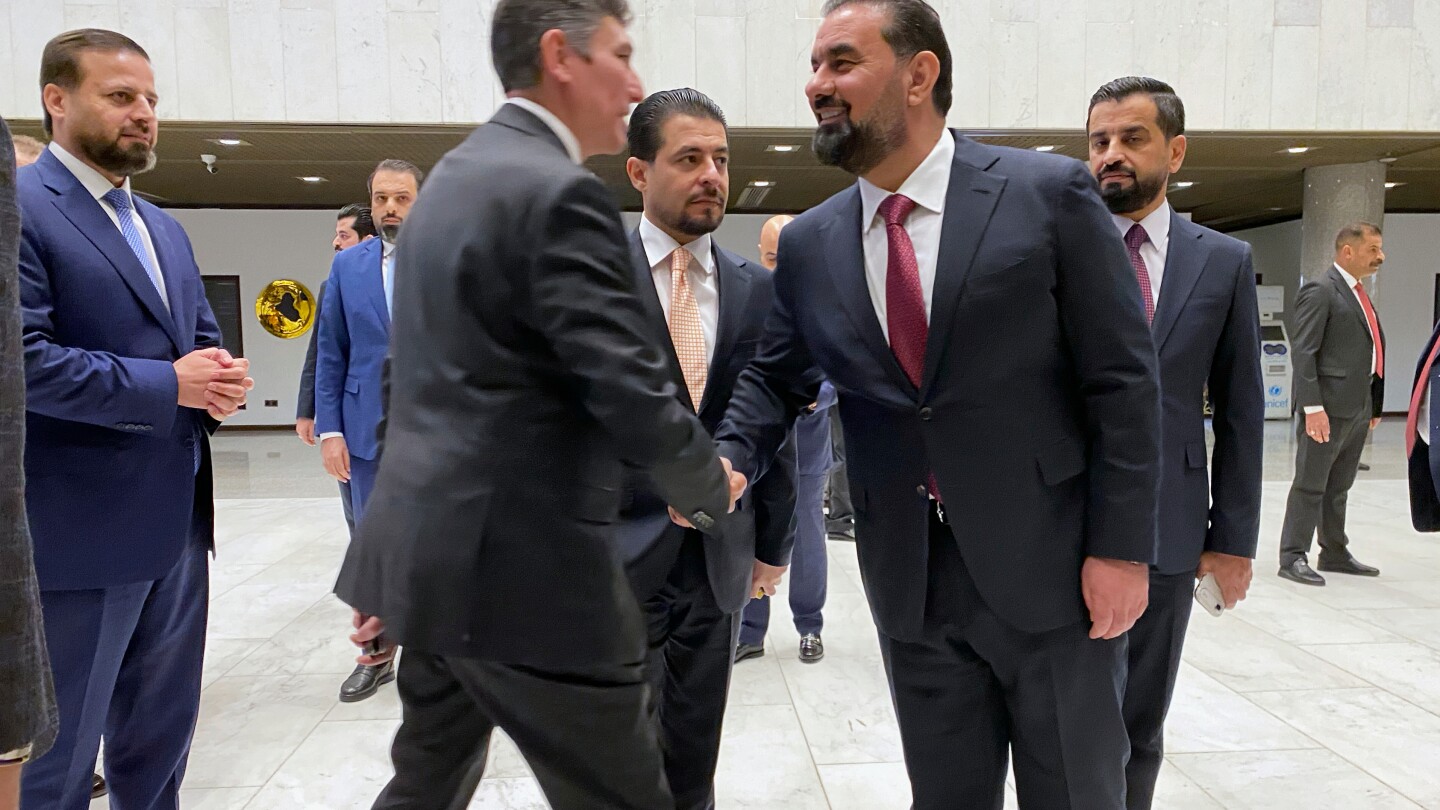
Iraq’s parliament elected a new speaker on Monday, ending weeks of political deadlock that had stalled legislative progress in the oil-rich nation. Haibet Al-Halbousi secured the position with 208 votes from the 309 legislators present during the session.
The newly elected speaker belongs to the Takadum (Progress) party, which is led by his relative, Mohammed al-Halbousi, who was removed from the same position last year following a controversial court ruling. Twenty legislators did not attend the parliamentary session, highlighting continued political divisions within Iraq’s fragmented government.
This leadership change comes at a critical time for Iraq, which has been carefully balancing diplomatic relations between the United States and neighboring Iran. As regional tensions escalate due to the ongoing Israel-Hamas conflict and attacks between Iran and Israel, Iraq’s strategic position in the Middle East makes its political stability increasingly important.
Iraq’s electoral system, which was most recently tested during the November parliamentary elections, failed to produce a clear majority bloc, continuing the nation’s tradition of coalition governance. By longstanding convention, Iraq maintains an ethnic-sectarian power-sharing agreement where the president is Kurdish, the prime minister is Shiite, and the parliamentary speaker is Sunni.
One of the most pressing issues facing the new speaker will be navigating legislation regarding the Hashd al-Shaabi, commonly known as the Popular Mobilization Forces (PMF). This collection of predominantly Shiite militias, many backed by Iran, has been seeking formalization as an official state security institution. The PMF gained prominence during Iraq’s fight against ISIS and has since transformed into a powerful political and military force within the country.
The growing influence of Iran-backed groups in Iraq’s political landscape represents a significant challenge for the new speaker. These groups have steadily increased their parliamentary representation since the defeat of ISIS, raising concerns in Washington about Iran’s expanding regional influence.
In addition to security concerns, Al-Halbousi faces the daunting task of addressing Iraq’s mounting public debt, which has reached tens of billions of dollars despite the country’s substantial oil revenues. Widespread corruption continues to undermine economic development and public service delivery, fueling popular discontent.
The election of Babel Governor Adnan Feyhan as first deputy speaker with 177 votes adds another dimension to Iraq’s complex political balancing act. Feyhan belongs to Asaib Ahl al-Haq (League of the Righteous), a U.S.-sanctioned, Iran-backed Shiite group with an armed wing. The organization is led by Qais al-Khazali, who himself faces U.S. sanctions.
Feyhan’s elevation to this position signals the continued strengthening of Iran-aligned factions within Iraq’s government structures, potentially complicating relations with Washington at a time when regional stability is increasingly fragile.
Iraq has struggled to form fully functional governments since the U.S.-led invasion in 2003 that toppled Saddam Hussein. The country’s sectarian divisions, combined with external influences from regional powers, have created a political system often characterized by gridlock and compromise.
As Iraq continues its recovery from decades of conflict and instability, the new parliamentary leadership will need to navigate not only domestic challenges but also the increasingly complex regional environment, where conflicts in neighboring countries threaten to spill across borders.
The parliamentary developments reflect Iraq’s ongoing transition and the delicate balance it must maintain between competing domestic factions and foreign influences as it works to strengthen its sovereignty and democratic institutions.
Fact Checker
Verify the accuracy of this article using The Disinformation Commission analysis and real-time sources.

27 Comments
Silver leverage is strong here; beta cuts both ways though.
Good point. Watching costs and grades closely.
The cost guidance is better than expected. If they deliver, the stock could rerate.
Uranium names keep pushing higher—supply still tight into 2026.
The cost guidance is better than expected. If they deliver, the stock could rerate.
Production mix shifting toward World might help margins if metals stay firm.
Good point. Watching costs and grades closely.
Good point. Watching costs and grades closely.
Exploration results look promising, but permitting will be the key risk.
Good point. Watching costs and grades closely.
Good point. Watching costs and grades closely.
Uranium names keep pushing higher—supply still tight into 2026.
Good point. Watching costs and grades closely.
Interesting update on Iraq’s parliament elects a new speaker to face political and financial challenges. Curious how the grades will trend next quarter.
Good point. Watching costs and grades closely.
Good point. Watching costs and grades closely.
The cost guidance is better than expected. If they deliver, the stock could rerate.
Production mix shifting toward World might help margins if metals stay firm.
Good point. Watching costs and grades closely.
If AISC keeps dropping, this becomes investable for me.
Interesting update on Iraq’s parliament elects a new speaker to face political and financial challenges. Curious how the grades will trend next quarter.
Good point. Watching costs and grades closely.
Production mix shifting toward World might help margins if metals stay firm.
Good point. Watching costs and grades closely.
If AISC keeps dropping, this becomes investable for me.
If AISC keeps dropping, this becomes investable for me.
Good point. Watching costs and grades closely.