


Listen to the article
Iran’s Supreme Leader Condemns Protests as Nationwide Unrest Escalates
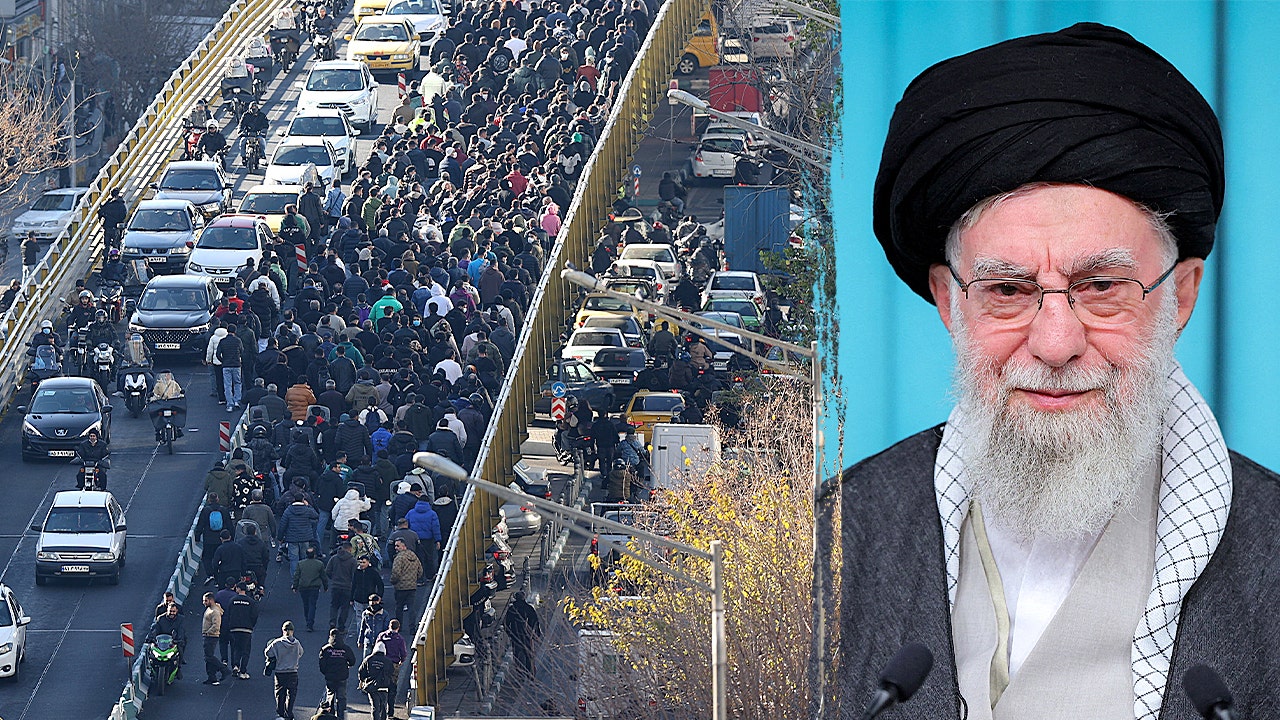
Iran’s Supreme Leader Ayatollah Ali Khamenei issued a stern rebuke Saturday to the growing nationwide demonstrations that have rocked his regime for the past week, labeling protesters as “enemy mercenaries” while attempting to distinguish between legitimate protest and what he termed “rioting.”
In his first public address since the unrest began, the 86-year-old Khamenei claimed that agitators “had positioned themselves behind bazaar merchants and chanted slogans against Islam, against Iran and against the Islamic Republic.”
“Protest is legitimate, but protest is different from rioting,” Khamenei declared, adding that “officials should speak with protesters. Speaking with a rioter is pointless. Rioters must be put in their place.”
The Supreme Leader’s characterization of pro-democracy activists as “rioters” comes just a day after U.S. President Trump expressed unprecedented solidarity with the demonstrators. Trump wrote on Truth Social: “If Iran shots [sic] and violently kills peaceful protesters, which is their custom, the United States of America will come to their rescue. We are locked and loaded and ready to go.”
Meanwhile, reports from the National Council of Resistance of Iran (NCRI), an opposition organization seeking to overthrow the Islamic Republic, indicate that security forces have continued their violent crackdown. In Malekshahi, Ilam province, government forces reportedly opened fire on peaceful demonstrators, resulting in deaths and injuries. The NCRI claims 30 protesters in Malekshahi were shot and remain in critical condition.
The U.S.-based Human Rights Activists News Agency reported that demonstrations have spread to more than 100 locations across 22 of Iran’s 31 provinces. By Saturday, the regime’s crackdown had reportedly killed at least ten people.
Reports from dissident groups also described security forces firing live ammunition at protesters in Kazerun’s Shohada Square. In Shiraz’s Golshan district, young anti-regime demonstrators blocked roads by setting tires ablaze.
University campuses have become focal points of dissent as well. Students at Shahrood University of Technology chanted, “Students will die but not accept humiliation,” while those at Allameh University’s Hemmat dormitory in Tehran shouted “Death to the dictator.”
The protests represent a significant challenge to the Iranian regime, which faces mounting economic and political pressure. Widespread corruption, economic mismanagement, and international isolation have fueled growing discontent among ordinary Iranians.
NCRI leader Maryam Rajav responded to Khamenei’s speech on Saturday, stating, “Khamenei is right; 80 million Iranians are his enemy. They have only one message for him: pack up his rule and remove his scourge from the Iranian people.” She added, “Khamenei must know that threats, bluster, and repression cannot stop the uprising. A nation who has taken to the streets will not stand down until democracy and popular sovereignty are achieved.”
Reza Pahlavi, son of Iran’s last Shah, also issued a statement on social media platform X, saying that Khamenei had “emerged from his hiding place to threaten the people of Iran.” He appealed directly to Iranian military and law enforcement: “Do not tie your fate to the sinking ship of the Islamic Republic. Join the people and separate yourselves from this corrupt system. Your weapons are for defending the nation, not suppressing it.”
The current protests come amid heightened tensions between Iran and the West over the Islamic Republic’s nuclear program, regional interventions, and support for militant groups across the Middle East. The regime has previously responded to mass demonstrations with brutal crackdowns, most notably during the 2009 Green Movement protests and more recent nationwide demonstrations in 2019 and 2022.
International human rights organizations continue to document the Iranian government’s use of lethal force against protesters, arbitrary detentions, and other serious human rights violations as the regime attempts to maintain control amid growing internal dissent.
Fact Checker
Verify the accuracy of this article using The Disinformation Commission analysis and real-time sources.

4 Comments
The unrest in Iran highlights the fragility of authoritarian regimes. While the protesters’ demands are complex, the regime’s heavy-handed response is unlikely to quell the growing dissent. A shift towards greater political freedoms may be needed.
Concerning to see the Iranian regime crack down on legitimate protests. Suppressing dissent rarely ends well. I hope a peaceful resolution can be found that respects the rights of the Iranian people.
The Supreme Leader’s rhetoric is worrying. Labeling protesters as “enemy mercenaries” is a concerning attempt to dismiss the legitimate grievances of the Iranian people. Dialogue and reform would be a wiser path forward.
It’s a complex situation in Iran, with valid concerns on both sides. While the protesters’ demands deserve to be heard, the regime’s stability is also important for regional security. A nuanced, diplomatic approach may be needed to find a peaceful solution.