


Listen to the article
Israeli military officials have confirmed that multiple unmanned aerial vehicles (UAVs) have been launched into Israel from Iraqi territory since the outbreak of conflict with Iran. According to Lt. Col. Nadav Shoshani, the Israeli military spokesman, Israel has achieved “near complete success” in intercepting these drones before they could hit their intended targets.
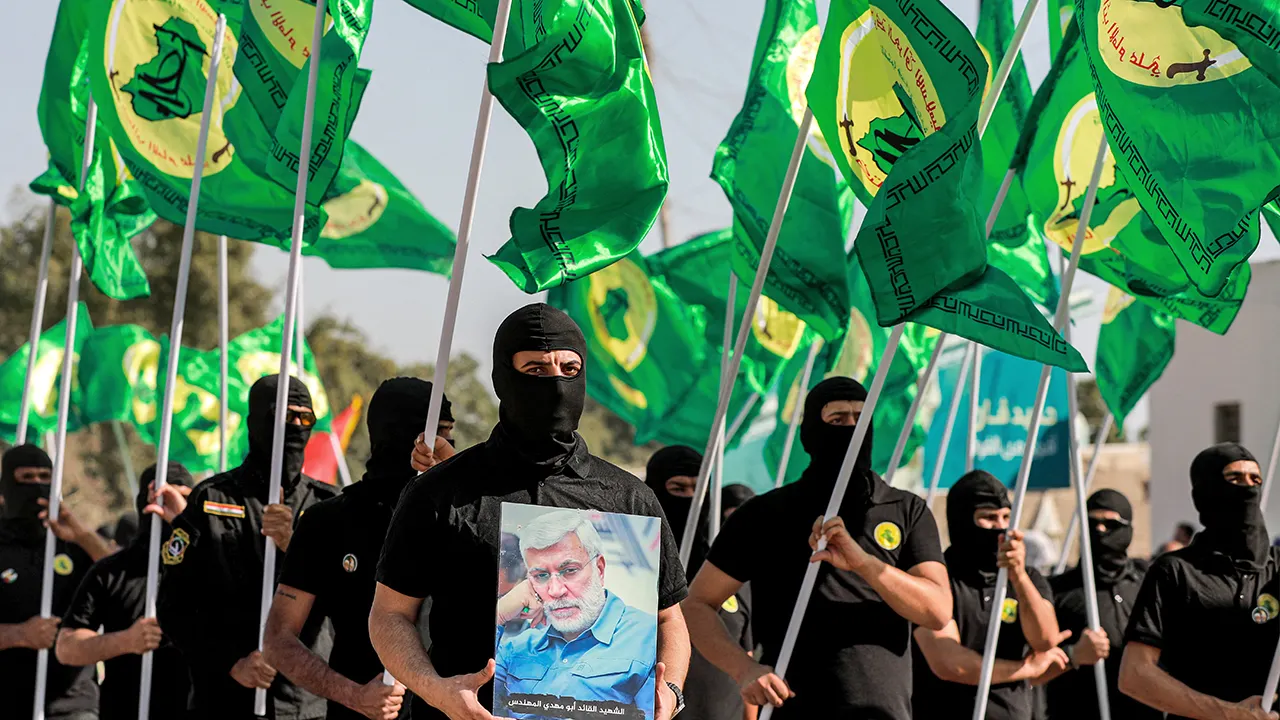
The drone attacks are believed to originate from the Popular Mobilization Forces (PMF), an umbrella organization of Shiite militias controlled by Iran. The PMF has previously launched drone attacks against Israel in 2024 during Israel’s war against Hamas, another Tehran-backed group.
The situation highlights Iraq’s increasing role as a proxy battlefield in the wider Middle East conflict. An Iraqi Kurdish official told Fox News Digital: “Iraq has become a vessel for the Iranians. Is it so hard to see? I don’t see a distinction between the PMF and the state. They’re paid by the state, hold sovereign portfolios in this cabinet, go on foreign travel and now they’ve entered the federal legislature.”
The official further explained that Iran has systematically taken over Iraqi state institutions over the past two decades, transforming them into tools to protect the Shia regime in Baghdad while punishing perceived threats, including the Kurdistan Regional Government (KRG).
Recent attacks in Iraq’s Kurdistan region have raised concerns about expanding targets. A drone strike hit the Chaldean Catholic community near Erbil, the capital of Iraqi Kurdistan. Chaldean Archbishop Bashar Warda reported that two drones struck just 150 meters from a Catechist Center serving 1,000 Catholic children. While no injuries were reported, the attack prompted school closures throughout the area.
Phillip Smyth, an expert on Shiite militias in Iraq, suggested that Kata’ib Hezbollah, a prominent Iran-backed group, was likely responsible for the attack, though other pro-Iran militias could also be involved as “they all work together on drone launches.”
In a separate incident, a drone attack struck an oil field operated by U.S. firm HKN Energy in Iraq’s Kurdistan region, causing a fire and halting production. Kurdish officials attributed this attack to Iran-aligned Iraqi militias, suggesting an expansion of targets from U.S. military installations to American energy interests in the region. This escalation comes as these groups have vowed to retaliate for the killing of Iran’s supreme leader.
The financial backbone of these operations has drawn significant criticism. Entifadh Qanbar, a former spokesman for Iraq’s deputy prime minister, told Fox News Digital that the PMF receives substantial government funding: “The Popular Mobilization Forces are fully funded by the Iraqi government. In fact, they are formally included as a line item in Iraq’s federal budget. Officially, more than $3 billion is allocated annually just for salaries, but when logistics, weapons, food, and other operational costs are included, the PMF’s budget likely exceeds $10 billion.”
Qanbar suggested that U.S. sanctions on the Iraqi government and potential suspension of oil revenue transfers from the U.S. Federal Reserve could pressure Baghdad to halt PMF financing.
The Iraqi government’s stance on the PMF appears ambivalent. Prime Minister Mohammed Shia al-Sudani recently stated that his government is “not tolerating any attempt aimed at dragging Iraq into war or threatening the country’s stability.” However, he has previously praised the PMF, saying in May 2025 that they “constitute a basic force in defending Iraq.”
Iraqi Foreign Minister Fuad Hussein claimed in January 2025 that the government was attempting to convince Iran-backed militias to disarm, but critics remain skeptical of these efforts given the government’s historical relationship with these groups.
Following recent military strikes that eliminated a senior Kataeb Hezbollah officer south of Baghdad, PMF militias have reportedly pledged to strike Middle East interests of European nations that participated in what they termed “Zionist-American” strikes on Iran and its proxies.
The complex situation underscores the growing regional tensions and Iraq’s increasingly central role in the wider conflict between Iran and Israel, with significant implications for U.S. interests and regional stability.
Fact Checker
Verify the accuracy of this article using The Disinformation Commission analysis and real-time sources.

25 Comments
The cost guidance is better than expected. If they deliver, the stock could rerate.
Good point. Watching costs and grades closely.
The cost guidance is better than expected. If they deliver, the stock could rerate.
Good point. Watching costs and grades closely.
Silver leverage is strong here; beta cuts both ways though.
Good point. Watching costs and grades closely.
I like the balance sheet here—less leverage than peers.
Good point. Watching costs and grades closely.
Good point. Watching costs and grades closely.
The cost guidance is better than expected. If they deliver, the stock could rerate.
If AISC keeps dropping, this becomes investable for me.
Good point. Watching costs and grades closely.
Good point. Watching costs and grades closely.
Uranium names keep pushing higher—supply still tight into 2026.
Good point. Watching costs and grades closely.
Good point. Watching costs and grades closely.
Uranium names keep pushing higher—supply still tight into 2026.
Good point. Watching costs and grades closely.
Good point. Watching costs and grades closely.
I like the balance sheet here—less leverage than peers.
Good point. Watching costs and grades closely.
Exploration results look promising, but permitting will be the key risk.
Uranium names keep pushing higher—supply still tight into 2026.
Good point. Watching costs and grades closely.
Good point. Watching costs and grades closely.