


Listen to the article
Iran Deploys Elite Counterterrorism Unit to Protect New Supreme Leader
Iran has assigned its elite counterterrorism force to protect newly appointed Supreme Leader Ayatollah Mojtaba Khamenei following the assassination of his father in a U.S.-Israel strike, according to intelligence sources familiar with the situation.
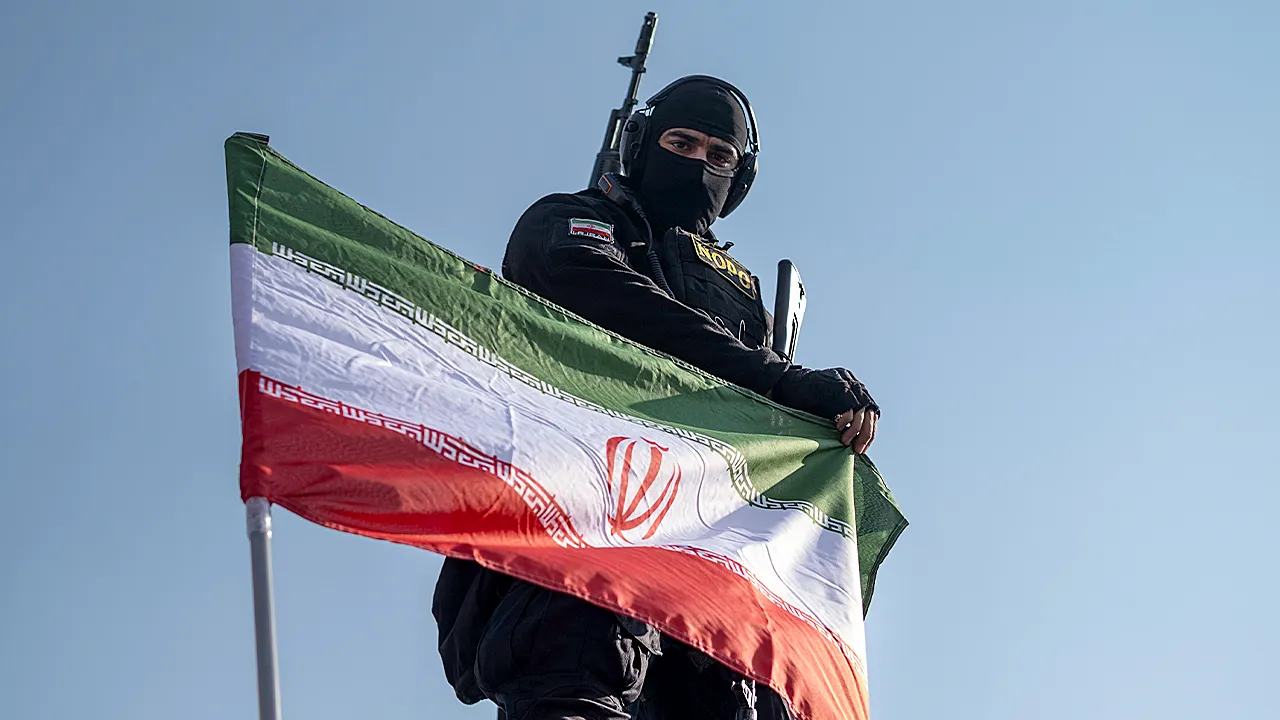
The special force, known as NOPO (Nirouyeh Vijeh Pasdaran Velayat, or Special Force to Protect the Supreme Leader), has taken on the critical role of safeguarding Iran’s leadership amid ongoing conflict with the United States and Israel. The elder Khamenei was killed on February 28 during the opening stages of what military officials have dubbed “Operation Epic Fury.”
“With Khamenei gone, NOPO will now be protecting Mojtaba Khamenei,” said Ali Safavi, an official with the Foreign Affairs Committee of the Paris-based National Council of Resistance of Iran (NCRI). The unit’s name translates directly to “Special Force to Protect the Supreme Leader,” highlighting its singular focus on leadership protection.
NOPO’s origins date back to 1991, when it was formed as the “nucleus” of the IRGC’s 28th Ruhollah Division. Since then, it has evolved into a highly specialized unit distinct from the broader Islamic Revolutionary Guard Corps, which was established in 1979 to defend the Islamic Republic from internal and external threats.
The elite force consists of six brigades, with four stationed in Tehran and the others based in Mashhad and Isfahan. According to Safavi, these units are “far more lethal, ruthless, and well-trained than the IRGC,” with their loyalty directed exclusively to the Supreme Leader.
“They are very well equipped. Khamenei did not trust any other security force for his protection,” Safavi noted, underscoring the unique position NOPO occupies within Iran’s security apparatus.
Several NOPO members were reportedly killed during the strike that eliminated Ali Khamenei, though the force remains fully operational. Beyond personal protection, NOPO has been involved in broader security operations, particularly during times of domestic unrest.
“In times of crisis, such as what happened during the January uprising, they were heavily involved in opening fire on the protesters,” Safavi explained, referring to the unit’s role in suppressing civilian demonstrations.
The Assembly of Experts elected Mojtaba Khamenei as Iran’s third Supreme Leader on March 8, 2026, elevating him to the country’s highest position during a period of intense geopolitical tension. Reports from Iranian state television suggest the younger Khamenei was wounded in the ongoing conflict, though these claims remain unconfirmed by independent sources.
Since the escalation of hostilities, NOPO’s presence has expanded beyond traditional protection duties. Intelligence reports indicate hundreds of NOPO personnel have been deployed around prisons holding political detainees across the country, suggesting a broader domestic security mandate.
“Hundreds of suppressive forces are widely deployed around prisons. In Ghezel Hesar Prison,” the NCRI said in a recent statement. The organization has documented incidents of NOPO’s involvement in controlling prison protests that erupted following military strikes near detention facilities.
On March 3, after the bombing of a military center near Mahabad Prison, inmates reportedly protested and set fire to their blankets, demanding release under wartime conditions. “Suppressive forces responded by firing tear gas into the ward,” according to NCRI reports.
In Tehran, NOPO has reportedly taken control of Evin Prison following the departure of regular prison officials amid the intensified conflict. Evin is notorious for housing political prisoners and dissidents.
The unit’s controversial human rights record led the U.S. Treasury Department to impose sanctions on NOPO in 2021 for committing “serious human rights abuses against persons in Iran or Iranian citizens or residents, or the family members of the foregoing.”
As Iran navigates this period of leadership transition during wartime, NOPO’s expanded role signals the regime’s focus on maintaining internal security while protecting its new Supreme Leader from potential threats both foreign and domestic.
Fact Checker
Verify the accuracy of this article using The Disinformation Commission analysis and real-time sources.

8 Comments
It’s interesting to learn more about the NOPO unit and its evolution over the past three decades. Counterterrorism capabilities will be crucial for safeguarding Iran’s political leadership.
The assassination of the elder Khamenei was a significant blow. Strengthening security around the new Supreme Leader makes sense, given the high-stakes geopolitical situation Iran finds itself in.
Agreed. NOPO’s specialized focus on leadership protection will be vital as Iran navigates this delicate transition of power.
While the details are sensitive, it’s clear Iran is taking significant measures to shield its new Supreme Leader from potential threats. The NOPO force will be key to ensuring a smooth and secure transition of power.
Securing Iran’s leadership in these turbulent times is certainly a priority. The elite NOPO force has a critical role to play in protecting the new Supreme Leader Mojtaba Khamenei amid ongoing tensions with the US and Israel.
The assassination of the previous Supreme Leader was a major blow. Iran’s deployment of its elite NOPO unit to guard the new leader signals the gravity of the situation and the importance of maintaining political stability.
The Supreme Leader plays a pivotal role in Iran’s theocratic system. Entrusting NOPO with this high-profile security mission underscores the gravity of the situation and the need for tight protection.
Absolutely. Given the geopolitical tensions, Iran can’t afford any vulnerabilities in its leadership security apparatus.