


Listen to the article
Iranians Decry Lack of Bomb Shelters as Regime Leaders Retreat to Bunkers
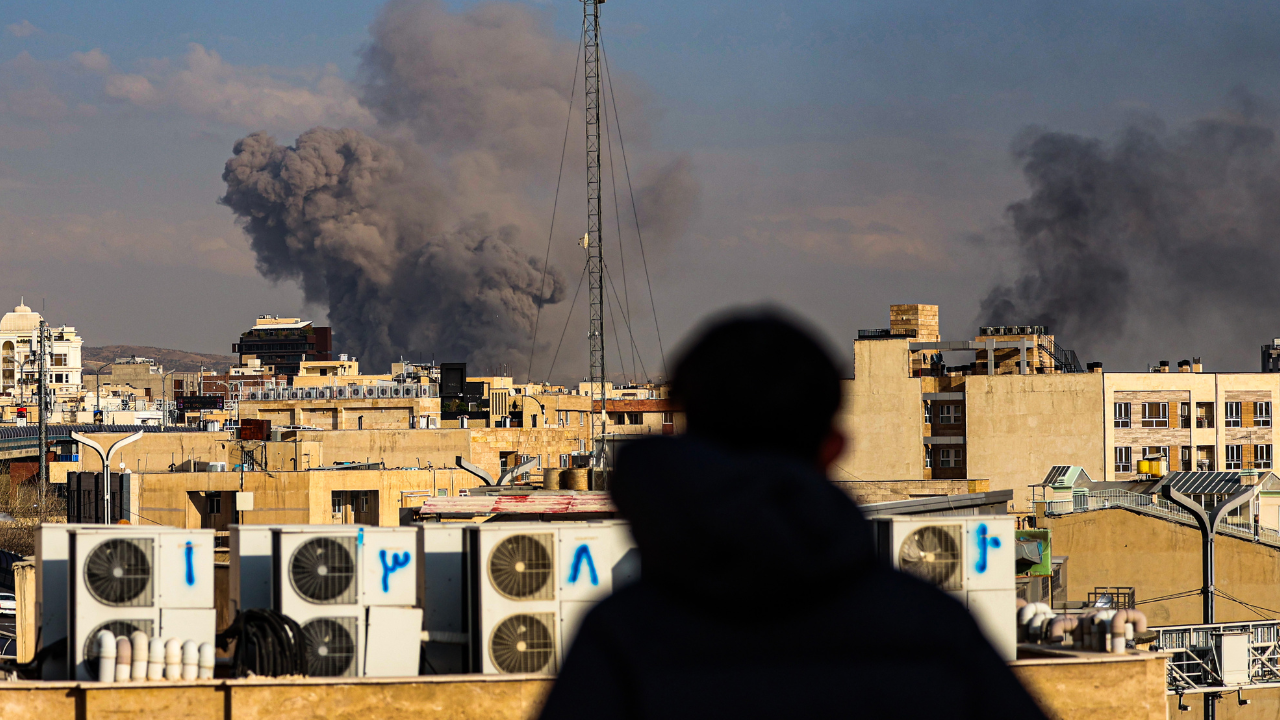
Ordinary Iranians are criticizing their government for failing to provide basic civil defense measures while the country faces joint U.S.-Israeli airstrikes. As officials from the Islamic Revolutionary Guard Corps (IRGC) seek safety in underground bunkers, civilians have been left without adequate protection, early warning systems, or reliable communication channels.
“In a country that has spent 47 years boasting about its military strength to the world, there are no warning sirens, let alone shelters,” said Noori, a Tehran resident who communicated with journalists through text messages. “They themselves hear the sound of airplanes and drones [and only then] realize the enemy airplanes have come into the sky. They do not even have radar.”
To compensate for the lack of proper bomb shelters, Iranian authorities have reportedly designated 82 metro stations and 300 parking garages in Tehran as makeshift shelters. However, Noori highlighted significant problems with this approach: “There are no bathrooms in the Metro stations, and during the 12-day war, when people tried to go there, they were locked.”
The military campaign, dubbed “Operation Epic Fury” by the U.S., has exposed critical gaps in Iran’s civil defense infrastructure. While the regime has spent billions developing missile programs and supporting proxy groups across the Middle East, it appears to have neglected basic safety measures for its own population.
“We are now in a situation where we have no shelters, and we fear for our lives,” said Faraz, another Tehran resident. “If we were at war with someone who would attack residential buildings, so many of the regular citizens would have died. We do not even have warning sirens.”
Lisa Daftari, editor-in-chief of The Foreign Desk and an Iran expert, described the dire situation: “What we’re seeing on the ground in Tehran is a city operating without any formal civil defense infrastructure. Families with children or elderly relatives have largely evacuated to the countryside or the Caspian coast.”
Those remaining in urban areas have resorted to improvised safety measures, such as moving away from windows during explosions or taking shelter in underground parking structures. Daftari noted that public gatherings shown on state media are not spontaneous displays of support but organized by the regime’s Basij militia, which forces people into the streets “to manufacture images of a loyal population.”
The Pentagon is currently investigating a military airstrike that reportedly hit a girls’ school in the town of Minab on February 28, killing 175 people, mostly children, according to Iranian authorities. The school was located on the same street as buildings used by the IRGC, raising questions about the placement of military installations in civilian areas.
Avi Bell, a law professor at the University of San Diego Law School and Bar Ilan University’s Faculty of Law, suggested this proximity is deliberate: “It’s highly unlikely that heavily populated civilian areas are used as drone attack sites or missile launch sites for any reason other than human shielding. On military grounds, it would make far more sense for the launch sites not to be near civilian areas.”
The U.S. Central Command (CENTCOM) issued a safety warning on March 8, stating that “the Iranian regime is using heavily populated civilian areas to conduct military operations, including launching one-way attack drones and ballistic missiles.” CENTCOM identified cities such as Dezful, Esfahan, and Shiraz as locations where military operations were being conducted in civilian areas.
Compounding the crisis, Iranian authorities have implemented an almost complete communications shutdown. According to Netblocks, an internet monitoring organization, the blackout has persisted for over 17 days, with further reductions in telecommunications infrastructure making even VPN services increasingly unavailable.
“I am messaging you under very difficult conditions, with an extremely weak internet,” wrote Manouchehr from Tehran. “I had to pay a very high price for a VPN just to send you this message.”
Many Iranians have noted that the regime had ample opportunity to build civilian protection systems after the Iran-Iraq War (1980-1988), when Iraqi missiles struck civilian areas in Iran. Instead, resources appear to have been directed elsewhere.
“They boast to the whole world, but they shut down water, electricity, air and the internet for their own people,” Noori said. “Whatever money they received from Biden and Obama and from selling oil, they spent on missiles, drones, Hamas, Hezbollah and building weapons.”
The regime has responded to criticism with a security crackdown. Ahmadreza Radan, commander of Iran’s police, announced that over 80 people had been arrested for spreading “disturbing content” online, warning that officers are “ready to pull the trigger” if protests occur.
A request for comment from Iran’s U.N. mission regarding these allegations went unanswered.
Fact Checker
Verify the accuracy of this article using The Disinformation Commission analysis and real-time sources.

23 Comments
Silver leverage is strong here; beta cuts both ways though.
Good point. Watching costs and grades closely.
Interesting update on Iran’s Leadership Retreats to Bunkers While Citizens Lack Basic Air Raid Protection. Curious how the grades will trend next quarter.
If AISC keeps dropping, this becomes investable for me.
Good point. Watching costs and grades closely.
Good point. Watching costs and grades closely.
Nice to see insider buying—usually a good signal in this space.
Good point. Watching costs and grades closely.
Good point. Watching costs and grades closely.
Production mix shifting toward World might help margins if metals stay firm.
Exploration results look promising, but permitting will be the key risk.
The cost guidance is better than expected. If they deliver, the stock could rerate.
Good point. Watching costs and grades closely.
Good point. Watching costs and grades closely.
Interesting update on Iran’s Leadership Retreats to Bunkers While Citizens Lack Basic Air Raid Protection. Curious how the grades will trend next quarter.
Good point. Watching costs and grades closely.
Good point. Watching costs and grades closely.
Interesting update on Iran’s Leadership Retreats to Bunkers While Citizens Lack Basic Air Raid Protection. Curious how the grades will trend next quarter.
Good point. Watching costs and grades closely.
Good point. Watching costs and grades closely.
Uranium names keep pushing higher—supply still tight into 2026.
Good point. Watching costs and grades closely.
Good point. Watching costs and grades closely.