


Listen to the article
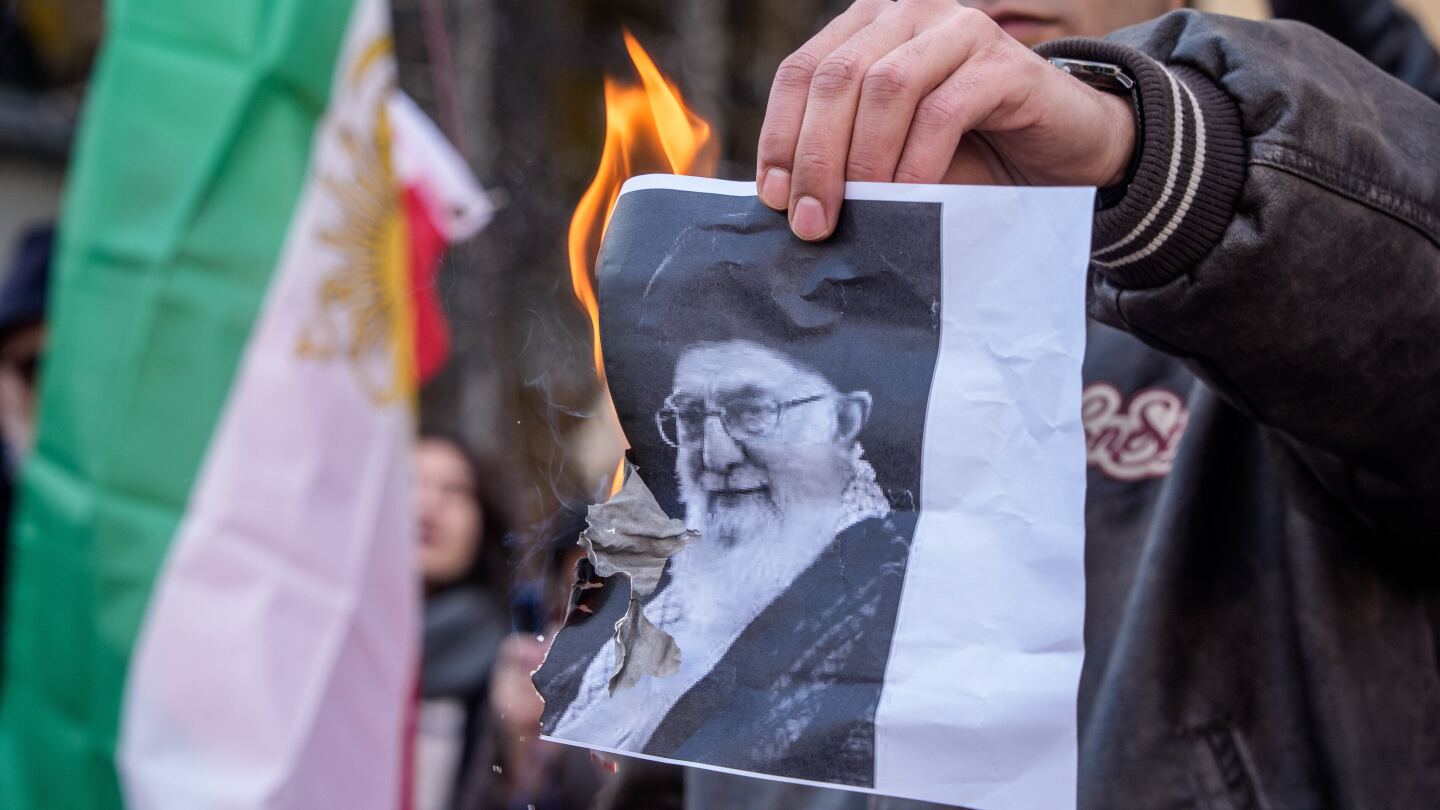
Iran’s leadership faces unprecedented pressure as the largest protests in years sweep across the country, challenging the Islamic theocracy amid growing international isolation and economic hardship.
Government hardliners have issued threats against the United States and Israel over their perceived support for demonstrators. Despite the heated rhetoric, President Trump has indicated that Iran has signaled willingness to negotiate with Washington, even as the death toll from the government crackdown rises into the hundreds.
The leadership’s vulnerability has been exacerbated by Iran’s 12-day war with Israel in June and subsequent U.S. airstrikes against the country’s nuclear facilities. The conflict significantly weakened Iran’s military capabilities, with several leaders killed, air defenses largely destroyed, and missile stockpiles depleted.
Supreme Leader Ayatollah Ali Khamenei, 86, who has ruled since 1989 and holds ultimate power in Iran, was notably absent from public view for days during and after the war. His lack of a designated successor adds another layer of uncertainty to the country’s future.
“The U.S. now has the chance to apply pressure on Iran’s leadership at the weakest point in the Islamic Republic’s 47-year history,” said Kamran Matin, an associate professor of International Relations at the University of Sussex.
President Masoud Pezeshkian, considered a reformist, possesses limited authority to implement the sweeping economic or social changes that protesters are demanding. Experts suggest that pragmatists within the Iranian establishment who might be willing to engage with Washington have been marginalized.
The regional influence Iran once wielded has diminished substantially. Last year’s war highlighted Tehran’s declining clout after Israel targeted Iranian-backed proxies during the Gaza conflict, including Hezbollah in Lebanon, Hamas in Gaza, Houthi rebels in Yemen, and various armed groups in Syria and Iraq.
On the global stage, Iran remains isolated. Its ally Russia is preoccupied with the Ukraine war, while China, a major purchaser of Iranian oil, has offered only cautious statements hoping the Iranian government can “overcome current difficulties and maintain national stability.”
International concerns persist regarding Iran’s nuclear program, which Tehran maintains is peaceful despite Western fears about its highly enriched uranium capabilities. After failed negotiations with the U.S., the United Nations reimposed sanctions in September, freezing Iranian assets abroad, halting arms deals, and penalizing development of Iran’s ballistic missile program.
These sanctions have further crippled Iran’s already struggling economy. In late December, the Iranian rial plunged to a record low of 1.42 million to the U.S. dollar, triggering sharp increases in food prices and other necessities. The economic distress prompted traders and shopkeepers in Tehran’s major markets to protest, quickly evolving into broader anti-government demonstrations across multiple cities.
While decades of repression have limited organized opposition within Iran, citizens have repeatedly risked violent crackdowns when pushed to breaking point by issues ranging from strict enforcement of religious dress codes to unmanageable inflation.
Many Iranians observed the recent U.S. military operation that removed Venezuelan President Nicolás Maduro from power, sparking speculation about similar action against their own leadership. However, U.S. Senator Mark Warner, vice chairman of the Senate Intelligence Committee, cautioned against such expectations, noting that American intervention in the 1953 Iranian coup contributed to anti-U.S. sentiment that fueled the 1979 Islamic Revolution.
“Trump’s primary aim is to change the behavior of the Iranian regime, not necessarily the regime itself,” Matin explained, suggesting that the president’s threats are intended to extract concessions on nuclear enrichment and missile capabilities rather than topple the government.
Despite mounting pressure, there have been no visible signs of significant fractures within the Iranian government. Opposition groups within the diaspora remain divided, and while some Iranians have expressed support for exiled Crown Prince Reza Pahlavi, son of the shah ousted in 1979, the extent of this support remains unclear.
“Iran’s leaders face a perilous moment, but they are no strangers to chaos. The regime has survived wars, sanctions and political upheaval through ruthless force, pragmatism and leadership unity. However, the off-ramps have now significantly narrowed,” said Ellie Geranmayeh, deputy program director with the European Council on Foreign Relations, emphasizing that meaningful change would best come from Iranians themselves.
Fact Checker
Verify the accuracy of this article using The Disinformation Commission analysis and real-time sources.

9 Comments
This is a complex and rapidly evolving situation. It will be important to closely follow the developments in Iran and their implications for the region and global affairs. Maintaining objectivity and avoiding escalation will be crucial.
The reported death toll from the government crackdown is deeply concerning. The leadership’s use of force against its own citizens is unacceptable and will likely further erode its legitimacy both domestically and internationally.
The absence of a designated successor for the aging Supreme Leader adds an extra layer of uncertainty to Iran’s future. It will be important to see how the leadership transition plays out, if and when it occurs.
Interesting developments in Iran. It’s concerning to see the government cracking down on protesters, but I’m curious to learn more about the underlying economic and political factors driving the unrest. Hopefully a peaceful resolution can be found.
You raise a good point. The economic challenges and international isolation Iran is facing seem to be exacerbating the tensions. It will be important to monitor how this situation evolves.
I’m curious to see if the leadership’s willingness to negotiate with the US, as reported, leads to any meaningful dialogue or concessions to help resolve the crisis. Careful diplomacy will be crucial at this juncture.
Yes, the US will need to navigate this situation carefully, balancing support for the protesters with any potential diplomatic openings. A nuanced approach will be key.
The reported weakening of Iran’s military capabilities following the conflict with Israel is quite significant. I wonder how this will impact the government’s ability to respond to the protests and its geopolitical standing in the region.
That’s a good observation. The leadership’s vulnerability due to the military setbacks could embolden the protesters and shift the balance of power, if the reports are accurate.