


Listen to the article
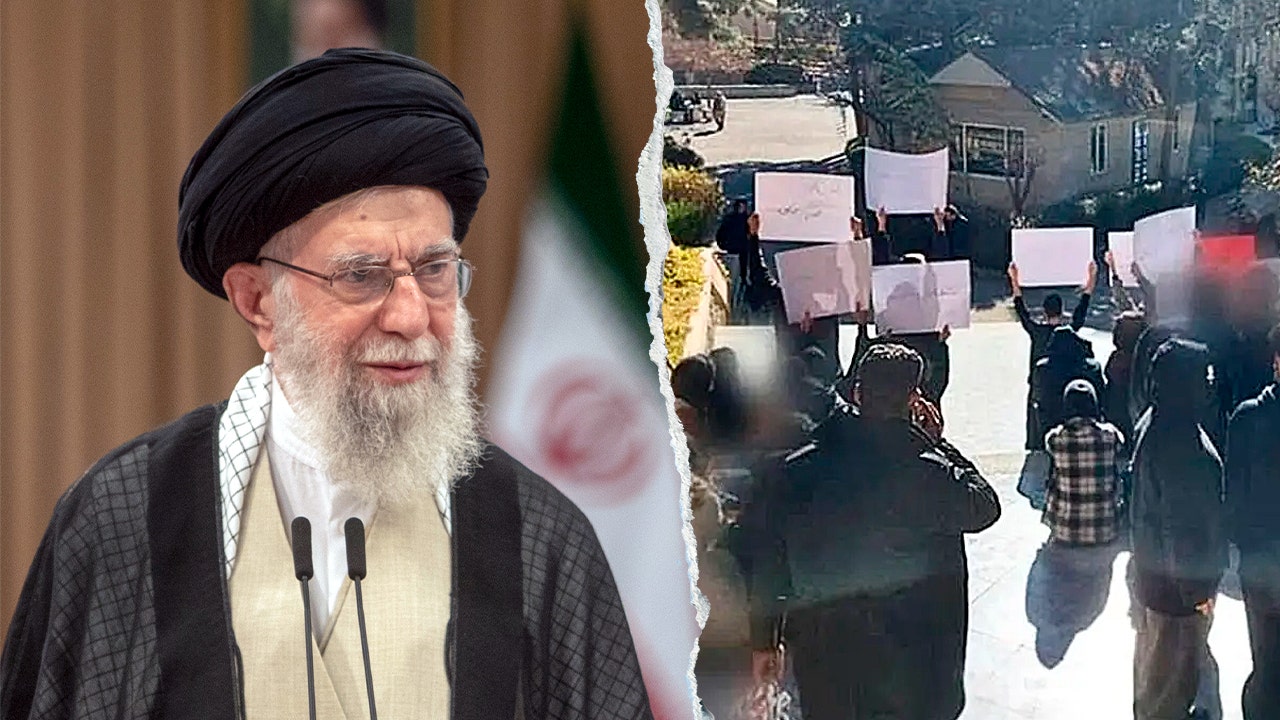
As anti-regime protests continue to spread across Iran, a central question looms over the country’s future: Who would take power if the Islamic Republic were to collapse?
Regional experts and Iranian opposition figures agree that the answer remains unclear and may depend more on how the regime falls than on ideological preferences.
Behnam Ben Taleblu, senior fellow at the Foundation for Defense of Democracies, emphasized that the critical variable is not simply whether the regime collapses, but how such a collapse unfolds. He warned Western governments against backing a cosmetic transition that merely reshuffles elites.
“One thing I fear is the Western temptation for a Maduro-type or Egypt-type model,” Ben Taleblu said, referring to scenarios where entrenched security forces retain power under new leadership. “That will only be playing musical chairs at the top and will not provide the Iranian people a pathway for meaningful change.”
The decisive role of Iran’s security apparatus looms large in any transition scenario. Multiple experts agree that Iran’s future hinges on whether the regime’s coercive apparatus—including the Islamic Revolutionary Guard Corps (IRGC), the Basij militia, and the regular military—remains intact.
Ben Taleblu noted that a successful transition would require sustained protests, economic strikes, and cracks within security units. “What has to be chipped away is the regime’s coercive power,” he said.
Without fragmentation in the security forces, analysts warn that Iran could see a scenario where clerical figureheads disappear but real power remains in the hands of armed institutions. “That’s the fear,” Ben Taleblu added. “If the state plays musical chairs, the street will not settle for it.”
Some analysts point to historical precedents, including Egypt, where the military stepped in amid unrest. Benny Sabti, an Iran expert at Israel’s Institute for National Security Studies, said a military-led transition cannot be ruled out but would be fraught with challenges.
“IRGC generals could theoretically attempt a coup,” Sabti told Fox News Digital, stressing that Iran’s military institutions are not monolithic. He distinguished between the ideological IRGC and the more professionally-oriented regular army.
Despite international attention on jailed activists, experts are skeptical that Iran’s next political leadership would emerge from the country’s prison system. Ben Taleblu said decades of repression have made it nearly impossible to cultivate political leadership inside Iran. “What will come from within are the forces of revolution,” he said. “Political leadership has to be built outside.”
In the diaspora, Reza Pahlavi, son of the last Shah, has positioned himself as a focal point for opposition mobilization. His supporters say he advocates a secular, democratic Iran committed to human rights, while rejecting claims that he seeks to restore the monarchy.
“My role is not to tip the scales in favor of either monarchy or republic,” Pahlavi has said. “I will remain entirely impartial in the process to help ensure that Iranians finally have the right to choose freely.”
Banafsheh Zand, an Iranian-American journalist, told Fox News Digital that Pahlavi is the only viable unifying figure capable of guiding a transition—a view strongly contested by others in the diaspora. Some experts caution that while Pahlavi has visibility in the West and among parts of the Iranian public, he remains a polarizing figure, particularly among Iranians wary of monarchy.
Another long-standing opposition movement, the Mujahedin-e Khalq (MEK), led by Maryam Rajavi, has received backing from some senior U.S. political figures including former Vice President Mike Pence and former Secretary of State Mike Pompeo.
In a statement to Fox News Digital, Rajavi said change “will not come from outside Iran, nor will it be delivered by the will of foreign capitals,” arguing that only an organized, nationwide resistance can overthrow the Islamic Republic. She said the National Council of Resistance of Iran (NCRI) proposes a six-month provisional period following the regime’s overthrow, culminating in free elections.
Critics dispute the MEK’s level of support inside Iran. Sabti said the group’s history of violence in the 1980s and its rigid ideology have alienated younger Iranians.
Speaking to an NCRI conference in Washington D.C. last November, Pompeo stated: “A thriving, democratic, popular government in Iran—not a theocracy, not a monarchy, not an oppressive regime. This will be a great thing for the entire world.”
Ben Taleblu warned against Western governments “playing favorites” among exiled factions, saying legitimacy must ultimately come from inside Iran. He described the moment as a marathon rather than a sprint, cautioning against simplistic narratives about regime collapse.
“This is about getting the best bridgehead to a post-Islamic Republic Iran,” he said, “so that the forces of revolution inside can finally become voters and choose their own fate.”
Fact Checker
Verify the accuracy of this article using The Disinformation Commission analysis and real-time sources.

8 Comments
The future of Iran’s leadership is highly uncertain, given the ongoing unrest. It’s clear that the IRGC and other security forces will play a pivotal role in shaping the outcome, for better or worse. I hope the Iranian people are able to achieve the meaningful change they’re demanding.
This is a thought-provoking analysis of Iran’s future leadership possibilities. The role of the security apparatus will be pivotal, and it’s crucial that any transition avoids simply reshuffling the same elites. I hope the Iranian people are able to achieve the change they’re seeking.
Well said. The outcome of the current unrest in Iran could have far-reaching consequences, both for the country and the broader region. It will be important to monitor how the situation unfolds in the coming weeks and months.
The potential collapse of the Iranian regime is a complex and uncertain situation. I’m curious to see if the security forces maintain control or if more significant change emerges. The outcome could have significant regional implications.
This is a fascinating look at the complex power dynamics within Iran. The outcome of the current protests could have major ramifications for the country’s leadership and regional influence. It will be interesting to see if the regime’s security apparatus maintains control or if more meaningful change emerges.
You raise a good point. The role of Iran’s security forces will be crucial in determining the nature of any political transition. A cosmetic reshuffling would likely disappoint protesters seeking deeper reforms.
This is an important issue to monitor as the situation in Iran continues to unfold. The collapse of the Islamic Republic could open the door to a wide range of potential outcomes, both positive and negative for the Iranian people and the region. I’ll be following the developments closely.
Agreed. The future of Iran is highly uncertain, and the role of the security apparatus will be crucial. It’s vital that any transition provides a genuine pathway for meaningful reform, not just a reshuffling of elites.