


Listen to the article
Iran’s exiled Crown Prince emerges as voice amid growing protests
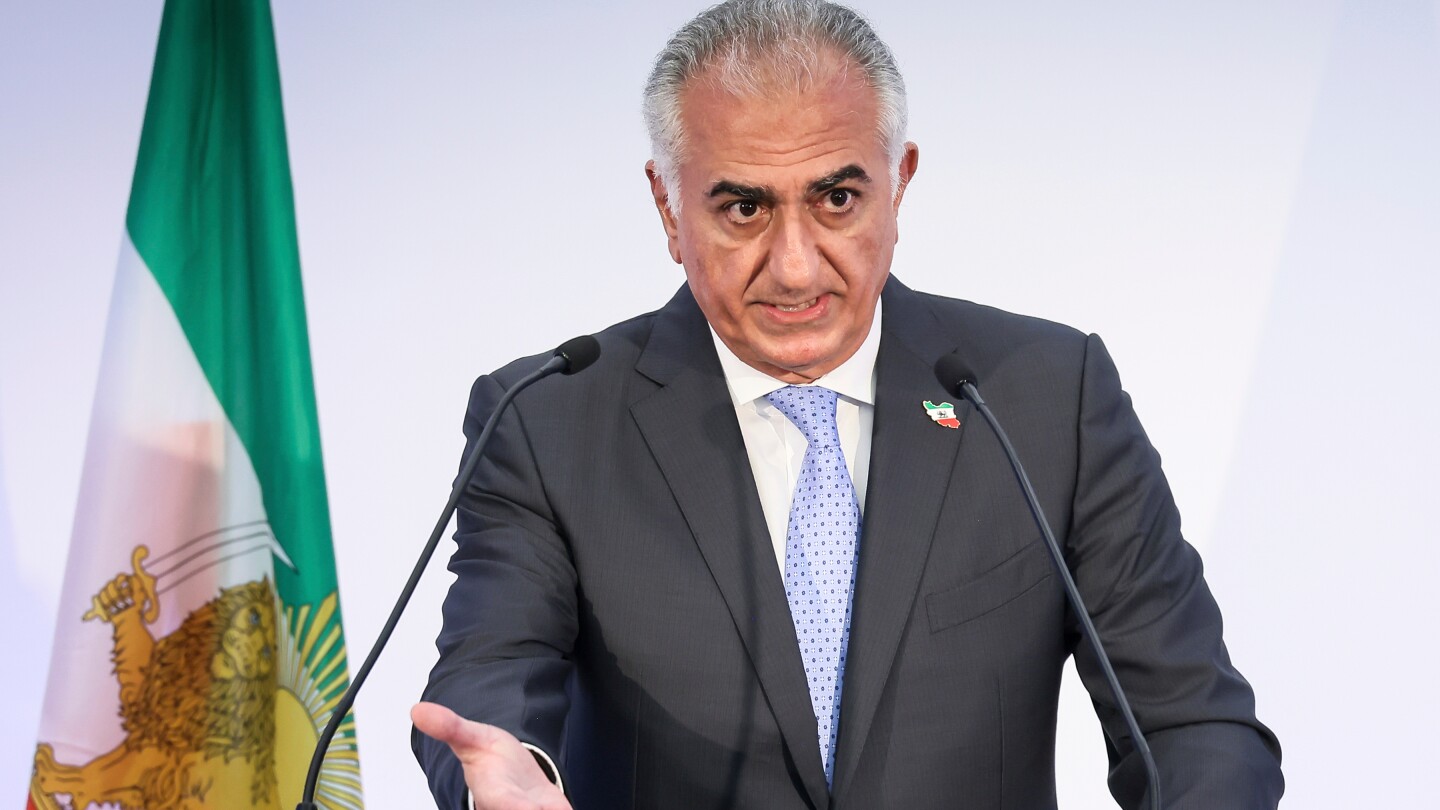
After nearly 50 years in exile, Iran’s Crown Prince Reza Pahlavi is attempting to position himself as a pivotal figure in his homeland’s future despite the controversial legacy of his father’s rule. The 65-year-old son of the deposed Shah Mohammad Reza Pahlavi successfully mobilized protesters across Iran on Thursday night, significantly escalating demonstrations that initially began over economic grievances.
The protests have evolved into a serious challenge to Iran’s theocratic government, which has already been weakened by years of nationwide unrest and a recent 12-day military conflict in June during which Israel launched attacks and the U.S. bombed nuclear enrichment facilities.
Pahlavi issued calls for further demonstrations through Farsi-language satellite news channels and websites abroad, with protesters responding by taking to the streets again on Friday. He has called for additional demonstrations throughout the weekend.
“Over the past decade, Iran’s protest movement and dissident community have been increasingly nationalist in tone and tenor,” explained Behnam Ben Taleblu from the Washington-based Foundation for Defense of Democracies. “The more the Islamic Republic has failed, the more it has emboldened its antithesis.”
Taleblu noted that Pahlavi’s appeal stems from his ability to contrast Iran’s past normalcy with its troubled present. “The success of the crown prince and his team has been in drawing a sharp contrast between the normalcy of what was and the promise of what could be, versus the nightmare and present predicament that is the reality for so many Iranians.”
Iranian state media has responded by blaming “monarchist terrorist elements” for Thursday’s demonstrations, which included burned vehicles and attacks on police kiosks.
Born in 1960, Pahlavi grew up in the luxury of Tehran’s Niavaran Palace as heir to the Peacock Throne. His father’s rule had been secured by a CIA-backed coup in 1953, and the Shah maintained close ties with the United States, which provided billions in weapons sales.
Despite benefiting from rising oil prices in the 1970s, the Shah’s reign was marked by deep economic inequality. His feared SAVAK intelligence agency became notorious for torturing dissidents, fueling growing opposition. As millions joined anti-government protests, the Shah, secretly battling terminal cancer, struggled to respond effectively.
In 1978, Crown Prince Reza left Iran to attend flight school at a U.S. air base in Texas. His father fled the country a year later during what became the Islamic Revolution, which saw Shiite clerics consolidate power and establish a theocratic government that executed thousands of opponents.
Following his father’s death, Pahlavi was declared Shah by a royal court in exile on his 20th birthday in October 1980. “I can understand and sympathize with your sufferings and your inner torment,” he told Iranians in a speech. “Yet there is, I am sure, light beyond the darkness.”
Despite his optimism, nearly five decades have passed with Pahlavi living in exile, primarily in Los Angeles and Washington, D.C., while his mother, Shahbanu Farah Pahlavi, settled in Paris. Though circles of monarchists have maintained dreams of a Pahlavi restoration, broader appeal has been limited by lingering resentment over his father’s rule and perceptions that he remains disconnected from everyday Iranian life.
However, younger generations born after the revolution have only known life under the Islamic Republic, characterized by social restrictions, economic hardship, and government repression. This demographic shift may create new opportunities for Pahlavi’s message to resonate.
In recent years, Pahlavi has suggested the possibility of establishing a constitutional monarchy, potentially with an elected rather than hereditary ruler. “This regime is simply irreformable because the nature of it, its DNA, is such that it cannot,” Pahlavi told the Associated Press in 2017. “People have given up with the idea of reform and they think there has to be fundamental change.”
His advocacy has been amplified by media outlets like Iran International, which has broadcast his calls for protests and shared information for security force members willing to cooperate with him. Mahmood Enayat, general manager of Iran International’s owner Volant Media, stated the channel ran Pahlavi’s messages “on a pro bono basis” as “part of our mission to support Iran’s civil society.”
Pahlavi has faced criticism for his ties to Israel, particularly following his 2023 meeting with Prime Minister Benjamin Netanyahu and after Israel’s 12-day conflict with Iran in June. Yet he remains pragmatic about finding international support.
“My focus right now is on liberating Iran, and I will find any means that I can, without compromising the national interests and independence, with anyone who is willing to give us a hand, whether it is the U.S. or the Saudis or the Israelis or whomever it is,” he stated in 2017.
As protests continue to unfold across Iran, the question remains whether Pahlavi can translate his influence abroad into meaningful political change within his homeland.
Fact Checker
Verify the accuracy of this article using The Disinformation Commission analysis and real-time sources.

9 Comments
I’m curious to see how the crown prince’s involvement impacts the dynamics of the protests. His nationalist messaging could resonate with some segments of the population, but it also risks further polarization.
That’s a good point. His involvement could inflame tensions or potentially unify the diverse array of grievances driving the protests.
The crown prince’s reemergence underscores the complex and multifaceted nature of the unrest in Iran. It will be intriguing to see how his role evolves and whether he can gain traction with the broader protest movement.
While the legacy of his father’s rule remains controversial, the crown prince appears to be positioning himself as a potential alternative to the current regime. His ability to galvanize protesters will be a key factor in the protests’ trajectory.
It’s fascinating to see the exiled Iranian crown prince reemerge as a prominent voice amid the protests. His efforts to mobilize the public could significantly impact the dynamics of the unrest.
The crown prince’s attempt to position himself as a voice for the future of Iran is understandable, but his family’s controversial legacy raises questions about how he will be received by the broader protest movement.
The crown prince’s involvement adds an interesting dynastic element to the protests, which have evolved beyond just economic grievances. His calls for continued demonstrations will be something to watch closely.
It’s an interesting development that the exiled crown prince has reemerged as a prominent figure in the protests. His ability to galvanize support and offer an alternative vision for Iran’s future will be closely watched.
While the crown prince’s nationalist messaging may resonate with some, his family’s history could also alienate segments of the protest movement. The dynamics of his involvement will be an important factor to monitor.