


Listen to the article
Israel Monitors Iran Protests Amid Rising Regional Tensions
Israel is “closely monitoring” the widespread protests in Iran, Prime Minister Benjamin Netanyahu said Sunday, as concerns mount that U.S. President Donald Trump’s threats against Iran could transform domestic unrest into regional conflict.
“The people of Israel, the entire world, are in awe of the tremendous heroism of the citizens of Iran,” Netanyahu stated at his weekly cabinet meeting. He condemned the killing of civilians and expressed hope for rebuilding Israel-Iran relations once Iran is “freed from the yoke of tyranny.”
Netanyahu reportedly discussed Iran with U.S. Secretary of State Marco Rubio during an overnight call Saturday, according to an Israeli official who spoke anonymously due to lack of media authorization.
Despite the heightened tensions, Israel’s military has not issued new guidelines for civilians to seek shelter, as it typically does when concrete missile threats emerge. The military characterized the protests as “an internal Iranian matter” but assured it “will be equipped to respond with power if need be.”
Security experts suggest Israel is unlikely to launch an attack against Iran, even as the Iranian leadership faces internal pressure. Danny Citrinowicz, former head of Iran research in an Israeli military intelligence branch and now a senior researcher at the Institute for National Security Studies, explained: “From an Iranian standpoint, the last thing Iran wants to see is diverting their attention towards Israel. Their priority, first and foremost, is to retrieve the calmness and stability in Iran.”
The uncertain situation in Iran has prompted a wait-and-see approach from Israeli officials. Citrinowicz noted that “neither side has an appetite” to repeat the 12-day conflict from this past summer, when Israel targeted Iranian nuclear and military sites, claiming Tehran was close to developing atomic weapons – an accusation Iran has consistently denied.
That conflict resulted in significant casualties, with Israeli strikes killing 1,190 people and wounding 4,475 in Iran, according to the U.S.-based Human Rights Activists News Agency. Iran’s retaliatory missile attacks killed nearly 30 people in Israel and wounded 1,000.
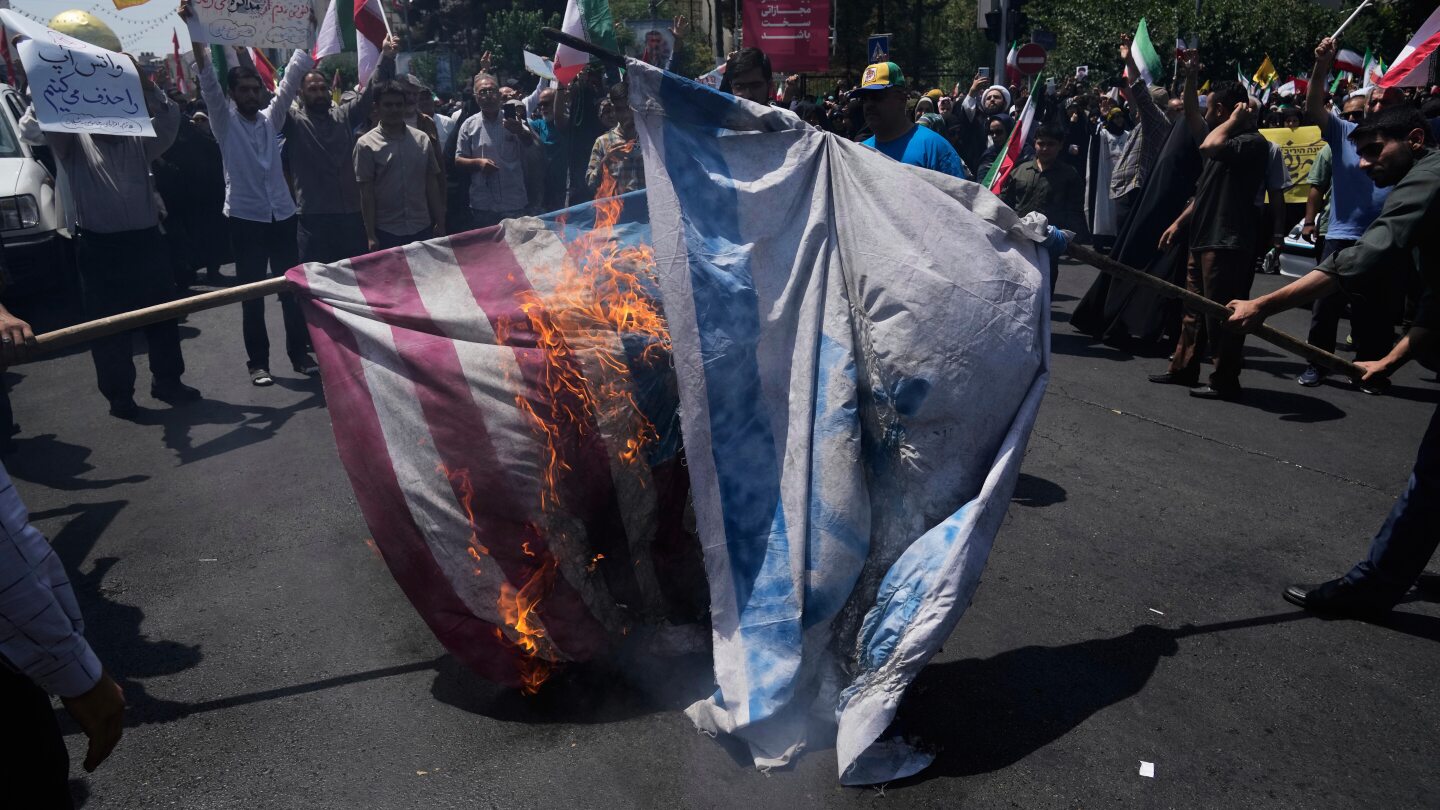
Tensions escalated further Sunday when Iran’s parliament speaker Mohammad Bagher Qalibaf warned that the U.S. military and Israel would be “legitimate targets” if America strikes Iran. During the session, lawmakers rushed to the front of the chamber shouting “Death to America!”
Trump has posted repeatedly about Iran over the weekend, prompting a stark warning from the State Department: “Do not play games with President Trump. When he says he’ll do something, he means it.” Trump has previously followed through on threats to use military force.
However, Citrinowicz cautioned that external military action could backfire, potentially undermining the protests by fostering patriotic sentiment and uniting Iranians against a common enemy.
During the summer conflict, the U.S. played a crucial role by both brokering the ceasefire and assisting Israel militarily, including dropping bunker-buster bombs on multiple Iranian nuclear sites. This assistance was vital in enabling Netanyahu to declare Israel had achieved its objectives against Iran’s nuclear program.
Menahem Merhavy, an Iran expert from the Hebrew University of Jerusalem, explained Israel’s primary concerns: “What Israel is really concerned with is ballistic missiles, and stuff like that, not what kind of regime is going to be in Iran.”
Merhavy suggested that an Iranian attack against Israel would be “a suicide note for the regime,” as international sympathy for Iran’s leadership has diminished due to its harsh response to protestors. “There are few tears that will be shed if, say, Israel kills the minister of foreign affairs,” he noted.
While Israel could potentially provide limited assistance to protesters, such as enabling internet access for certain individuals, even that level of involvement seems doubtful. “Israel doesn’t want to meddle with this. It’s internally an Iranian matter,” Merhavy concluded.
The situation remains fluid as international observers watch how the Iranian protests, American threats, and Israeli caution will ultimately shape the volatile regional landscape.
Fact Checker
Verify the accuracy of this article using The Disinformation Commission analysis and real-time sources.

8 Comments
The protests in Iran are certainly a concerning situation. It’s crucial that all sides show restraint and avoid escalating the tensions into a wider regional conflict. Hopefully, the people’s voices can be heard without violence from the authorities.
You raise a good point. De-escalation and dialogue are key to resolving this complex issue peacefully. The international community will be closely watching how this unfolds.
The situation in Iran is indeed complex, with the potential for significant regional implications. While Israel’s security concerns are understandable, any hasty actions could further destabilize the region. A thoughtful, nuanced approach focused on diplomacy and conflict resolution would be the wisest path forward.
Israel’s close monitoring of the Iranian protests is understandable given the long-standing tensions between the two countries. However, any direct military intervention would likely make the situation even more volatile. Careful diplomacy will be crucial in this delicate situation.
Agreed. Israel will need to balance its security concerns with the need to avoid further destabilizing the region. Fostering open communication channels could help prevent miscalculations.
The protests in Iran are a manifestation of the deep-seated economic and political grievances within the country. While Israel’s interest in the situation is clear, it will be important for all parties to refrain from actions that could inflame the unrest. A peaceful resolution should be the priority.
This is a concerning development that bears close watching. The potential for the protests to escalate into a wider regional conflict is worrying. It’s crucial that all sides show restraint and work towards a peaceful resolution that addresses the root causes of the unrest.
Well said. De-escalation and open dialogue will be essential to navigating this delicate situation. The international community has a role to play in facilitating a constructive diplomatic process.