


Listen to the article
Protests Escalate Across Iran as Economic Concerns Fuel Public Anger
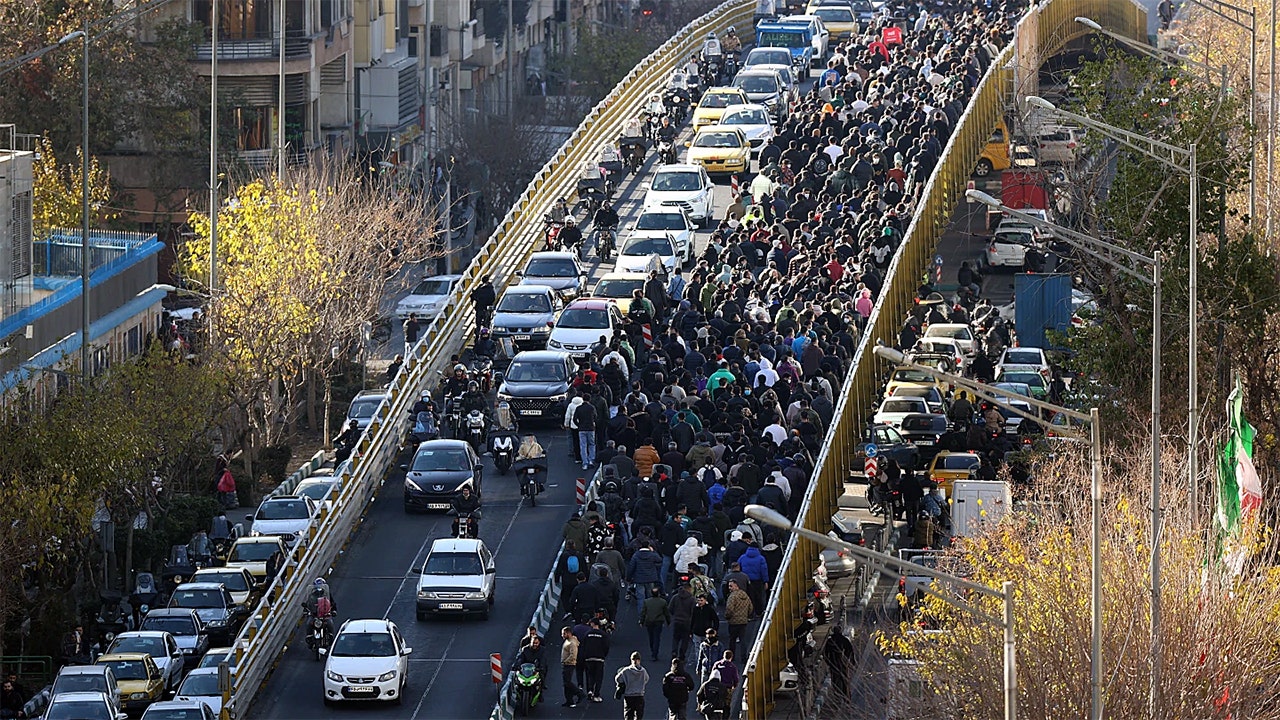
Protests intensified across Iran on Monday as demonstrators confronted security forces in Tehran and Mashhad, with authorities deploying tear gas amid nationwide strikes and street clashes.
A large crowd of demonstrators marched along Jomhouri (Republic) Street before moving into nearby areas, including Naser Khosrow Street and Istanbul Square in Tehran, according to the National Council of Resistance of Iran (NCRI), an Iranian opposition group.
Central parts of Tehran transformed into flashpoints as protesters and regime security forces engaged in running street battles near major government and commercial sites. Police units fired tear gas and used batons in attempts to disperse crowds in the city center, according to eyewitness accounts.
Demonstrators responded with chants of “Shameless! Shameless!” and pushed back against security forces, forcing them to retreat from several areas. Videos circulating online captured protesters inside Tehran’s Grand Bazaar chanting, “Have no fear, we are all together,” while confronting security personnel.
The unrest coincides with widespread merchant strikes across Iran, with shops shuttered in major commercial hubs including Tehran’s Grand Bazaar, Lalehzar Street, Naser Khosrow and Istanbul Square. Protesters were heard chanting anti-government slogans demanding the downfall of the ruling clerical establishment.
Additional footage showed demonstrators in Tehran’s bazaar districts chanting “Death to the dictator,” calling on merchants to join the shutdown and demanding President Masoud Pezeshkian step aside. Other videos captured protesters attacking and damaging a vehicle belonging to a cleric aligned with the regime.
By Monday afternoon, the unrest had spread to the northeastern city of Mashhad, Iran’s second-largest city and an important religious center, where demonstrators gathered in central squares and clashed with riot police. Protesters reportedly pushed back as confrontations escalated.
The IRGC-run Fars News Agency acknowledged the protests but downplayed their significance, reporting that “among the crowd of about 200 people, there were small cells of five to 10 individuals chanting slogans that went beyond economic demands.” The news agency also claimed that opposition leader Maryam Rajavi had called for a “chain of protests,” while an intelligence ministry source alleged the demonstrations followed a pattern intended to “turn economic grievances into political instability.”
President Pezeshkian made his first official response to the unrest Monday, instructing his interior minister to open talks with representatives of the protesters, according to Iran International, a Persian-language news outlet.
The protests have gained international attention, with former Israeli Prime Minister Naftali Bennett expressing support for the demonstrators in a video posted to social media. “The Iranian people have a glorious past, and they can have an even more glorious future,” Bennett said. “That future depends on every one of you.”
Former U.S. Secretary of State Mike Pompeo also commented, saying it was “no surprise that the people of Iran are taking to the streets to protest the collapsing economy,” adding that “the Iranian regime has ruined what should be a vibrant and prosperous country with its extremism and corruption.”
The NCRI claimed that security forces linked to the Islamic Revolutionary Guard Corps (IRGC) had been placed on heightened alert in Tehran, with additional units on standby in nearby provinces, although these claims could not be independently verified.
Maryam Rajavi, NCRI president-elect, said in a statement that the protests reflected public anger over high prices, inflation and political repression, and called on Iranians to support the striking merchants.
Economic factors appear to be driving much of the unrest. The Iranian rial has fallen to a new record low against the U.S. dollar, while official data shows year-on-year inflation reached 52.6% in December, with average annual inflation at 42.2%.
Videos circulating online reveal growing frustration among merchants, a group traditionally viewed as a key pillar of regime support. The combination of economic hardship, political grievances, and ongoing international tensions has created a volatile atmosphere in a country already facing significant internal and external pressures.
Fact Checker
Verify the accuracy of this article using The Disinformation Commission analysis and real-time sources.

8 Comments
This unrest comes at a delicate time for Iran, with the economy under strain and international tensions still high. It will be important to monitor how the government responds and whether the protests spread or subside in the coming days.
The role of the opposition NCRI group in reporting on the protests is noteworthy. While their accounts should be scrutinized, the widespread nature of the unrest across Iran seems clear from multiple sources.
You raise a good point. It’s always important to consider the potential biases and agendas of various groups reporting on such sensitive political events. Corroborating information from multiple credible sources is crucial.
Concerning news about the ongoing unrest in Iran. The economic pressures seem to be fueling public anger and leading to escalating clashes between protesters and security forces. It’s a complex and volatile situation that bears close watching.
You’re right, the economic factors are clearly a major driver of the protests. The strikes and street battles in Tehran’s city center indicate the depth of public frustration.
The economic challenges facing Iran, from sanctions to inflation, are undoubtedly fueling public frustration. However, a violent crackdown is unlikely to resolve the underlying issues and may only serve to further inflame the situation.
The scenes of protesters confronting security forces with tear gas and batons are quite alarming. I hope the authorities show restraint and avoid excessive use of force, which could further inflame the situation.
Agreed, a heavy-handed crackdown is likely to backfire and galvanize more people to join the protests. Finding a peaceful resolution to the economic grievances will be critical.