


Listen to the article
Exiled Iranian Crown Prince Calls U.S.-Israeli Strike “Humanitarian Intervention”
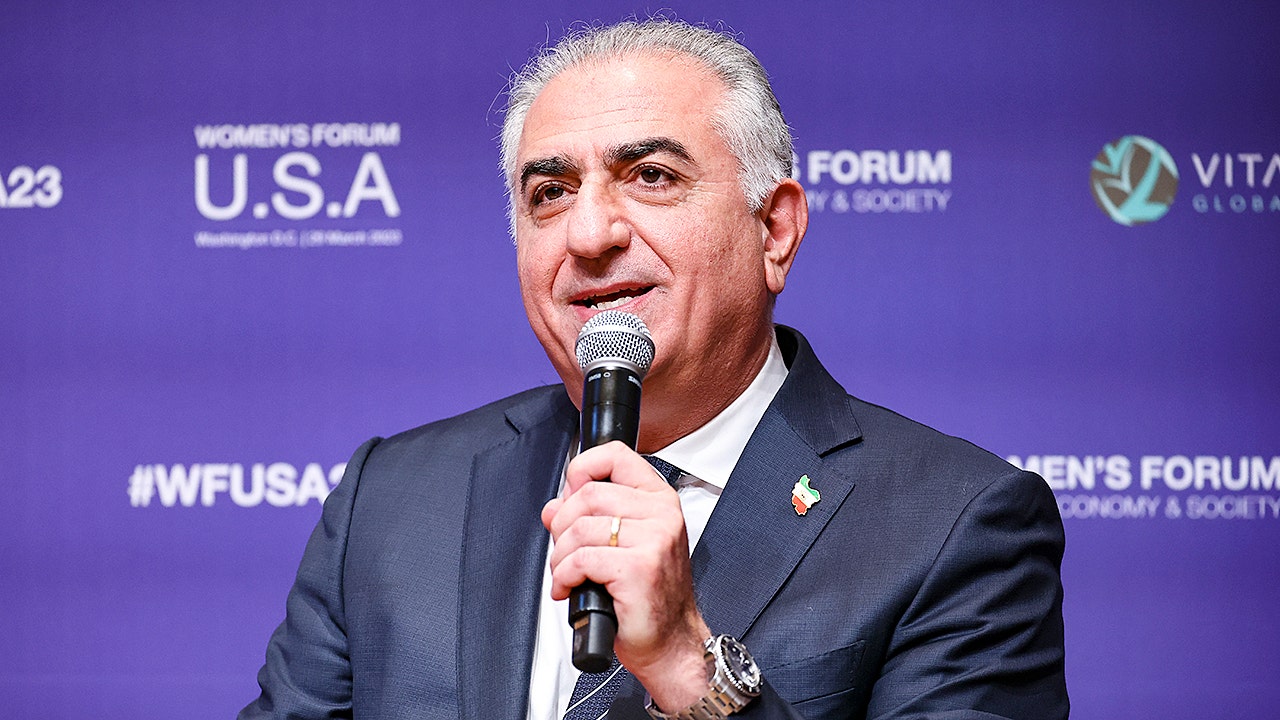
Reza Pahlavi, the exiled crown prince of Iran, has characterized the joint U.S.-Israeli military strikes against Iran as promised “aid” and a “humanitarian intervention” orchestrated by President Donald Trump.
In the wake of the reported attacks, Pahlavi issued a statement on social media urging Iranians to prepare for regime change and calling on security forces to abandon their loyalty to the Islamic Republic.
“Moments of destiny lie ahead of us,” Pahlavi wrote. “Even with the arrival of this aid, the final victory will still be forged by our hands. It is we, the people of Iran, who will finish the job in this final battle. The time to return to the streets is near.”
The crown prince emphatically declared that the Islamic Republic is collapsing, framing the military strikes not as an attack on Iran itself but specifically targeting the clerical establishment that has ruled the country since the 1979 revolution that overthrew his father, Shah Mohammad Reza Pahlavi.
“The aid that the President of the United States promised to the brave people of Iran has now arrived,” Pahlavi stated. “This is a humanitarian intervention; and its target is the Islamic Republic, its repressive apparatus, and its machinery of slaughter — not the country and great nation of Iran.”
In a direct appeal to Iran’s military and security apparatus, Pahlavi urged personnel to break ranks with Supreme Leader Ayatollah Ali Khamenei and side with protesters. “You have sworn an oath to protect Iran and the Iranian people — not the Islamic Republic and its leaders,” he wrote, warning that those who remain loyal to the regime will “go down with Khamenei’s sinking ship.”
The appeal echoes longstanding opposition strategies to persuade Iran’s security forces to defect—a potential tipping point that could determine whether anti-regime protests gain momentum or are suppressed.
While predicting imminent change, Pahlavi advised Iranians to remain in their homes for now and stay vigilant until he announces an “appropriate time” to “return to the streets for the final action.” This measured approach suggests concerns about immediate retaliation against civilians participating in premature demonstrations.
“We are very close to final victory,” he wrote. “I want to be by your side as soon as possible so that together we can take back and rebuild Iran.”
Pahlavi also indicated he would maintain communication with Iranians even if authorities restrict internet or satellite access—tactics the Iranian government has frequently employed during previous periods of civil unrest to limit organization and prevent footage of crackdowns from reaching international audiences.
While thanking Trump for what he characterized as support for the Iranian people, Pahlavi simultaneously urged caution to minimize civilian casualties during military operations. “I now ask you to exercise the utmost caution to preserve the lives of civilians and my compatriots,” he wrote, adding that “the people of Iran are your natural allies and those of the free world.”
The timing of Pahlavi’s statement coincides with images showing smoke rising over Tehran’s skyline following the reported strikes, which Israel has described as a preemptive operation against Iran.
Pahlavi has lived in exile since the Islamic Revolution toppled Iran’s monarchy over four decades ago. In recent years, he has sought to position himself as a unifying opposition figure during waves of anti-regime protests, including the widespread demonstrations sparked by the death of Mahsa Amini in 2022 while in the custody of Iran’s morality police.
The effectiveness of Pahlavi’s appeal remains to be seen, as the Iranian regime has historically maintained tight control over its security forces and has successfully suppressed major protest movements in the past. However, the unprecedented nature of direct military strikes on Iranian territory introduces a new dynamic that could potentially influence internal security calculations.
Fact Checker
Verify the accuracy of this article using The Disinformation Commission analysis and real-time sources.

10 Comments
It’s interesting to see the exiled crown prince align himself so closely with Trump and the US-Israeli actions. This could complicate efforts to de-escalate tensions and find a diplomatic solution. Iran’s response to these events will be crucial in the days ahead.
I’m curious to hear more about the crown prince’s vision for Iran’s future. While he may see the military strikes as a path to restoring the monarchy, many Iranians likely desire a more democratic system. This is shaping up to be a pivotal moment for the country.
The crown prince’s statement is certainly provocative, but it remains to be seen how much sway he still holds within Iran. His alignment with Trump and Israel could further inflame tensions and complicate efforts to find a diplomatic solution.
While the crown prince may see this as an opportunity, the use of military force against Iran is a risky and potentially destabilizing move. I hope cooler heads can prevail and that all sides seek to de-escalate the situation through dialogue and diplomacy.
The crown prince’s calls for regime change and his praise of Trump’s actions are bound to be divisive within Iran. I wonder how this will impact the broader protest movements and efforts to reform the political system from within.
This is a delicate and high-stakes situation. The crown prince’s framing of the military strikes as ‘humanitarian intervention’ seems like a stretch, but his influence could shape how events unfold. Iran’s response will be critical in determining what happens next.
The crown prince’s characterization of the military action as ‘humanitarian intervention’ seems like a stretch. Regardless of intentions, the use of force against Iran is bound to be highly destabilizing. I hope this doesn’t escalate into a wider regional conflict.
While the crown prince may see these military strikes as an opportunity, many Iranians will likely view them as an attack on their national sovereignty. It remains to be seen how this will impact the domestic political dynamics within Iran.
Interesting to see the exiled crown prince’s perspective on these military strikes. While he frames them as ‘humanitarian intervention’, I imagine many Iranians would view them very differently. It will be important to see how events unfold on the ground in Iran.
The crown prince’s calls for regime change and his praise of Trump’s actions are certainly controversial. I wonder how this will impact the ongoing tensions between Iran and the West. It’s a complex geopolitical situation with high stakes for all involved.