


Listen to the article
Iranian drone strikes on Monday forced Qatar to suspend liquefied natural gas (LNG) production, sending shockwaves through global energy markets and raising concerns about potential supply disruptions amid escalating regional tensions.
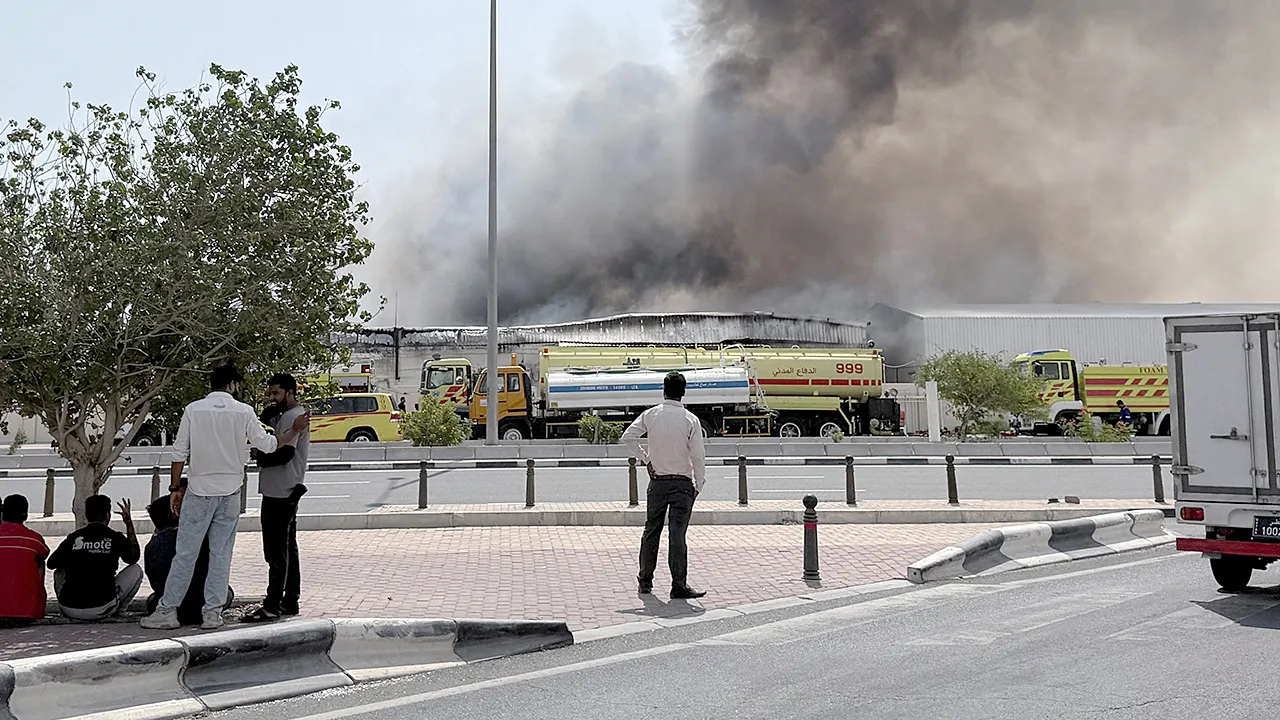
QatarEnergy, the state-owned company and one of the world’s largest LNG producers, halted operations at two facilities after drones launched from Iran struck the sites. Qatar’s Ministry of Defense confirmed that two drones hit facilities in the country, though no casualties were reported.
The attacks targeted a water tank at a power plant in Mesaieed and critical energy infrastructure at Ras Laffan, which houses the world’s largest LNG export facility. The Ras Laffan complex is considered one of the most strategically important energy hubs globally.
The significance of this disruption cannot be overstated. According to the U.S. Energy Information Administration, approximately 20% of global LNG trade passes through the Strait of Hormuz, with Qatar being the primary source. This vital shipping lane has become increasingly volatile as regional tensions escalate.
Financial markets responded dramatically to the news. European benchmark natural gas futures surged by the largest margin since the 2022 energy crisis that followed Russia’s invasion of Ukraine. Dutch TTF natural gas prices reportedly jumped 50% following news of the shutdown. Asian LNG markets also recorded significant gains as traders scrambled to assess the potential duration and scale of the supply disruption.
“The threat to security of supply is here and now,” said Simone Tagliapietra, an analyst at Bruegel, speaking to Bloomberg. “The extent of it will depend on the duration of the shutdown, but we are now into a new scenario.”
The attacks on Qatar’s energy infrastructure weren’t isolated incidents. In Saudi Arabia, another drone strike caused a fire at the kingdom’s Ras Tanura oil refinery, forcing a partial shutdown of operations there as well. While Saudi authorities have not reported casualties from this incident, the coordinated nature of these attacks has heightened fears about broader instability throughout the Gulf’s crucial energy corridor.
The timing of these attacks is particularly concerning for European energy markets, which have spent the past two years diversifying away from Russian natural gas following the invasion of Ukraine. Qatar has emerged as an increasingly important supplier to European countries looking to reduce their dependence on Russian energy. Any prolonged disruption to Qatari LNG exports could potentially force some European buyers to seek alternative supplies during a period of already tight global energy markets.
Energy security experts are closely monitoring how long Qatar’s LNG facilities will remain offline. Even a short-term disruption could trigger price volatility, while a longer shutdown might have more profound implications for global gas markets, especially as winter approaches in the Northern Hemisphere when demand typically increases.
The attacks come amid rising tensions in the Middle East, with Iran increasing its aggressive posture toward regional infrastructure. The targeting of energy facilities represents a significant escalation, as it directly impacts global energy supplies and threatens economic stability beyond the immediate region.
For Qatar, which has positioned itself as a reliable global energy supplier, the attacks present both security and economic challenges. The country has invested billions in expanding its LNG production capacity, with plans to increase output substantially in the coming years to maintain its position as a leading global supplier.
As markets continue to assess the fallout from these attacks, energy analysts warn that prolonged instability in the Gulf region could lead to sustained higher prices for natural gas and potentially wider repercussions throughout global energy markets.
Fact Checker
Verify the accuracy of this article using The Disinformation Commission analysis and real-time sources.

16 Comments
I’m curious to see how this will impact Qatar’s plans to expand its LNG production capacity. This disruption could force them to rethink their timeline and investment priorities.
Good point. Qatar is a major player in the global LNG market, so any setbacks in their expansion could have wider ramifications.
This attack on Qatar’s LNG facilities is deeply concerning. Any disruption to global energy supply could have far-reaching consequences, especially with the ongoing volatility in the region.
You’re right, the Strait of Hormuz is a crucial chokepoint for LNG trade. These types of attacks raise serious questions about the security of critical energy infrastructure in the Middle East.
The involvement of Iranian drones in this attack is deeply concerning. It highlights the growing regional tensions and the potential for further escalation.
Absolutely. The security of energy infrastructure in the Middle East is becoming an increasingly pressing issue that requires careful diplomatic and strategic responses.
The surge in energy prices following this incident highlights the fragility of the global LNG market. Diversifying supply sources and improving resilience should be priorities for policymakers.
Agreed. Exploring alternative energy sources and transportation routes could help reduce reliance on volatile regions like the Persian Gulf.
The impact of this disruption on global energy markets is likely to be significant, given Qatar’s importance as a major LNG exporter. It will be interesting to see how other producers respond to fill the supply gap.
That’s a good observation. Countries like the United States, Australia, and others may need to ramp up LNG exports to help offset the shortfall from Qatar.
The potential for further escalation in the region is deeply concerning. Maintaining open lines of communication and pursuing diplomatic solutions will be essential to prevent a wider conflict.
Well said. De-escalating tensions and finding diplomatic resolutions should be the top priority for regional and global stakeholders.
This incident serves as a stark reminder of the vulnerability of critical energy infrastructure to drone attacks and other asymmetric threats. Strengthening security measures should be a top priority.
You make a good point. Investing in advanced defense systems and improving early warning capabilities could be crucial in mitigating the risks posed by drone attacks.
This attack on Qatar’s LNG facilities is a stark reminder of the geopolitical risks that energy producers face. Diversifying supply sources and strengthening regional cooperation will be crucial in the long run.
Absolutely. Developing more resilient and interconnected energy systems could help mitigate the impact of localized disruptions and improve overall energy security.