


Listen to the article
After days of communications blackout, Iranian citizens experienced a partial restoration of international phone service on Tuesday, marking the first time many have been able to connect with the outside world since authorities imposed sweeping restrictions amid violent crackdowns on anti-government protests.
Residents in Tehran reported being able to briefly place calls to international numbers, though significant limitations remain in place. Text messaging services continue to be disabled, and internet access remains restricted to government-approved domestic websites, leaving most Iranians largely isolated from global communications.
The limited restoration comes as security forces maintain a heavy presence across central Tehran. Residents describe seeing riot police, Revolutionary Guard units, and plainclothes officers deployed strategically throughout the capital as authorities work to contain the ongoing unrest.
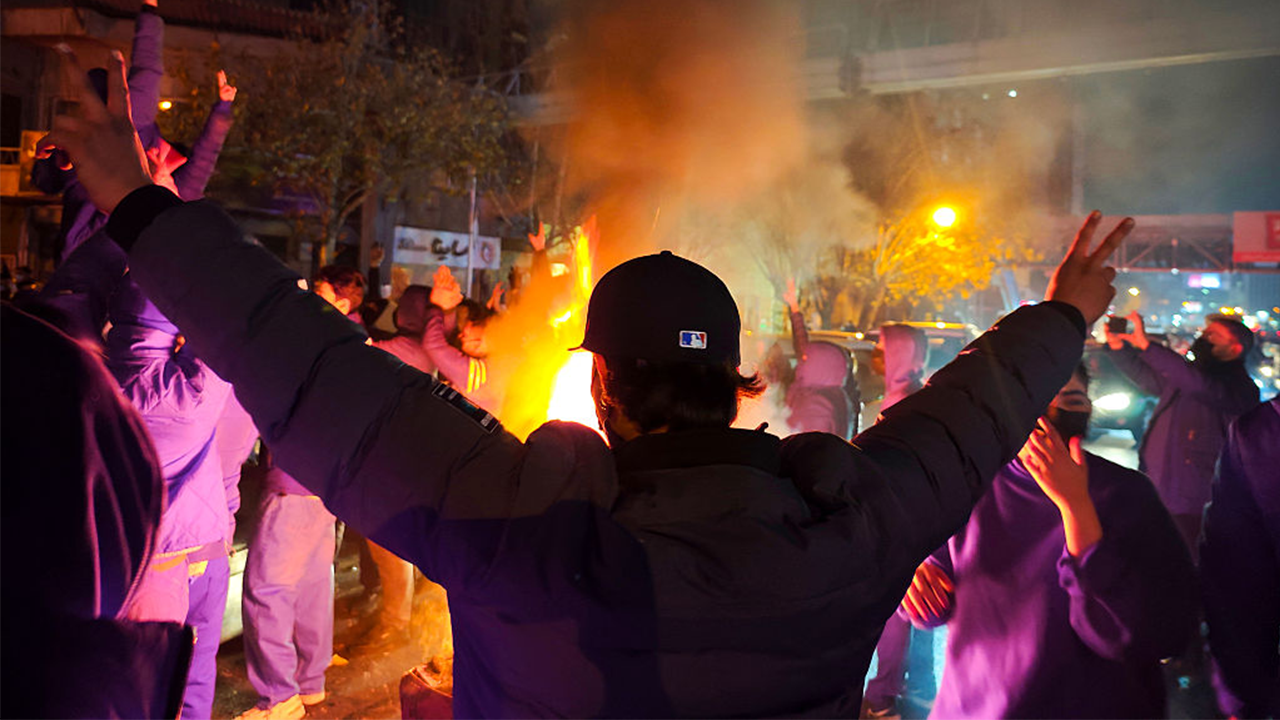
The protests, which have intensified in recent weeks, initially erupted over Iran’s deteriorating economic situation but quickly evolved into broader demonstrations calling for regime change. Activist groups report that hundreds of people have been killed during the government’s crackdown, though exact figures remain difficult to verify due to the communications blackout and tight state controls on information.
According to local sources, several government offices and financial institutions have sustained damage during the protests. Merchants in the capital report being ordered to reopen their businesses despite ongoing security operations, though foot traffic remains noticeably sparse in many areas of Tehran.
The situation has drawn heightened international attention as tensions escalate between Tehran and Washington. U.S. President Donald Trump has claimed that Iran wants to negotiate with his administration following his threat to take military action against the country over its response to the protests.
“Iran better not start shooting, because we’ll start shooting, too,” Trump warned on Friday, significantly raising the stakes in the already tense relationship.
Despite the hostile rhetoric, diplomatic channels appear to remain open. Iranian Foreign Minister Abbas Araghchi told Al Jazeera in an interview aired Monday night that communications with U.S. envoy Steve Witkoff have “continued before and after the protests and are still ongoing.” However, Araghchi emphasized that “Washington’s proposed ideas and threats against our country are incompatible,” while asserting that Tehran is “fully prepared for war” should the U.S. launch an attack.
The White House has attempted to balance firm messaging with diplomatic openings. Press Secretary Karoline Leavitt told reporters that diplomacy remains Trump’s first option, but noted that the president “has shown he’s unafraid to use military options if and when he deems necessary, and nobody knows that better than Iran.”
“He certainly doesn’t want to see people being killed in the streets of Tehran. And unfortunately, that’s something we are seeing right now,” Leavitt added.
The Iranian government has responded to the unrest with both force and displays of support. State television broadcast pro-government demonstrations on Monday, showing tens of thousands of supporters chanting “Death to America!” and “Death to Israel!” as well as “Death to the enemies of God!”
The legal consequences for protesters have been made explicit by Iranian authorities. The country’s attorney general has issued warnings that anyone participating in protests will be considered an “enemy of God,” a designation that carries the death penalty under Iranian law.
Further complicating the situation, President Trump announced on Monday that countries doing business with Iran will face immediate 25% tariffs, adding economic pressure to his administration’s response to Tehran’s crackdown.
As the situation continues to develop, the partial restoration of communications represents only a minor easing of restrictions, with most Iranians still facing significant barriers to accessing information and connecting with the outside world during this period of intense domestic turmoil and international tension.
Fact Checker
Verify the accuracy of this article using The Disinformation Commission analysis and real-time sources.

15 Comments
This is a worrying situation for the Iranian people. I hope the international community continues to pressure the government to respect basic civil liberties and restore full communication capabilities.
Agreed. The world is watching, and the Iranian authorities must be held accountable for their heavy-handed response to these protests.
This is a complex and rapidly evolving situation. I hope the international community continues to closely monitor developments and finds ways to support the Iranian people’s right to free expression and access to information.
The partial restoration of international call access is a small positive, but the broader crackdown on communication and protests is extremely concerning. The Iranian government needs to show restraint and prioritize the rights of its citizens.
While the limited international call access is a small improvement, the ongoing internet blackout and security force deployments are deeply troubling. The Iranian people deserve unfettered access to information and the ability to freely communicate.
The partial restoration of international phone service is a small positive, but the ongoing internet blockade and security crackdown is deeply worrying. These protests have become a fight for basic freedoms.
Agreed, the government’s heavy-handed response is concerning. Maintaining open communication channels should be a priority to avoid further escalation.
This is a complex and rapidly evolving situation. I hope the Iranian government takes steps to fully restore communication capabilities and allow for peaceful protest. The people’s right to free expression must be protected.
Well said. Maintaining open channels of communication is crucial during times of civil unrest. The authorities must show restraint and respect fundamental freedoms.
The partial restoration of communication services is a positive sign, but the broader crackdown on protests is extremely concerning. The Iranian government needs to respect its citizens’ fundamental rights.
Absolutely. Maintaining open channels of communication is crucial during times of civil unrest. The authorities must show restraint and allow for peaceful protest.
While the limited call access is a step in the right direction, the Iranian authorities need to fully restore unfettered internet and communication for their citizens. Restricting information flow will only breed more unrest.
You make a good point. Cutting off Iranians from the outside world is counterproductive and will likely backfire on the government.
This is a concerning situation for the people of Iran. I hope they are able to regain full access to communication and the internet soon, as it’s crucial for them to stay connected during this turbulent time.
You’re right, the restrictions on communication are very troubling. Residents need to be able to coordinate and share information freely.