


Listen to the article
As U.S. forces mass in the Middle East, Iran faces the prospect of major strikes by the world’s most powerful military. American operations could target the Islamic Republic’s leadership, military installations, nuclear sites, and critical infrastructure.
Iran’s military capabilities pale in comparison to those of the United States, and its position has been further weakened following last year’s Israeli-led military campaign and recent domestic unrest. Despite these vulnerabilities, Iran maintains significant retaliatory options that could inflict substantial damage on U.S. forces and regional allies.
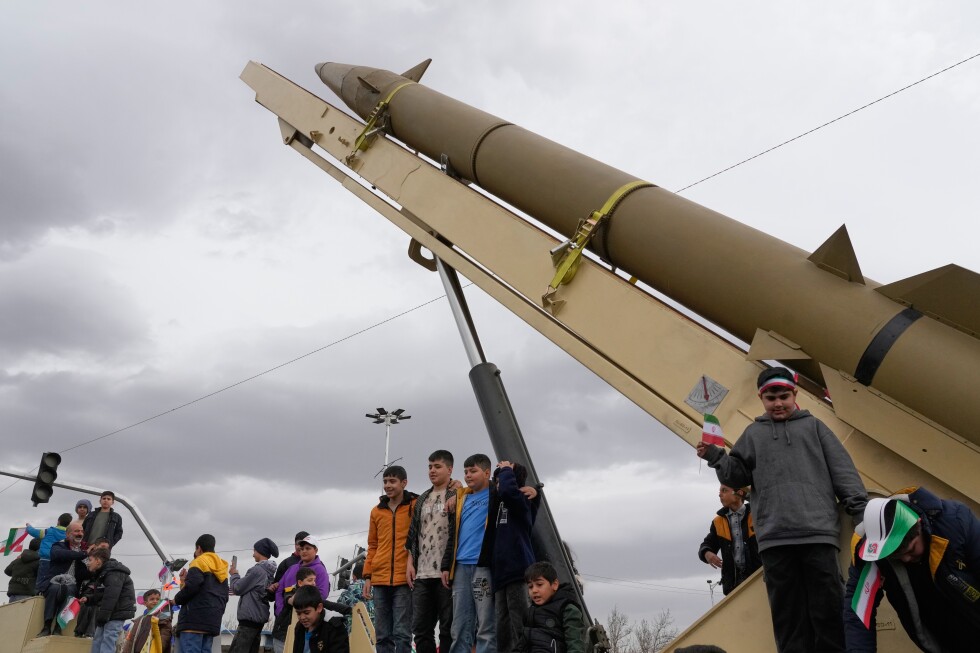
According to Israeli intelligence estimates, Iran still possesses hundreds of missiles capable of striking Israel, despite suffering major losses during the June conflict. More concerning for U.S. military planners is Iran’s substantial arsenal of shorter-range missiles that can target American bases throughout the Gulf region and offshore forces, including the aircraft carrier battle groups stationed in the area.
Iranian officials have previously threatened to close the Strait of Hormuz, a critical waterway through which approximately one-fifth of the world’s traded oil passes. During recent military drills, Iran claimed to have partially closed the strait, signaling its potential vulnerability in case of conflict.
The rhetoric from Tehran has been uncompromising. Supreme Leader Ayatollah Ali Khamenei has warned that Iran could sink American warships, while Iran’s UN Ambassador Amir Saeid Iravani declared that “all bases, facilities and assets of the hostile force in the region” would be legitimate targets in the event of U.S. military action.
Last June’s conflict saw Israel conduct extensive strikes against Iran’s long-range missile arsenals, military leadership, and nuclear program. The United States also targeted Iran’s primary nuclear facilities, with President Donald Trump claiming they had been “obliterated.” However, the extent of the damage and subsequent reconstruction efforts remains unclear.
“Iran may be weak. But it still has ways to inflict real pain on the United States — and much more incentive to try than it did before,” said Nate Swanson, head of the Atlantic Council’s Iran Strategy Project. “Iranian officials feel they need to give Trump a bloody nose or they will perpetually be at risk.”
Iran has demonstrated its willingness to strike U.S. interests in the past. Following the 2020 killing of General Qassem Soleimani, Iran launched missiles at American bases in Iraq. Similar strikes targeted a U.S. base in Qatar near the conclusion of last year’s conflict. These attacks caused damage but no fatalities, as early warning systems and missile defenses were activated.
Beyond conventional military responses, Iran could activate its global network of proxies and operatives. The country has been accused of using criminal organizations and armed groups to plan or execute attacks worldwide, targeting dissidents, Israeli nationals, and Jewish institutions.
Last year’s Israeli operations revealed significant vulnerabilities in Iran’s security apparatus, killing several top generals and nuclear scientists. At one point, Trump claimed U.S. intelligence knew Khamenei’s location, describing him as an “easy target.” Fresh from the operation against Venezuelan leader Nicolás Maduro, Trump might consider decapitation strikes aimed at toppling Iran’s theocracy.
However, security experts believe the Iranians have likely learned from past failures and strengthened internal security measures. Danny Citrinowicz of Israel’s Institute for National Security Studies suggests contingency plans probably exist in case Khamenei is killed, with power potentially shifting to a small committee until the situation stabilizes.
American allies in the region are visibly concerned about the prospect of war. Israeli Prime Minister Benjamin Netanyahu has warned of severe retaliation for any Iranian attack. Gulf states like Saudi Arabia and the United Arab Emirates, which host thousands of American troops, have reportedly refused to allow their airspace to be used for strikes against Iran.
An anonymous Gulf diplomat revealed that regional leaders are engaged in talks with both Iran and the United States to prevent conflict, warning that war could have grave consequences, including a spike in global oil prices.
Another strategic pressure point for Iran is the Strait of Hormuz. Disruption of this vital shipping lane could send shockwaves through global energy markets, as demonstrated by the Houthi rebels’ actions in the Red Sea over the past two years. In 2019, strikes on Saudi oil infrastructure temporarily halved the kingdom’s production capacity. While Yemen’s Houthis claimed responsibility, U.S. officials later attributed the sophisticated attack to Iran.
The nuclear dimension adds further complexity to the situation. Trump has warned of “bad things” if Iran refuses to negotiate on its nuclear program, with another round of indirect talks scheduled in Geneva. Following the U.S. withdrawal from the 2015 nuclear agreement, Iran accelerated uranium enrichment, accumulating near-weapons-grade material.
Although recent strikes damaged Iran’s major nuclear sites, questions remain about whether enriched uranium was relocated beforehand or secured underground. Iran claims its enrichment capabilities have been disabled, but it has also barred international inspections.
While experts believe Iran remains far from developing a deployable nuclear weapon, radioactive material could pose significant hazards in the event of widespread military strikes against the country’s infrastructure.
Fact Checker
Verify the accuracy of this article using The Disinformation Commission analysis and real-time sources.

21 Comments
Silver leverage is strong here; beta cuts both ways though.
Good point. Watching costs and grades closely.
Production mix shifting toward World might help margins if metals stay firm.
Good point. Watching costs and grades closely.
Good point. Watching costs and grades closely.
Nice to see insider buying—usually a good signal in this space.
Good point. Watching costs and grades closely.
Good point. Watching costs and grades closely.
If AISC keeps dropping, this becomes investable for me.
Good point. Watching costs and grades closely.
Good point. Watching costs and grades closely.
Nice to see insider buying—usually a good signal in this space.
Good point. Watching costs and grades closely.
The cost guidance is better than expected. If they deliver, the stock could rerate.
Uranium names keep pushing higher—supply still tight into 2026.
Good point. Watching costs and grades closely.
The cost guidance is better than expected. If they deliver, the stock could rerate.
Good point. Watching costs and grades closely.
Good point. Watching costs and grades closely.
Uranium names keep pushing higher—supply still tight into 2026.
Good point. Watching costs and grades closely.