


Listen to the article
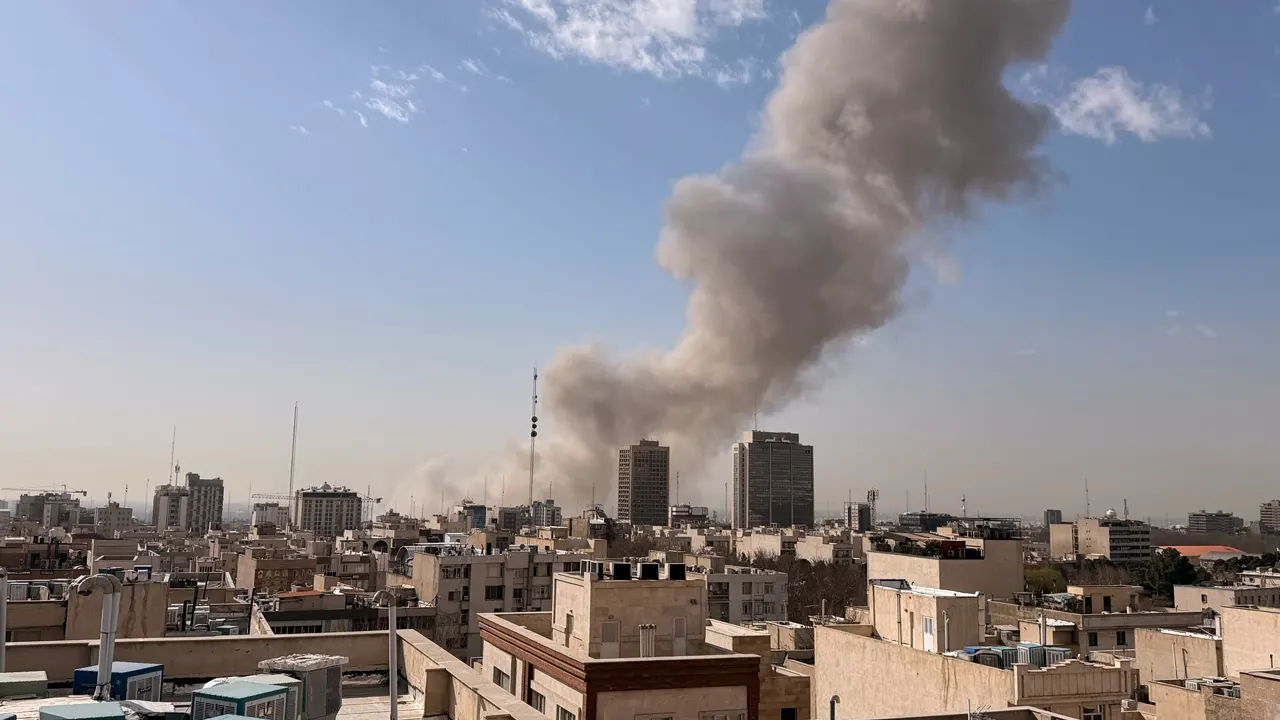
Israelis awoke Saturday to the beginning of Operation “Roaring Lion,” a joint American-Israeli military campaign targeting strategic sites within Iran. Within hours of the initial strikes, Israeli media circulated satellite images appearing to show damage to a compound linked to Supreme Leader Ayatollah Ali Khamenei, reportedly hit in the first wave of attacks.
The Iranian response came swiftly as missile barrages triggered air raid alerts across parts of Israel. According to an Israeli military official speaking on background, the incoming fire consisted of “more in the dozens” per round, though no significant impacts had been reported during the initial briefing. Israel’s Home Front Command urged civilians to follow updated safety instructions and avoid sharing real-time locations of missile strikes on social media.
President Donald Trump addressed the escalating conflict, placing the blame squarely on Tehran’s role in regional instability. “From Lebanon to Yemen and Syria to Iraq, the regime has armed, trained, and funded terrorist militias that have soaked the earth with blood,” Trump said in a Saturday morning speech. He specifically highlighted Iran’s support for Hamas, which carried out the October 7 attacks on Israel that killed more than 1,000 people, including 46 Americans.
Trump emphasized America’s longstanding position that “this terrorist regime can never have a nuclear weapon,” reinforcing the administration’s red line regarding Iran’s nuclear ambitions.
Israeli Prime Minister Benjamin Netanyahu addressed his nation with a message of resolve, warning citizens that “in the coming days we will be required to show resilience.” His statement reflected the broader messaging from Israeli leadership that frames the operation as both necessary and potentially prolonged, preparing the public for a sustained military campaign.
Israeli officials stated that the primary objective of Operation Roaring Lion is “to thoroughly degrade the Iranian regime’s capabilities and remove existential threats to the State of Israel.” Military sources cited intelligence indicating renewed Iranian efforts to advance ballistic missile production and conceal aspects of its nuclear program as justification for the timing of the strikes.
According to local reports, Israeli intelligence assessments suggest that Ali Shamkhani, a senior adviser to Khamenei and key figure connected to Iran’s nuclear program, was likely killed during the operation. However, military officials have not formally confirmed specific casualties, stating that damage assessments remain ongoing.
The potential for broader regional conflict has prompted Israel’s National Security Council to issue warnings to Israelis abroad, urging them to exercise heightened caution in all international destinations and remain vigilant regarding potential threats against Israeli and Jewish targets worldwide.
Inside Israel, the public response has combined tension with disciplined preparation. Schools in vulnerable areas have shifted to remote learning, military reservists have received activation orders, and families across the country are ensuring that protective rooms are properly stocked with emergency supplies. The Israel Defense Forces announced the mobilization of approximately 70,000 reservists, primarily for aerial defense operations, Home Front Command duties, and border reinforcement.
Military officials confirmed that forces are deployed along all of Israel’s borders in preparation for potential escalation involving Iran-backed proxy groups, including Lebanon’s Hezbollah and Palestinian militant organizations like Hamas. While Israeli leaders emphasized that the operation specifically targets military installations rather than civilian infrastructure, they acknowledged that the coming days would test the nation’s resilience.
The campaign marks a significant escalation in the long-running shadow war between Israel and Iran, bringing the conflict into a more direct and conventional military confrontation. Regional analysts note that this operation represents one of the most significant direct strikes against Iranian territory in decades, raising concerns about further destabilization in the Middle East.
For now, Israelis are closely monitoring developments while bracing for additional retaliation, as government officials signal that Operation Roaring Lion will continue “as long as necessary” to achieve its strategic objectives.
Fact Checker
Verify the accuracy of this article using The Disinformation Commission analysis and real-time sources.

20 Comments
This is a highly volatile and unpredictable situation. The potential for miscalculation and unintended escalation is extremely worrying. Diplomacy must prevail over military action.
This is a very concerning development that could have far-reaching implications for global energy and commodity markets. Careful diplomacy is urgently needed to defuse the situation.
Escalating the conflict with Iran through military strikes is a high-risk move that could backfire badly. Diplomatic efforts to ease tensions should be the priority.
Geopolitical tensions in the Middle East are reaching a boiling point. I worry this could disrupt global energy and commodity supplies, with serious economic consequences.
That’s a valid concern. With Iran’s role as a major energy producer, this conflict could have widespread economic ripple effects if not carefully managed.
This is a very concerning development that could disrupt global energy and commodity supplies. I hope all parties can step back from the brink and pursue diplomatic solutions to ease tensions.
This is a very troubling development. The impacts on global energy and commodity markets could be significant. I hope cooler heads can prevail to find a peaceful resolution.
The strikes on Iran are a dramatic escalation. While Iran’s behavior is concerning, I fear this could lead to protracted conflict and destabilization across the region.
I share your apprehension. Measured, diplomatic approaches have the best chance of de-escalating tensions and finding a sustainable resolution.
The strikes on Iran seem to be a risky gamble by the US and Israel. Iran has shown it can retaliate asymmetrically, so this could backfire and destabilize the region further.
You raise valid concerns. This is a high-stakes game of brinkmanship that could have disastrous consequences if not handled extremely delicately.
I’m concerned that this conflict could spiral out of control and lead to widespread regional instability and suffering. Diplomatic solutions must be urgently pursued.
Absolutely, de-escalation and conflict resolution through diplomacy should be the top priority here to avoid catastrophic outcomes.
The US-Israel strikes on Iran are a major gamble that could backfire catastrophically. The risks of unintended consequences and further escalation are extremely high in my view.
The US-Israel strikes on Iran are a major escalation that could have grave consequences. I hope cooler heads can prevail and find a diplomatic solution to ease tensions.
Absolutely, the risks of this conflict spiraling out of control are extremely worrying. Diplomacy and conflict resolution must take precedence over further military action.
While Iran’s activities are worrying, resorting to military strikes seems like an extremely high-risk strategy that could lead to widespread instability and suffering. Diplomacy should be the priority.
I agree, this is a very delicate and dangerous situation that requires a nuanced, diplomatic approach to have any chance of a positive outcome.
This is a significant and concerning development. Iran will likely retaliate forcefully, risking a dangerous escalation. I hope diplomacy can de-escalate the situation and prevent all-out conflict.
Agreed, this is a very tense and volatile situation. Careful diplomacy and restraint will be crucial to avoid further deterioration.