


Listen to the article
Iran Signals Crackdown on Protesters as Death Toll Rises to 50
Iranian Supreme Leader Ayatollah Ali Khamenei has directly challenged U.S. President Donald Trump’s pledge to support anti-government demonstrators, as authorities prepare for what appears to be an imminent crackdown on nationwide protests.
Speaking to supporters at his Tehran compound, Khamenei dismissed Trump as having hands “stained with the blood of Iranians” while the crowd chanted “Death to America!” He accused protesters of “ruining their own streets… in order to please the president of the United States.”
The escalating rhetoric comes as Iran’s judiciary chief Gholamhossein Mohseni-Ejei vowed that punishment for protesters “will be decisive, maximum and without any legal leniency,” setting the stage for a violent response similar to those that followed previous nationwide demonstrations.
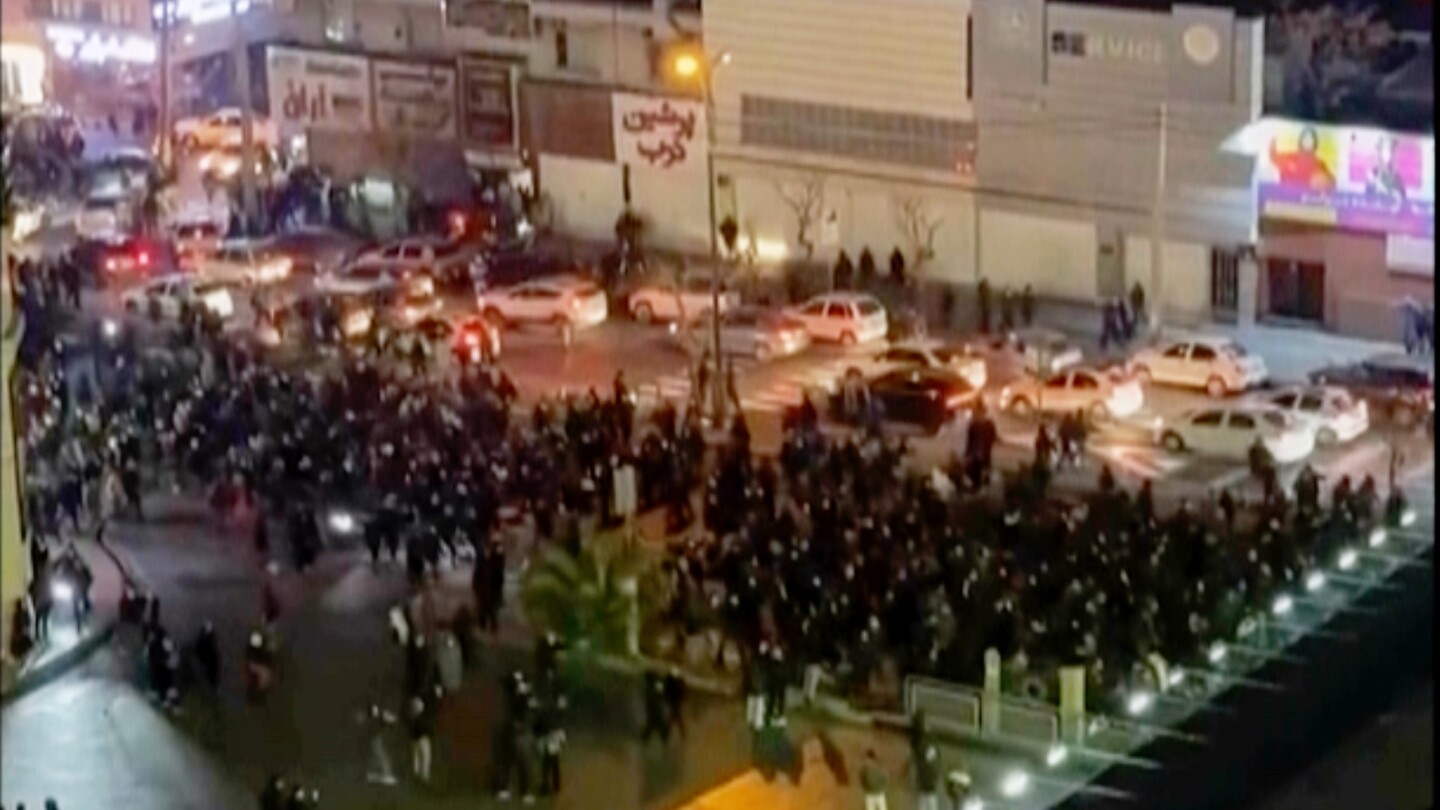
Iranian authorities have cut off internet access and international phone service, making it difficult to assess the full scope of the unrest. Despite the communications blackout, activists managed to share videos showing protesters gathering around bonfires and chanting against the government in Tehran and other cities into Friday morning.
The death toll has reached at least 50 people, according to the U.S.-based Human Rights Activists News Agency, which also reported more than 2,270 people have been detained since the protests began on December 28.
“What turned the tide of the protests was former Crown Prince Reza Pahlavi’s calls for Iranians to take to the streets at 8 p.m. on Thursday and Friday,” said Holly Dagres, a senior fellow at the Washington Institute for Near East Policy. “Per social media posts, it became clear that Iranians had delivered and were taking the call seriously to protest in order to oust the Islamic Republic.”
The demonstrations began over Iran’s deteriorating economy but have evolved into the most significant challenge to the government in years. As the clock struck 8 p.m. on Thursday, neighborhoods across Tehran erupted with chants including “Death to the dictator!” and “Death to the Islamic Republic!” Some protesters also expressed support for the former monarchy, shouting: “This is the last battle! Pahlavi will return!”
Pahlavi, whose father fled Iran just before the 1979 Islamic Revolution, has emerged as a significant figure in the unrest. After the internet shutdown, he called on European leaders to join Trump in promising to “hold the regime to account” and urged them to “use all technical, financial, and diplomatic resources available to restore communication to the Iranian people so that their voice and their will can be heard and seen.”
The European Union and Germany have condemned the violence targeting demonstrators, while the United States has remained relatively quiet since the internet shutdown. However, Trump has repeatedly threatened to strike Iran if protesters are killed – a threat that has taken on greater significance following the recent U.S. military raid that seized Venezuela’s Nicolás Maduro.
In interviews with Hugh Hewitt and Fox News host Sean Hannity, Trump reiterated his pledge to support the protesters. “Iran has been told very strongly, even more strongly than I’m speaking to you right now, that if they do that, they’re going to have to pay hell,” Trump told Hewitt. In his Fox News appearance, Trump suggested that the 86-year-old Khamenei might be looking to flee Iran, saying, “He’s looking to go someplace. It’s getting very bad.”
Iranian state media has characterized the demonstrations as violent and blamed “terrorist agents” of the U.S. and Israel for setting fires and sparking unrest. State television reported that overnight violence killed six people in Hamedan, about 280 kilometers southwest of Tehran.
The protests represent the latest in a series of challenges to Iran’s theocracy in recent years. The country’s economy has deteriorated significantly under international sanctions, with the rial currency collapsing in December to 1.4 million to the dollar. The economic crisis was exacerbated by a 12-day war with Israel in June, which has further strained the country’s resources and public patience.
As tensions continue to rise, the communications blackout raises concerns that security forces may be preparing for a more severe crackdown away from international scrutiny.
Fact Checker
Verify the accuracy of this article using The Disinformation Commission analysis and real-time sources.

14 Comments
The reports of Iran cutting off internet access and threatening harsh punishments for protesters are deeply concerning. The international community should closely monitor the situation and be prepared to condemn any human rights abuses.
I agree, the regime’s actions seem aimed at stifling dissent and transparency. Maintaining open lines of communication and scrutiny will be crucial in the days ahead.
The ongoing protests in Iran are a complex issue with valid grievances on both sides. While the regime’s crackdown is concerning, we should be cautious about taking sides without fully understanding the nuances of the situation.
You raise a fair point. Geopolitics in the Middle East are often murky, and it’s important to avoid oversimplifying the dynamics at play here.
While the protesters’ frustrations are understandable, resorting to violence and destruction is counterproductive. Both sides need to show restraint and seek constructive dialogue to address the country’s challenges.
That’s a fair assessment. Escalating tensions through confrontation is unlikely to lead to meaningful reform. A measured, diplomatic approach may be the best path forward.
While the protesters’ grievances may be valid, resorting to violence and destruction is counterproductive. Both the government and the opposition need to prioritize de-escalation and seek a peaceful resolution through dialogue and reform.
That’s a thoughtful perspective. Constructive engagement and a willingness to address the underlying issues on all sides will be key to finding a sustainable solution.
The Iranian government’s threat of a ‘decisive’ crackdown on protesters is deeply troubling. Peaceful dissent is a fundamental human right, and the regime’s response appears to be dangerously heavy-handed.
I agree, the reported communication blackout and promise of harsh punishment for protesters is very concerning. The world will be watching closely to see how this unfolds.
Khamenei’s rhetoric about ‘ruining their own streets’ and Trump’s ‘blood-stained hands’ reflects the deep ideological divisions fueling this conflict. Hopefully cooler heads can prevail and prevent further loss of life.
Exactly, the inflammatory language from both sides is concerning. De-escalation and a return to the negotiating table seem like the wisest course of action at this point.
The escalating unrest in Iran is a troubling development, but a heavy-handed crackdown by the regime would only serve to further inflame the situation. All parties should prioritize restraint and seek a peaceful resolution.
Well said. Resorting to violence and repression is unlikely to address the underlying grievances driving the protests. A more conciliatory and inclusive approach may be needed.