


Listen to the article
Iran’s Women’s Soccer Team Faces Uncertain Return Amid Escalating Conflict
Iran’s women’s soccer team concluded their Women’s Asian Cup campaign on Sunday with a 2-0 loss to the Philippines, leaving them to contemplate a return to their conflict-stricken homeland.
The squad arrived in Australia last month for the continental championship before the escalation of hostilities that began on February 28 when the U.S. and Israel conducted strikes on Iran. While teams eliminated during the group stage typically depart within days, tournament organizers have yet to announce specific departure plans for the Iranian delegation.
Head coach Marziyeh Jafari expressed the team’s desire to return home promptly despite the ongoing conflict. “I want to be with my country and home… We are eager to come back,” Jafari told reporters during a post-match news conference, according to the Australian Associated Press.
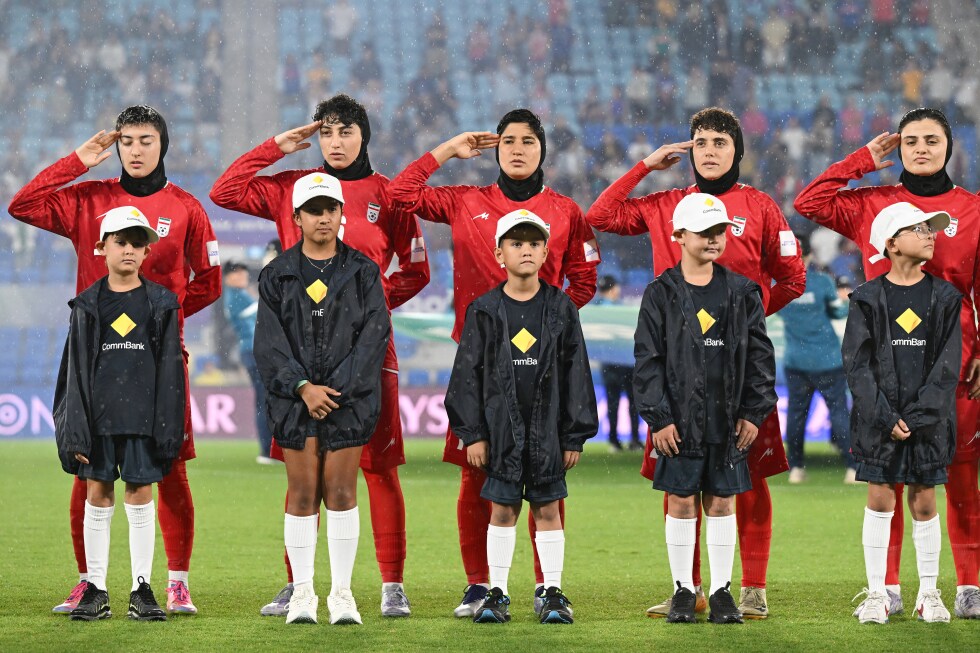
The team’s actions during national anthems have drawn significant attention throughout the tournament. Players remained silent during the anthem before their opening loss to South Korea, which many interpreted as either an act of resistance or a show of mourning. However, in subsequent matches against Australia and the Philippines, the team sang the anthem and offered salutes.
Amid growing concerns for the players’ welfare, particularly following reported criticism in Iranian media, the Australian Iranian Council has launched an advocacy campaign. The organization wrote to Australia’s Home Affairs Minister Tony Burke urging government protection for the squad members during their stay in Australia.
An online petition initiated by the council garnered more than 50,000 signatures before Sunday’s match. The petition calls on Australian authorities to “ensure that no member of Iran’s women’s national football team is to depart Australia while credible fears for their safety remain” and to provide independent legal advice, support, and interpreters.
The situation took a dramatic turn following Sunday’s match when dozens of protesters reportedly slowed the team bus as it departed the stadium, chanting “let them go” and “save our girls.” Video footage showed Australian police and security clearing a path for the team’s departure amid the demonstrations.
Throughout their time in Australia, team members have largely declined to comment on the situation at home. In a rare emotional moment, forward Sara Didar struggled to hold back tears during a news conference last Wednesday as she expressed concerns for family, friends, and all Iranians affected by the conflict.
The Australian Iranian Council’s petition emphasizes that silence is “not a neutral position” when athletes may face persecution upon return. “The current wartime environment has intensified repression, fear, and the risks faced by anyone publicly perceived by the Islamic Republic as disloyal,” the petition states.
Australian Foreign Minister Penny Wong, while declining to comment on specific communications with individuals, expressed solidarity with the Iranian women’s team. “It has been really moving for Australians to see them in Australia, and swapping jerseys with them was a very evocative moment,” Wong told the Australian Broadcasting Corporation. “We know this regime has brutally oppressed many Iranian women.”
Iranian Australian activist Tina Kordrostami, who serves on Sydney’s Ryde Council, has called for government assistance in creating a safe environment for the players to express their needs. “We can’t give them that space without the government helping us,” she told The Australian newspaper.
Iran’s elimination from the tournament after losses to South Korea, Australia, and the Philippines means they will not advance to the quarterfinals, which would have extended their stay in Australia by at least another week. The Asian Cup continues without them, with the final scheduled for March 21.
As international attention remains focused on their situation, the team’s uncertain future highlights the complex intersection of sports, politics, and humanitarian concerns in international competition.
Fact Checker
Verify the accuracy of this article using The Disinformation Commission analysis and real-time sources.

7 Comments
This is a difficult situation for the Iranian team. Their safety should be the top priority as they navigate their return home amidst the escalating conflict.
Women’s sports often become political flashpoints. I hope the Iranian team is able to return home without incident and that the tournament can continue in a spirit of unity and sportsmanship.
This is a complex situation with no easy answers. I hope the Iranian team is able to get home safely and that the conflict in their country can be resolved through peaceful means.
Given the tense geopolitical situation, the logistics of getting the Iranian team home from Australia must be challenging. I hope tournament organizers can ensure their safe passage.
The team’s silence during the national anthem was a powerful gesture, though the reasons behind it are complex. I hope they are able to make it back to Iran without incident.
The Iranian women’s soccer team has faced immense challenges both on and off the field. My heart goes out to them as they prepare to return to an unstable situation in their home country.
It’s a shame to see the Iranian women’s soccer team exit the Asian Cup under these circumstances. Hopefully they can return home safely despite the ongoing conflict.