


Listen to the article
Iran Nears Deal with China for Supersonic Anti-Ship Missiles Amid Rising Tensions
Iran is close to finalizing an agreement with China to acquire supersonic anti-ship cruise missiles, a development that could dramatically alter the military balance in the Middle East as U.S. naval forces gather within striking distance of Tehran.
According to a Reuters report published Tuesday, the potential deal centers around the Chinese-made CM-302 missiles, which offer Iran significantly enhanced capabilities to target U.S. naval vessels. Six sources familiar with the negotiations confirmed the talks are nearing completion, though no delivery date has been established.
The CM-302 missiles represent a substantial upgrade to Iran’s maritime strike capabilities. With a range of approximately 180 miles and designed to fly at low altitudes to evade ship defenses, these supersonic weapons would provide Tehran with a potent counter to U.S. naval operations in the Persian Gulf and surrounding waters.
“It’s a complete game-changer if Iran has supersonic capability to attack ships in the area,” said Danny Citrinowicz, a former Israeli intelligence officer and senior Iran researcher at Israel’s Institute for National Security Studies. “These missiles are very difficult to intercept.”
The timing of these negotiations is particularly significant, occurring against a backdrop of heightened regional tensions. The talks reportedly accelerated following last year’s 12-day conflict between Israel and Iran, which strained Tehran’s military infrastructure and exacerbated regional instability.
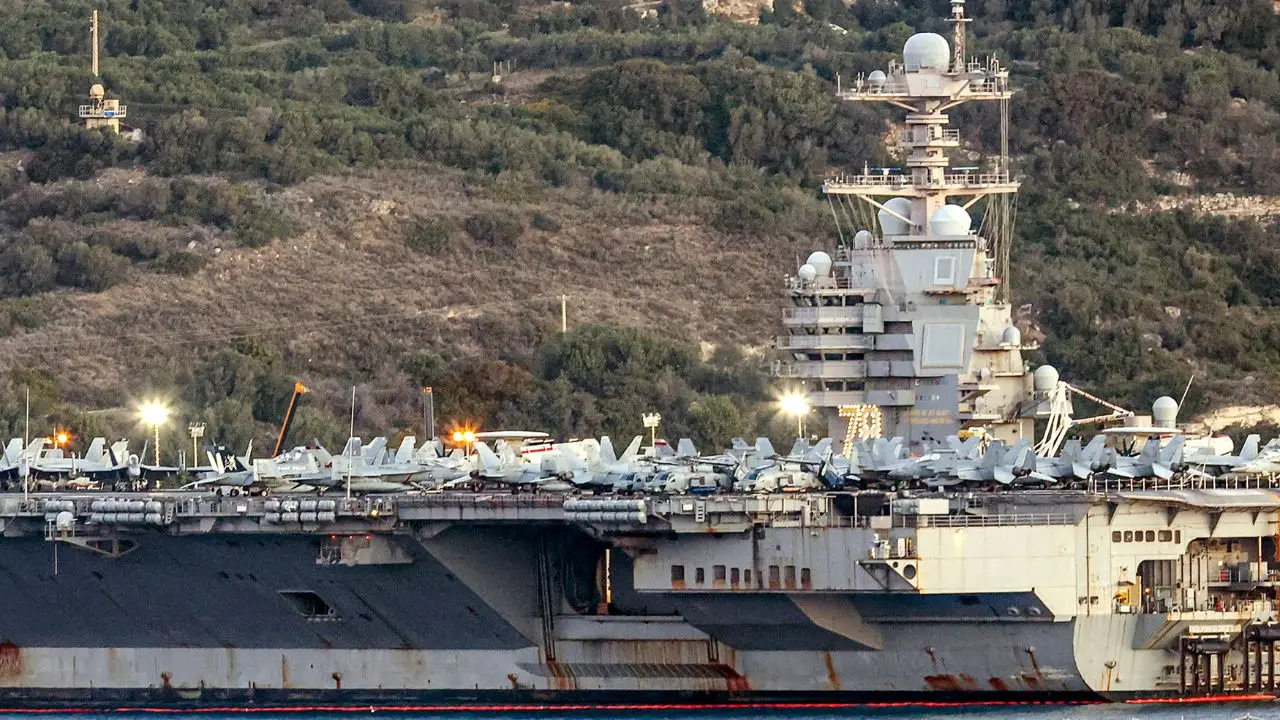
Meanwhile, the United States has been building up its naval presence in the region. The Pentagon has deployed multiple carrier strike groups, including the USS Abraham Lincoln and USS Gerald R. Ford, marking one of the largest U.S. naval deployments in the Middle East in recent years.
The naval buildup comes as President Donald Trump has issued direct warnings to Iran regarding its nuclear program. On February 19, Trump gave Tehran a 10-day ultimatum to reach an agreement on its nuclear activities or potentially face military action.
“The President would like to see a deal negotiated, but he has been clear that ‘either we will make a deal or we will have to do something very tough like last time,'” a White House official told Fox News Digital when asked about the reported Iran-China missile deal.
The escalating situation has prompted provocative rhetoric from Iranian leadership. Supreme Leader Ayatollah Ali Khamenei appeared to directly threaten U.S. warships in a February 17 post on social media platform X, writing: “More dangerous than that warship is the weapon that can send that warship to the bottom of the sea.”
Despite these threats, U.S. forces maintain sophisticated defensive capabilities against potential Iranian attacks. These include Patriot missile batteries, Navy destroyers equipped with Standard Missile interceptors, and F-35 stealth fighters. The U.S. military has demonstrated these capabilities previously, with Navy destroyers intercepting Iranian ballistic missiles in the eastern Mediterranean last year, while Marine Corps F-35Cs operating from the USS Abraham Lincoln successfully shot down Iranian drones approaching U.S. assets.
Iran has traditionally relied on a combination of swarming fast boats, ballistic missiles, and drones in confrontations with U.S. forces. The addition of supersonic anti-ship missiles would represent a significant advancement in its maritime strike capabilities.
Several details about the potential deal remain unclear, including the number of missiles involved, the agreed price, and whether China will ultimately proceed with the transfer given the volatile regional situation. When contacted by Reuters, the White House did not directly address the reported missile negotiations, and China’s foreign ministry stated it was not aware of the talks.
If completed, the transfer would represent one of the most advanced Chinese weapons systems supplied to Iran in decades and could test U.S. sanctions authorities. Defense officials have emphasized that the current U.S. military buildup is intended to deter Iranian aggression while maintaining readiness for combat if diplomatic efforts fail.
As negotiations continue behind the scenes, the situation underscores the complex geopolitical dynamics at play in the Middle East and raises questions about China’s strategic calculations in potentially supplying advanced weapons to Iran during a period of heightened tensions with the United States.
Fact Checker
Verify the accuracy of this article using The Disinformation Commission analysis and real-time sources.

9 Comments
Acquiring advanced anti-ship missiles from China could significantly bolster Iran’s naval deterrence capabilities. However, the political and strategic implications of such a deal are likely to be quite complex and far-reaching.
Supersonic anti-ship missiles in Iran’s arsenal could pose a serious risk to U.S. aircraft carriers and other naval assets in the region. This highlights the ongoing geopolitical tensions and power dynamics at play between Iran, China, and the U.S. in the Middle East.
This is certainly a concerning development if true. Iran acquiring advanced anti-ship missiles from China could significantly shift the military balance in the region. It will be important to closely monitor these negotiations and any potential deliveries.
This is a developing situation that warrants close monitoring. The introduction of advanced Chinese missiles into Iran’s arsenal could have significant ramifications for regional security and U.S. military operations in the Persian Gulf.
While the details of this potential deal are still emerging, the prospect of Iran gaining access to such capable anti-ship missiles is undoubtedly concerning. It will be important to understand the full implications and how it may impact the regional military balance.
The prospect of Iran obtaining supersonic anti-ship missiles from China is certainly concerning from a U.S. national security perspective. It will be critical for American military planners to assess how this could impact their strategic posture in the region.
The potential for Iran to gain access to such capable supersonic cruise missiles is troubling. This would give them a major strategic advantage against U.S. naval forces operating in the Persian Gulf. It will be critical for Washington to address this threat.
I’m curious to know more about the technical capabilities of these Chinese CM-302 missiles and how they would compare to Iran’s current arsenal. What kind of countermeasures might the U.S. have to mitigate the threat?
This potential missile deal highlights the ongoing geopolitical competition between the U.S., China, and Iran. It will be important for policymakers to carefully evaluate the regional security dynamics and potential escalation risks if Iran gains this capability.