


Listen to the article
Iran’s Nationwide Protests Enter Thirteenth Day Amid Internet Blackout and Rising Death Toll
Iran’s nationwide protests reached their thirteenth day on Friday, as authorities imposed a sweeping internet blackout, effectively isolating the country from the outside world while escalating threats of harsh punishment against demonstrators. According to Iran Human Rights (IHRNGO), at least 51 protesters, including nine children, have been killed, with hundreds more injured in the ongoing unrest.
Despite the communications blackout, Iranian-American journalist Banafsheh Zand told Fox News Digital that demonstrations were expected to intensify later Friday. “People are going to be pouring out into the streets,” she said, describing the unrest as unprecedented in the Islamic Republic’s 47-year history.
Security forces reportedly killed a significant number of protesters overnight in several cities, particularly Tehran and Karaj, according to the opposition-linked National Council of Resistance of Iran (NCRI). The group claimed that repression forces opened fire on civilians in the Fardis area of Karaj, leaving at least 10 young people killed or wounded in one incident, though these claims could not be independently verified.
Miriam Rajavi, leader of the NCRI, emphasized in a statement to Fox News Digital that regime change must come from within: “The regime’s overthrow will not come from outside Iran, nor will it be delivered by the will of foreign capitals. Change can only be achieved by the Iranian people themselves, through an organized and nationwide resistance.”
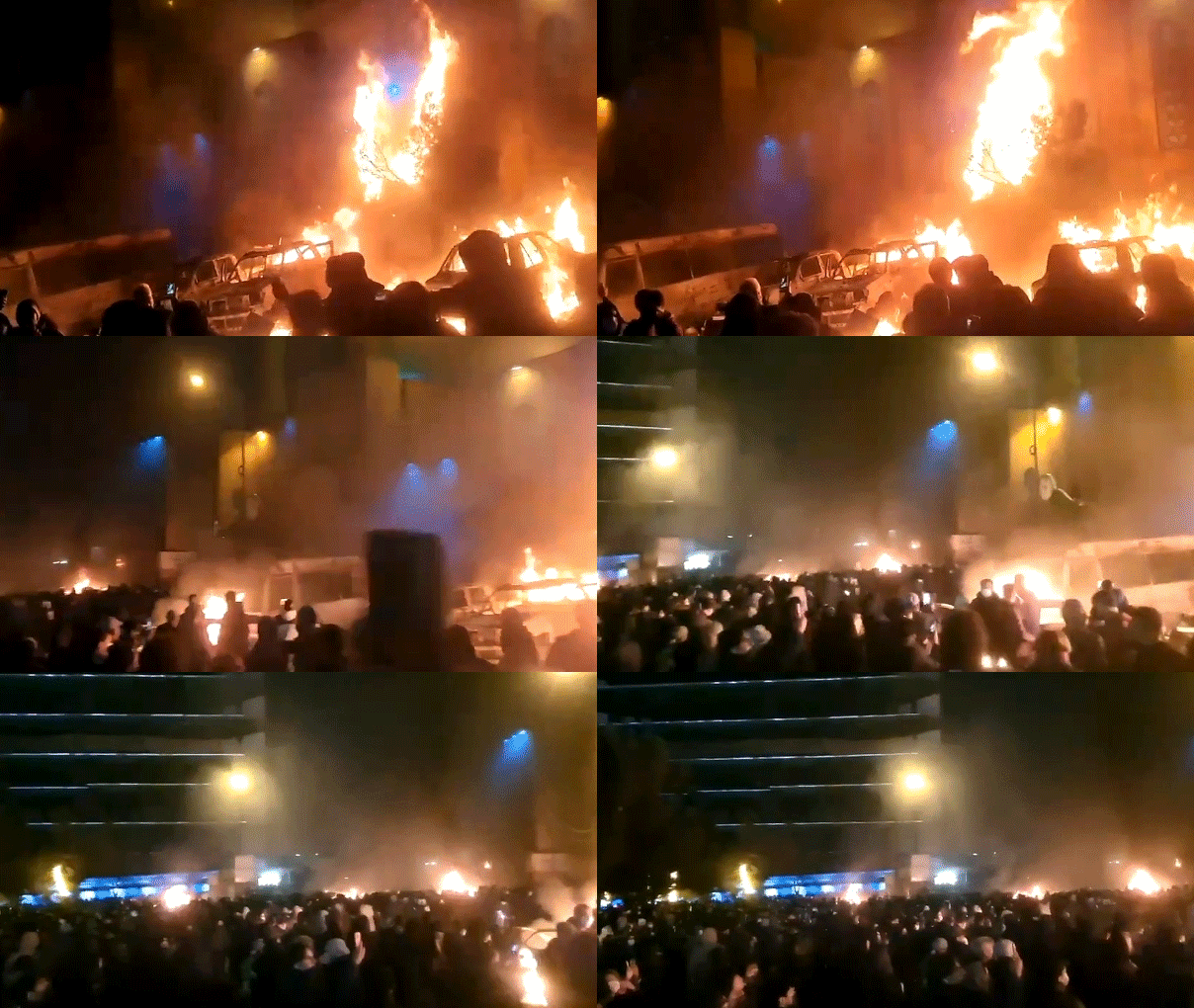
The internet shutdown has severely limited the flow of information from the country. Phone calls into Iran were failing, and at least 17 flights between Dubai and Iran were canceled, according to Dubai Airport’s website. Videos verified by Reuters showed buildings and vehicles ablaze in several cities as unrest intensified.
In Tehran, footage showed hundreds of demonstrators marching, with protesters shouting “Death to Khamenei!” and other slogans supporting the monarchy. In Zahedan, where Iran’s Baluch minority predominates, rights group Hengaw reported that a protest march following Friday prayers was met with gunfire, wounding several people.
Iranian state television aired images of clashes and fires, while the semi-official Tasnim news agency reported that several police officers were killed overnight, underscoring the increasingly violent nature of the confrontations.
Supreme Leader Ayatollah Ali Khamenei delivered a televised address Friday, vowing not to back down. While the current unrest has not yet drawn as broad a cross-section of society as some previous protest waves, analysts note that Iranian authorities appear more vulnerable due to a dire economic situation and the aftermath of last year’s war with Israel and the United States.
The protests began in late January with shopkeepers and bazaar merchants demonstrating against accelerating inflation and the collapse of the rial, which lost about half its value against the dollar last year. With inflation topping 40% in December, the unrest soon spread to universities and provincial cities, with young men clashing with security forces.
State television broadcast overnight images of burning buses, cars, and motorbikes, as well as fires at underground railway stations and banks. In the Caspian Sea port city of Rasht, a state TV journalist standing amid the flames described the scene: “This looks like a war zone – all the shops have been destroyed.”
Thirteen days into the protests, the leaders of France, the United Kingdom, and Germany issued their first joint declaration on the situation. “We are deeply concerned about reports of violence by Iranian security forces and strongly condemn the killing of protesters,” the statement said. “The Iranian authorities have the responsibility to protect their own population and must allow for freedom of expression and peaceful assembly without fear of reprisal.”
A senior U.S. official told Fox News there had been no change to the U.S. military posture in the Middle East in response to the unrest, adding that U.S. Central Command was closely monitoring developments, particularly around Friday prayers and the regime’s response.
Despite the unrest, Iranian Foreign Minister Abbas Araqchi said the likelihood of foreign military intervention was “very low,” adding that Oman’s foreign minister would visit Tehran on Saturday.
The Islamic Republic has weathered repeated waves of nationwide unrest over the decades, including major protests in 1999, 2009, 2019, and 2022. Analysts say the coming days will test whether the current uprising can sustain momentum under intensified repression — or meet a similar fate as previous movements that were ultimately suppressed.
Fact Checker
Verify the accuracy of this article using The Disinformation Commission analysis and real-time sources.

30 Comments
Exploration results look promising, but permitting will be the key risk.
Uranium names keep pushing higher—supply still tight into 2026.
Good point. Watching costs and grades closely.
Good point. Watching costs and grades closely.
I like the balance sheet here—less leverage than peers.
Good point. Watching costs and grades closely.
Uranium names keep pushing higher—supply still tight into 2026.
Good point. Watching costs and grades closely.
Nice to see insider buying—usually a good signal in this space.
Good point. Watching costs and grades closely.
Good point. Watching costs and grades closely.
Exploration results look promising, but permitting will be the key risk.
Good point. Watching costs and grades closely.
Uranium names keep pushing higher—supply still tight into 2026.
Interesting update on Iran Protests Escalate Despite Internet Blackout as Death Toll Rises. Curious how the grades will trend next quarter.
Interesting update on Iran Protests Escalate Despite Internet Blackout as Death Toll Rises. Curious how the grades will trend next quarter.
Good point. Watching costs and grades closely.
Production mix shifting toward World might help margins if metals stay firm.
I like the balance sheet here—less leverage than peers.
Good point. Watching costs and grades closely.
Good point. Watching costs and grades closely.
Exploration results look promising, but permitting will be the key risk.
Good point. Watching costs and grades closely.
Good point. Watching costs and grades closely.
Silver leverage is strong here; beta cuts both ways though.
Good point. Watching costs and grades closely.
Good point. Watching costs and grades closely.
If AISC keeps dropping, this becomes investable for me.
Good point. Watching costs and grades closely.
Good point. Watching costs and grades closely.