


Listen to the article
Iran to Execute First Protester as Anti-Regime Demonstrations Intensify
Iran is preparing to execute its first protester connected to the recent wave of anti-government demonstrations, according to prominent human rights organizations. Erfan Soltani, 26, is scheduled to be hanged on Wednesday after his arrest last week during protests in Karaj, northwest of Tehran.
“His family was told that he had been sentenced to death and that the sentence is due to be carried out on January 14,” sources informed Iran Human Rights (IHRNGO), one of the monitoring groups tracking the situation. The National Union for Democracy in Iran (NUFD) has joined IHRNGO in raising international alarm about the case.
Mahmood Amiry-Moghaddam, IHRNGO Director, warned that “the widespread killing of civilian protesters in recent days by the Islamic Republic is reminiscent of the regime’s crimes in the 1980s, which have been recognized as crimes against humanity.” He emphasized that “the risk of mass and extrajudicial executions of protesters is extremely serious.”
According to human rights advocates, Soltani was denied access to legal representation and charged with “waging war against God,” a capital offense in Iran’s Islamic legal system. The NUFD has launched an urgent appeal for international intervention, stating that Soltani’s “only crime was calling for freedom” for Iran.
The reported execution plans emerge amid a significant communications blackout imposed by Iranian authorities attempting to suppress information about the ongoing unrest. This has complicated efforts to independently verify details about Soltani’s case and the broader crackdown.
Human rights monitors estimate more than 10,000 people have been detained in recent weeks for participating in the demonstrations, which were initially sparked by Iran’s deteriorating economic conditions. As the movement has grown, many protesters have expanded their demands to call for complete regime change. The government’s harsh response has reportedly resulted in over 500 deaths.
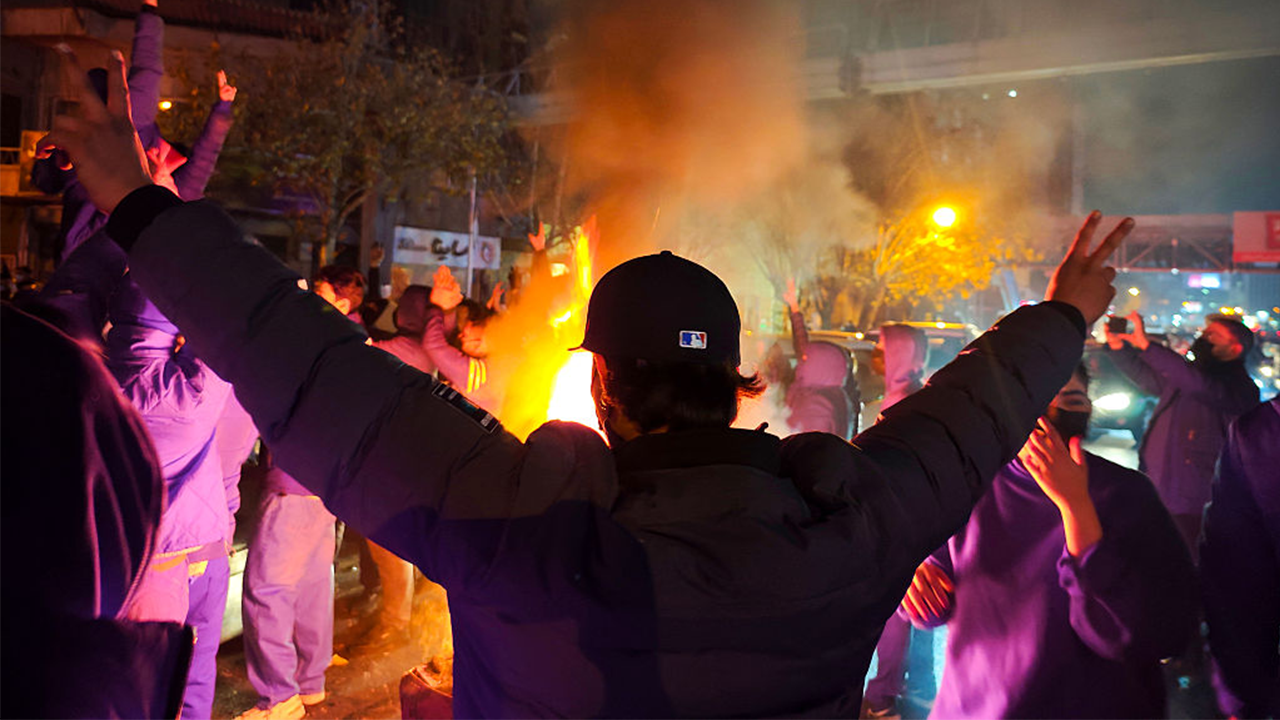
The protests represent one of the most significant challenges to the Islamic Republic’s authority since the 1979 revolution. Images from Tehran show burning barricades, overturned vehicles, and large gatherings of demonstrators, despite the severe risks of participation.
The situation has drawn international attention, with U.S. President Donald Trump threatening military action against Iran if authorities continue their violent crackdown. “Iran is looking at FREEDOM, perhaps like never before. The USA stands ready to help!!!” Trump wrote on his social media platform Truth Social.
White House Press Secretary Karoline Leavitt confirmed that while diplomacy remains the administration’s preferred option, military intervention hasn’t been ruled out. “He certainly doesn’t want to see people being killed in the streets of Tehran. And unfortunately that’s something we are seeing right now,” she told reporters.
Trump’s threats have drawn criticism from lawmakers across the political spectrum. Senator Rand Paul (R-Ky.) cautioned against U.S. military involvement, arguing that such action could undermine the protest movement by rallying Iranians to support the government against foreign intervention. “If you bomb the government, do you then rally people to their flag who are upset with the Ayatollah?” Paul questioned.
The senator also emphasized constitutional concerns, stating that presidents cannot unilaterally decide to attack other countries without congressional approval.
Iranian officials have responded defiantly to American threats, with Foreign Minister Abbas Araghchi declaring that Tehran is “fully prepared for war” and warning of retaliation against U.S. troops stationed in the Middle East if the Pentagon were to launch strikes.
As international tensions rise, human rights groups continue to call for coordinated action to protect civilian protesters. “Under the Responsibility to Protect, the international community has a duty to protect civilian protesters against mass killings,” IHRNGO stressed in its statement on Soltani’s case.
Fact Checker
Verify the accuracy of this article using The Disinformation Commission analysis and real-time sources.

30 Comments
Nice to see insider buying—usually a good signal in this space.
Exploration results look promising, but permitting will be the key risk.
Good point. Watching costs and grades closely.
Good point. Watching costs and grades closely.
I like the balance sheet here—less leverage than peers.
Good point. Watching costs and grades closely.
Good point. Watching costs and grades closely.
The cost guidance is better than expected. If they deliver, the stock could rerate.
Good point. Watching costs and grades closely.
The cost guidance is better than expected. If they deliver, the stock could rerate.
Uranium names keep pushing higher—supply still tight into 2026.
Good point. Watching costs and grades closely.
Good point. Watching costs and grades closely.
I like the balance sheet here—less leverage than peers.
Good point. Watching costs and grades closely.
Good point. Watching costs and grades closely.
The cost guidance is better than expected. If they deliver, the stock could rerate.
Good point. Watching costs and grades closely.
Good point. Watching costs and grades closely.
Production mix shifting toward World might help margins if metals stay firm.
Good point. Watching costs and grades closely.
I like the balance sheet here—less leverage than peers.
Good point. Watching costs and grades closely.
Good point. Watching costs and grades closely.
Interesting update on Iran Prepares to Execute First Protester Linked to Anti-Regime Demonstrations. Curious how the grades will trend next quarter.
Nice to see insider buying—usually a good signal in this space.
Good point. Watching costs and grades closely.
Good point. Watching costs and grades closely.
Production mix shifting toward World might help margins if metals stay firm.
Good point. Watching costs and grades closely.