


Listen to the article
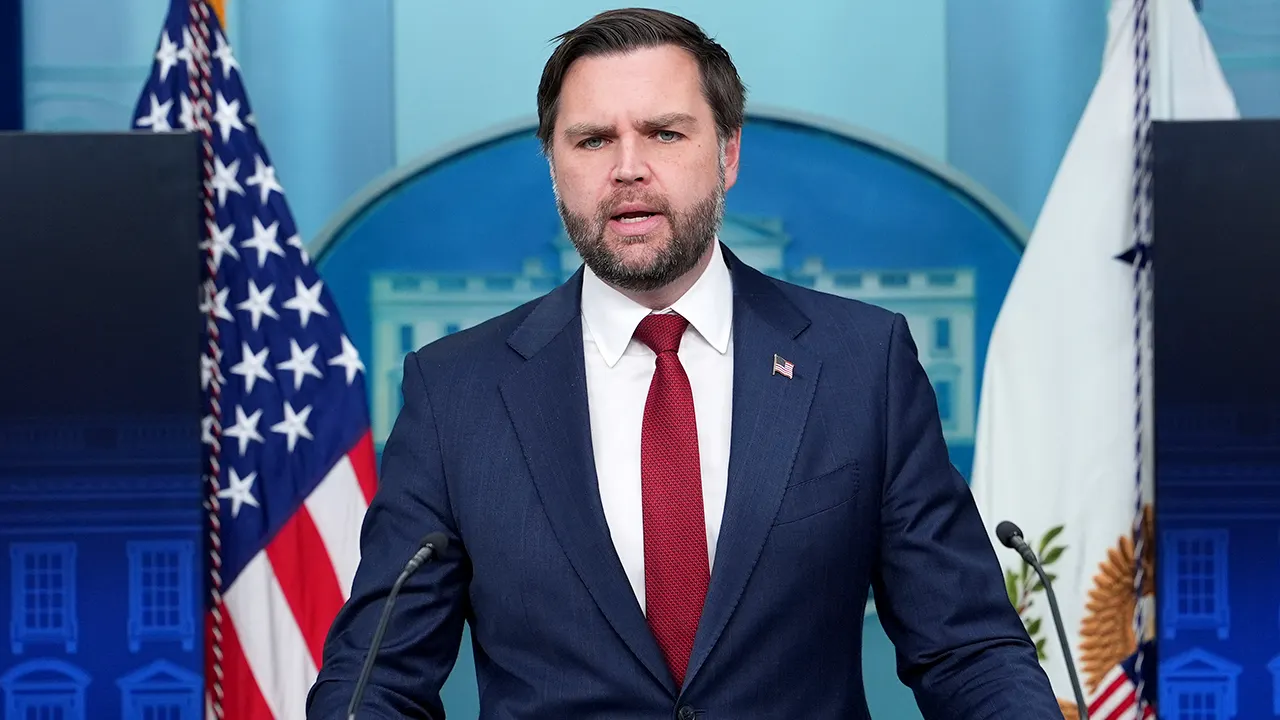
Vice President JD Vance confirmed Monday that U.S. negotiations with Iran over its nuclear program collapsed after American officials determined Tehran’s claims about its nuclear enrichment activities were not credible, prompting President Donald Trump to authorize Operation Epic Fury.
In an interview on “Jesse Watters Primetime,” Vance revealed that a delegation including special envoy Steve Witkoff, Secretary of State Marco Rubio, and presidential adviser Jared Kushner had conducted extensive talks with Iranian representatives in Geneva. The negotiations aimed to curb Tehran’s nuclear ambitions in exchange for sanctions relief while preventing broader regional conflict.
“The Iranians would come back to us and they’d say, ‘Well, you know, having enrichment for civilian purposes, for energy purposes, is a matter of national pride,'” Vance explained. The U.S. delegation responded by questioning why Iran was building enrichment facilities 70 feet underground and enriching uranium to levels far beyond what would be necessary for civilian applications.
“Nobody objects to the Iranians being able to build medical isotopes; the objection is these enrichment facilities that are only useful for building a nuclear weapon,” Vance said. “It just doesn’t pass the smell test for you to say that you want enrichment for medical isotopes, while at the same time trying to build a facility 70 to 80 feet underground.”
The breakdown in talks came amid ongoing international concern about Iran’s uranium enrichment activities. Tehran has been enriching uranium to approximately 60% purity—significantly below weapons-grade but far exceeding the limits established under the 2015 nuclear agreement—raising alarm among global nonproliferation experts about Iran’s true intentions.
Operation Epic Fury, now in its third day, began on February 28 when U.S. and Israeli forces launched coordinated precision strikes inside Iran. The military campaign specifically targets Iran’s missile arsenal and nuclear infrastructure in what analysts describe as the most significant military action against the Islamic Republic since its revolution in 1979.
“We destroyed Iran’s ability to build a nuclear weapon during President Trump’s term,” Vance claimed. “We set them back substantially. But I think the President was looking for the long haul.”
The vice president emphasized that Trump sought a more comprehensive commitment from Iran. “Trump was looking for Iran to make a significant long-term commitment that they would never build a nuclear weapon, that they would not pursue the ability to be on the brink of a nuclear weapon.”
The military operation has reportedly caused significant damage to key Iranian military facilities. Media reports indicate fires are raging at Iran’s Bandar Abbas naval headquarters, and maritime traffic through the strategically vital Strait of Hormuz—through which approximately 20% of global oil shipments pass—has been disrupted.
Regional security experts note that the strikes represent a major escalation in the long-running tensions between Iran, the United States, and Israel. The Trump administration has characterized the operation as a preventive measure aimed at eliminating Iran’s nuclear weapons capability rather than the beginning of a prolonged military campaign.
“There’s just no way that Donald Trump is going to allow this country to get into a multiyear conflict with no clear end in sight and no clear objective,” Vance said, indicating that the administration’s preferred outcome would be “a friendly regime in Iran, a stable country, a country that’s willing to work with the United States.”
The military action comes after years of deteriorating relations between Washington and Tehran, with the Trump administration having withdrawn from the 2015 nuclear agreement during its first term and imposed severe economic sanctions on Iran as part of its “maximum pressure” campaign.
Oil markets have reacted nervously to the military operations, with prices surging on concerns about potential disruptions to supply chains if the conflict expands further in the petroleum-rich region.
Fact Checker
Verify the accuracy of this article using The Disinformation Commission analysis and real-time sources.

8 Comments
Interesting to hear that the Iran nuclear talks lacked credibility from the US perspective. It seems the Iranians were not being transparent about the true purpose of their nuclear program. Tough negotiation ahead to find a balanced solution.
This is a complex geopolitical issue with high stakes. While I’m not an expert, it sounds like the US delegation felt the Iranians were being disingenuous about their nuclear activities. Rebuilding trust will be crucial for any lasting agreement.
You make a good point. Verifying Iran’s nuclear claims and intentions will be critical to reaching a credible deal. Transparency and good faith efforts on both sides are needed.
Losing credibility in nuclear negotiations is a serious matter, especially with a country like Iran. The US delegation seems to have valid concerns about Iran’s true nuclear ambitions. Rebuilding confidence will be crucial for any progress.
You’re right, credibility is essential in these high-stakes talks. Both sides need to demonstrate a genuine commitment to verifiable outcomes that address regional security concerns.
The revelation that Iran’s nuclear claims lacked credibility is concerning. As a major uranium and nuclear power, their intentions and activities need to be closely scrutinized. I hope the negotiations can find a path forward that addresses these trust issues.
It’s unfortunate that the Iran nuclear talks apparently broke down over credibility issues. With such high stakes, both sides need to be fully transparent. I’m curious to see if a new negotiation strategy can restore trust and reach an agreement.
This is a complex geopolitical situation with a lot of history and tensions. I’m not surprised the US delegation felt the Iranian claims lacked credibility. Restoring trust will be a major challenge, but necessary for a lasting nuclear agreement.