


Listen to the article
Shadowy IRGC Commander Emerges as Key Decision-Maker in Iran-US Ceasefire Talks
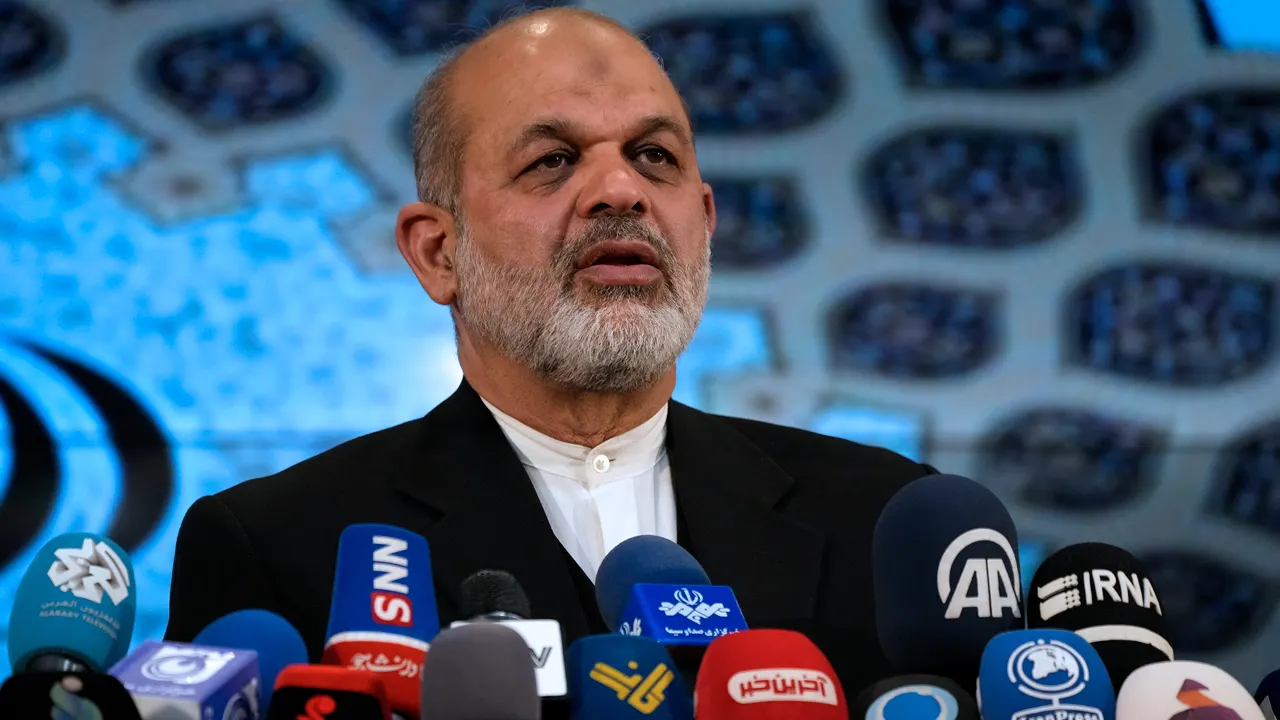
As President Donald Trump’s deadline for extending the two-week ceasefire with Iran approaches, attention has shifted from Iran’s president to a powerful figure with a troubling background: Ahmad Vahidi, the newly appointed commander of the Islamic Revolutionary Guard Corps (IRGC).
Vahidi, described by analysts as “radical even within the regime’s hardline elite,” has emerged as one of Iran’s most influential powerbrokers and is likely playing a decisive role in whether Tehran continues talks or resumes hostilities.
“Vahidi’s rise is a warning that Tehran’s war machine now calls the shots,” says Lisa Daftari, a foreign policy analyst. “Putting someone with such a bloody and murderous record at the top of the Revolutionary Guard Corps confirms that the regime is not moderating under pressure. On the contrary, it is doubling down on men whose careers are built on hostage-taking, assassinations, and domestic repression.”
This development comes at a critical juncture in U.S.-Iranian relations, with significant implications for regional stability and American security interests. The elevation of a hardliner with a history of orchestrating terrorist operations signals a potential shift toward more confrontational policies.
Power Structure Shifting Away From Formal Institutions
Experts describe Iran’s current power structure as increasingly dominated by informal networks rather than official government institutions. Benham Ben Taleblu, senior fellow at the Foundation for Defense of Democracies, characterizes Iran as “a system of men, not laws, but one whose success rested on institutionalizing their power,” where decisions now flow primarily through Revolutionary Guard figures rather than the civilian government.
Beni Sabti of Israel’s Institute for National Security Studies believes Vahidi may now wield more influence than parliamentary speaker Mohammad Bagher Ghalibaf or even Supreme Leader Ali Khamenei’s son, Mojtaba Khamenei.
“In my view, he is more dominant right now, even if they are coordinated. This is not a time for internal competition,” Sabti noted, adding that Vahidi is uniquely positioned with direct access to the supreme leader.
A Dark History of Terrorism and Violence
Before Qassem Soleimani became the face of Iran’s foreign operations, Vahidi led the elite Quds Force from 1988 to 1998. During this period, he helped establish Iran’s extensive network of proxy groups throughout the Middle East, particularly in Lebanon.
“Ahmad Vahidi is the embodiment of the Islamic Republic’s most militant wing,” Daftari told Fox News Digital. “As Qassem Soleimani’s predecessor at the Quds Force, he helped build Tehran’s terror infrastructure abroad.”
Western intelligence agencies and analysts have linked Vahidi to numerous deadly attacks over four decades, including the 1983 Beirut barracks bombing that killed 241 U.S. service members, the 1996 Khobar Towers attack in Saudi Arabia, and a 2008 attack on the U.S. Embassy in Yemen.
Argentine prosecutors have also implicated him in the 1994 bombing of the AMIA Jewish community center in Buenos Aires, which killed 85 people, as well as the 1992 bombing of the Israeli Embassy in the same city. Interpol has issued a red notice for his arrest specifically related to the AMIA bombing.
In April, Argentina’s government under President Javier Milei designated the entire IRGC a terrorist organization and specifically named Vahidi in their announcement.
International Sanctions and Human Rights Abuses
Vahidi remains under multiple layers of sanctions from both the United States and European Union. The U.S. first sanctioned him in 2010 for connections to Iran’s nuclear and missile programs, then redesignated him in 2022 for human rights abuses during the crackdown following Mahsa Amini’s death.
As interior minister during the widespread protests that followed Amini’s death, Vahidi orchestrated internet blackouts and directed the Law Enforcement Command’s brutal response. Human rights organizations documented the use of live ammunition, mass arbitrary detentions, and torture against protesters, with reports of more than 30,000 deaths.
The European Union first sanctioned Vahidi in 2008 and imposed additional sanctions in 2022 over the violent suppression of demonstrations.
Implications for Ceasefire Negotiations
Vahidi’s growing influence raises serious concerns about Iran’s willingness to maintain any ceasefire agreement with the United States. Experts warn that his radical ideology could push Tehran toward more confrontation rather than reconciliation.
“He brings even more radicalization into the system and may not want to stop the war, because it serves the interests of the Revolutionary Guards to continue,” Sabti cautioned.
Even if Iran formally agrees to extend the ceasefire, there are concerns that Vahidi may view it merely as a tactical pause to regroup and strengthen Iran’s position. This perspective takes on greater urgency as Trump’s deadline approaches.
Yigal Carmon, founder and president of the Middle East Media Research Institute, offered a stark assessment: “Trusting him is a grave mistake. He belongs to the hard ‘DEATH TO AMERICA’ corps.”
As negotiations continue, the question is not simply whether Iran wants peace, but whether the Revolutionary Guard commander who increasingly holds power sees continued conflict as serving his strategic interests.
Fact Checker
Verify the accuracy of this article using The Disinformation Commission analysis and real-time sources.

10 Comments
I’m curious to see how the international community responds to Vahidi’s appointment. His history of alleged involvement in terrorist attacks and human rights abuses is well documented. Will this prompt a stronger pushback from the US and its allies?
That’s a good question. Vahidi’s selection could provoke a more assertive response from the West, given his track record. However, Iran may be calculating that installing such a hardliner will strengthen their negotiating position. It’s a risky gambit.
This news underscores the complex and fluid nature of the regional geopolitics. Vahidi’s appointment suggests Iran’s leadership may be doubling down on confrontational tactics rather than seeking compromise. It will be crucial to monitor how this impacts the ceasefire talks.
The timing of this move is particularly concerning given the delicate state of US-Iran relations. Placing a hardliner like Vahidi in such a powerful position could jeopardize ongoing ceasefire talks and increase the risk of conflict escalation.
You raise a good point. Vahidi’s elevation comes at a critical juncture and could make it much harder to find a diplomatic resolution to the current tensions. This is a concerning development.
This is concerning news. Vahidi’s history is deeply troubling and suggests Iran may be taking an increasingly hardline stance. His appointment as IRGC chief could undermine regional stability and diplomatic efforts.
Agreed. Vahidi’s involvement in past terrorist and repressive activities is very worrying. This appointment signals a worrying shift towards more aggressive policies from Iran.
The timing of Vahidi’s appointment is particularly troubling given the fragile state of US-Iran relations. This move could make it much harder to find a diplomatic off-ramp to the current tensions. It will be critical to see how this plays out in the coming weeks.
Vahidi’s history of alleged involvement in terrorist activities and human rights abuses is extremely concerning. His selection as IRGC chief could signal a hardening of Iran’s stance and a move away from diplomacy. This is a development worth watching closely.
Vahidi’s history is deeply concerning, and his elevation to such a powerful position is a worrying development. It will be important to see if this leads to a shift in Iran’s regional posture and policies going forward.