


Listen to the article
Iran’s top diplomat Abbas Araghchi met with Rafael Grossi, director-general of the International Atomic Energy Agency (IAEA), in Geneva on Monday, setting the stage for a second round of negotiations with the United States over Tehran’s nuclear program.
The meeting comes at a time of heightened tensions in the Middle East, with Iran conducting naval drills in strategically vital waterways while the U.S. bolsters its military presence in the region.
“I am in Geneva with real ideas to achieve a fair and equitable deal,” Araghchi wrote on social media platform X. “What is not on the table: submission before threats.” The Iranian Foreign Minister also mentioned he would meet with Oman’s Foreign Minister Badr al-Busaidi, whose country is hosting the U.S.-Iran talks scheduled for Tuesday.
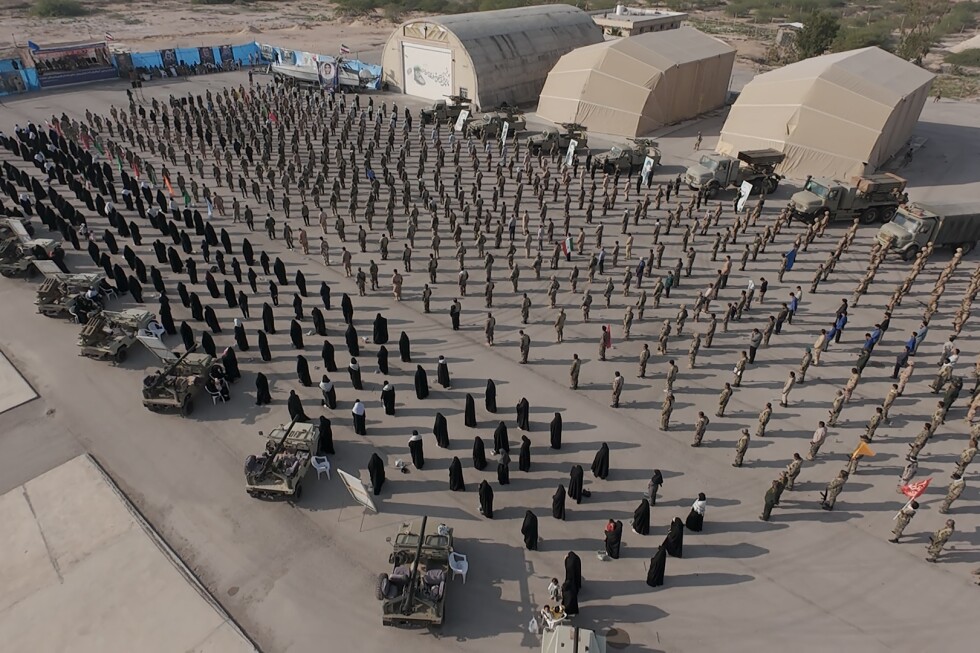
Iran’s paramilitary Revolutionary Guard launched naval exercises early Monday in the Strait of Hormuz, Persian Gulf, and Gulf of Oman – crucial international trade routes through which approximately 20% of the world’s oil passes. EOS Risk Group reported that sailors in the region received radio warnings about a potential live-fire drill in the northern lane of the Strait of Hormuz on Tuesday.
This marks the second Iranian naval exercise in recent weeks. During a previous drill announced in late January, the U.S. military’s Central Command issued a stern warning to Iran, acknowledging their right to operate in international waters but cautioning against threatening American warships or commercial vessels.
Tensions between the naval forces escalated on February 4 when a U.S. Navy fighter jet shot down an Iranian drone approaching the aircraft carrier USS Abraham Lincoln in the Arabian Sea. In a separate incident, Iran reportedly harassed a U.S.-flagged and U.S.-crewed merchant vessel navigating the Strait of Hormuz.
Meanwhile, the diplomatic track shows some potential for progress. Iran’s Deputy Foreign Minister Majid Takht-Ravanchi signaled on Sunday that Tehran could be open to compromise on nuclear issues in exchange for sanctions relief.
“The ball is in America’s court. They have to prove they want to have a deal with us,” Takht-Ravanchi told the BBC. “If we see a sincerity on their part, I am sure that we will be on a road to have an agreement.”
“We are ready to discuss this and other issues related to our program provided that they are also ready to talk about the sanctions,” he added.
U.S. President Donald Trump, speaking to reporters aboard Air Force One on Monday night, indicated he would be indirectly involved in the talks. “Typically, Iran’s a very tough negotiator,” Trump said, before correcting himself. “I would say they’re bad negotiators, because we could have had a deal instead of sending the B2s in to knock out their nuclear potential.”
He added: “I think they want to make a deal. I don’t think they want the consequences of not making a deal.”
Oman previously hosted a first round of indirect talks between the U.S. and Iran on February 6. Similar negotiations last year broke down after Israel launched what became a 12-day conflict with Iran that included U.S. bombing of Iranian nuclear sites.
The Trump administration has maintained that Iran can have no uranium enrichment under any deal, a position Tehran has rejected. Iran insists its nuclear program is for peaceful purposes, though some officials have increasingly threatened to pursue nuclear weapons.
Before the conflict in June, Iran had been enriching uranium up to 60% purity, just short of weapons-grade levels. According to Grossi, Iran’s stockpile of uranium enriched to that level could potentially allow it to build as many as 10 nuclear bombs, should it decide to weaponize its program.
The meeting with Grossi represents a significant development after Iran suspended all cooperation with the IAEA following the June war with Israel. The IAEA has reported it has been unable to verify the status of Iran’s near weapons-grade uranium stockpile since the conflict, with Iran granting inspectors only limited access to certain sites.
Secretary of State Marco Rubio, speaking from Budapest, emphasized the U.S. preference for a negotiated solution. “I’m not going to prejudge these talks,” Rubio said. “The president always prefers peaceful outcomes and negotiated outcomes to things.”
As diplomatic efforts continue, the U.S. is maintaining military pressure. Trump announced Friday that the USS Gerald R. Ford, the world’s largest aircraft carrier, was being sent from the Caribbean to join other U.S. military assets in the Middle East. Iranian officials have warned they would respond to any U.S. attack with retaliation of their own.
Israeli Prime Minister Benjamin Netanyahu visited Washington last week, urging Trump to ensure any deal would include measures to neutralize Iran’s ballistic missile program and end its funding for proxy groups such as Hamas and Hezbollah.
Fact Checker
Verify the accuracy of this article using The Disinformation Commission analysis and real-time sources.

8 Comments
The timing of Iran’s naval exercises is concerning, as they could disrupt critical oil shipping in the region. Keeping communication open between all sides and avoiding unilateral actions will be key to making progress in the nuclear talks.
This is a critical juncture for the Iran nuclear talks. Keeping communication channels open between Iran and the UN watchdog is essential for making progress. It will be interesting to see if the US and Iran can find common ground to ease tensions in the region.
The potential for disruptions to global oil supply from tensions in the Strait of Hormuz is a major concern. Ensuring the free flow of energy resources should be a priority for all stakeholders in these talks.
The IAEA’s role in verifying Iran’s nuclear program will be critical to building confidence in any final agreement. Maintaining an open and transparent process will be key to a successful outcome.
Iran’s statement about not submitting to threats suggests they are taking a firm negotiating stance. However, a fair and equitable deal that addresses all parties’ concerns will be crucial for a lasting agreement. Constructive dialogue is needed now more than ever.
Geopolitical tensions in the Middle East make these negotiations especially delicate. All parties will need to exercise restraint and prioritize diplomacy to avoid further escalation and unintended consequences.
The naval exercises by Iran’s Revolutionary Guard are concerning, as they could escalate tensions in the vital Strait of Hormuz shipping lanes. Maintaining stability in the region should be a priority for all parties involved in the nuclear negotiations.
Oman’s mediation role in the US-Iran talks is an important one. As a neutral party, they may be able to help bridge gaps and find compromise solutions. The stakes are high, so all sides will need to show flexibility and restraint.