


Listen to the article
Russia and Iran Strengthen Alliance with Satellite Launch Amid Western Tensions
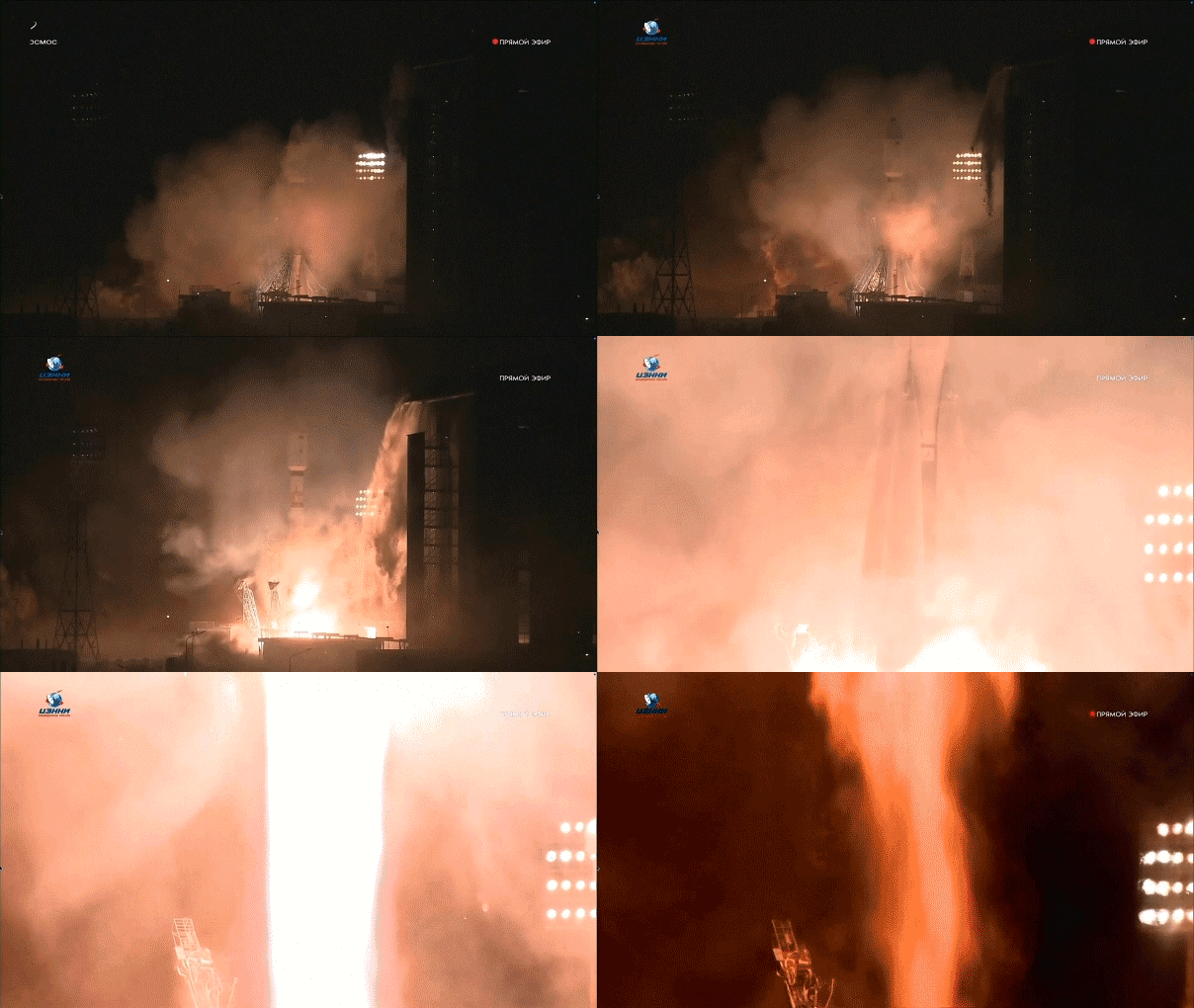
Russia and Iran have deepened their strategic partnership with the successful launch of three Iranian satellites into orbit aboard a Russian rocket, underscoring growing cooperation between the two nations as they face continued Western pressure.
The launch, broadcast by Iran’s Arabic-language state television channel Al-Alam News Network, marks the seventh time Iran has conducted a satellite launch with Russian assistance. According to the Associated Press and Reuters, the satellites were carried into orbit from a launch site in eastern Russia.
Iranian Ambassador to Russia Kazem Jalali emphasized that the satellites were “designed and produced by Iranian scientists,” while highlighting that cooperation between Tehran and Moscow continues “despite all the sanctions and threats.” Iranian officials maintain the satellites serve civilian purposes, including environmental monitoring and agricultural applications.
Western governments, however, have long expressed concern that Iran’s space program could advance technologies applicable to ballistic missile development, potentially enhancing Tehran’s military capabilities despite international restrictions.
The satellite launch represents a broader strategic relationship between Moscow and Tehran that has expanded significantly since Russia’s invasion of Ukraine in 2022. Iran has supplied Russia with military equipment, including drones used on Ukrainian battlefields, while Russia has provided diplomatic cover, economic cooperation and advanced technical support to the Islamic Republic.
This partnership has gained momentum as both nations face extensive Western sanctions. For Russia, collaborations with countries like Iran serve as evidence that Western attempts to isolate Moscow have failed. Meanwhile, Iran leverages its cooperation with Russia to demonstrate technological resilience despite decades of economic restrictions.
The strengthening Russia-Iran alliance comes amid escalating tensions between Tehran and Washington. Following President Donald Trump’s recent warning that the United States could strike Iran if it attempted to rebuild its nuclear program, Iranian President Masoud Pezeshkian issued a firm response, stating that any U.S. attack would be met with a “harsh and discouraging” response.
Iranian officials have framed such statements as defensive measures intended to deter potential U.S. aggression rather than signals of intent to initiate conflict. Tehran continues to insist its nuclear program serves peaceful purposes, though this claim is widely disputed by the United States and its allies.
The exchange highlights how Iran and Russia are increasingly positioning themselves as partners resisting U.S. pressure, even as Washington attempts diplomatic engagement on multiple fronts. For Russia, this alliance provides a counterbalance to Western influence as the Ukraine war continues, while Iran gains a powerful ally amid its own regional conflicts and tensions with the West.
Military cooperation between the two nations has also expanded beyond technological exchanges. Joint naval exercises in recent years have demonstrated their growing operational coordination, particularly in strategic waterways like the Caspian Sea.
The United States faces increasing challenges in addressing this partnership, as sanctions against both nations have proven insufficient to prevent their collaboration. As Russia and Iran continue to deepen ties, Western policymakers face difficult questions about how to respond to an alliance that appears increasingly resistant to traditional diplomatic and economic pressure tactics.
Analysts note that this relationship represents a significant shift in global power dynamics, with implications extending beyond bilateral ties to affect broader regional security in the Middle East, Eastern Europe, and Central Asia. The satellite launch, while ostensibly civilian in nature, symbolizes a growing technological and strategic alignment that could reshape international relations for years to come.
Fact Checker
Verify the accuracy of this article using The Disinformation Commission analysis and real-time sources.

17 Comments
This satellite launch highlights the growing cooperation between Russia and Iran, which could have significant regional and global implications. It’ll be important to follow how this relationship develops.
Absolutely. The Russia-Iran alliance is an emerging geopolitical dynamic that warrants close attention.
Iran’s ability to launch its own satellites, with Russian support, demonstrates its growing technical capabilities. This could strengthen Iran’s position in negotiations over its nuclear program.
Interesting to see Iran and Russia strengthening their space cooperation despite Western sanctions. This could have wider geopolitical implications that bear watching.
Agreed. The ability to launch satellites independently is an important strategic capability for Iran.
The successful satellite launch is a technical achievement for Iran’s space program. However, the dual-use nature of the technology means the West will remain wary of Iran’s intentions.
Agreed. Verification and transparency around the stated civilian applications will be crucial to building trust.
The strengthening ties between Russia and Iran, as evidenced by this satellite launch, are an important geopolitical shift that bears close monitoring. It could have broader ramifications.
Agreed. The Russia-Iran alliance is one to watch, especially in light of ongoing tensions with the West.
Iran’s ability to launch its own satellites, with Russian support, is a notable technical achievement. However, the potential dual-use nature of the technology will raise concerns.
I’m curious to know more about the civilian applications Iran claims for these satellites. Environmental monitoring and agriculture seem like reasonable uses, but the technology could have dual-use potential.
Valid point. The West will likely be closely scrutinizing Iran’s space program for any indications it’s being used for military purposes.
This launch is a significant milestone for Iran’s space program. While the stated civilian applications seem plausible, the West will undoubtedly scrutinize it for potential military implications.
This launch highlights the deepening Russia-Iran alliance, which has significant implications for geopolitics in the region. It’ll be important to monitor how this relationship evolves going forward.
The successful launch of Iranian satellites using Russian rockets demonstrates the strengthening ties between the two countries. This development will likely raise alarm bells in the West.
The Russia-Iran space cooperation is an interesting development. It’ll be worth watching how this impacts broader regional geopolitics and potential tensions with the West.
Definitely. This is another area where the two countries are aligning their interests against Western influence.