


Listen to the article
US Enforces Naval Blockade on Iran After Failed Diplomatic Talks in Pakistan
The United States began enforcing a naval blockade targeting Iranian maritime traffic Monday, dramatically escalating tensions in the Gulf region mere hours after high-level diplomatic negotiations in Pakistan collapsed without an agreement.
President Donald Trump defended the blockade at a White House press conference, saying, “Right now, there’s no fighting. Right now, we have a blockade… Iran is doing absolutely no business, and we’re going to keep it that way very easily.” He further claimed that Iran’s military capabilities had been significantly degraded, asserting that its “Navy has gone, their air force is gone, their anti-aircraft is gone, their radar is gone and their leaders are gone.”
The blockade represents a major escalation in the ongoing confrontation between Washington and Tehran, effectively cutting off Iran’s maritime trade routes in a move that could have far-reaching economic consequences across the region and beyond.
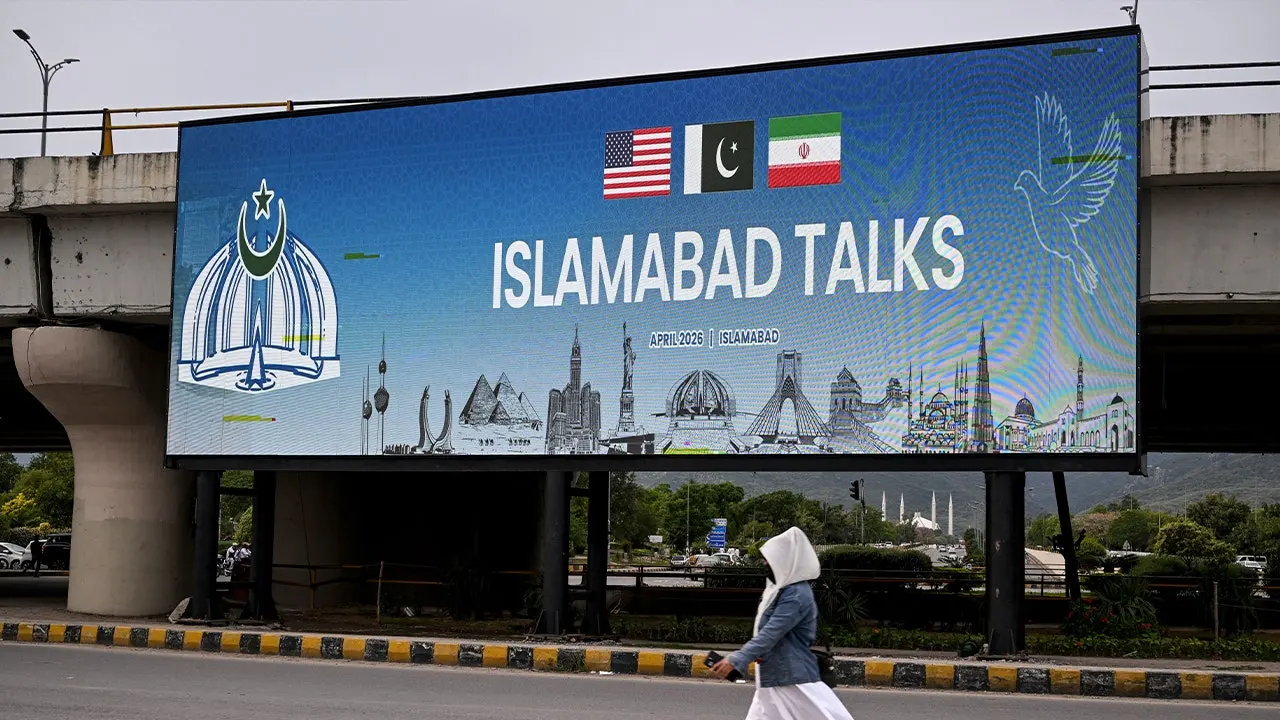
The enforcement action came after rare direct talks between U.S. and Iranian officials in Islamabad ended without a breakthrough. Vice President JD Vance, who led the American delegation, had pressed Iran to accept a “zero enrichment” nuclear policy and remove its stockpile of highly enriched uranium.
“The simple fact is that we need to see an affirmative commitment that they will not seek a nuclear weapon, and they will not seek the tools that would enable them to quickly achieve a nuclear weapon,” Vance said at a press conference following the failed negotiations.
Iranian officials rejected these demands, insisting that any agreement must include the immediate release of billions of dollars in frozen Iranian assets held abroad under international sanctions.
Despite the apparent diplomatic impasse, Lt. Gen. (ret.) Mohammed Saeed, former chief of general staff of the Pakistan Army, suggested in an exclusive interview with Fox News Digital that the talks came much closer to success than their outcome indicates.
“Both sides are saying they were very close… even inches away from a solution,” said Saeed, who retired in 2023 but remained deeply involved in Pakistan’s security apparatus until recently. “They talked to each other in a very friendly manner. There was, from both sides, an expression of accommodation and understanding from each other.”
Saeed characterized the Islamabad talks as a critical reopening of dialogue after nearly five decades of hostility. “It is the first time in 47 years… that there was engagement at the highest level,” he said, calling it “a great moment for diplomacy” and evidence of Pakistan’s unique position of maintaining credibility with both Washington and Tehran.
The blockade has raised significant concerns globally, particularly among countries dependent on Gulf energy flows. Energy markets have already shown volatility in response to the increased tensions, with oil prices climbing on fears of potential supply disruptions through the strategically vital Strait of Hormuz.
Saeed suggested the blockade might be designed more as leverage than a permanent military solution. “This blockade could be… a maneuver to build further pressure on Iran to negotiate,” he said.
The Pakistani general highlighted the critical role played by Pakistan’s army chief, Asim Munir, in facilitating the discussions. Trump has publicly praised Munir, at one point calling him his “favorite field marshal,” elevating his profile as a key intermediary in regional diplomacy.
Munir’s background in Pakistan’s intelligence apparatus, including leadership roles in military intelligence and the Inter-Services Intelligence (ISI), has given him extensive experience with Iranian officials. “What people do not know is that when he was director general of military intelligence… he was interacting with Iranians at multiple levels continuously,” Saeed explained, noting that these connections included engagement with former Islamic Revolutionary Guard Corps commander Qassem Soleimani before his death in a U.S. strike during Trump’s first term.
These established relationships could prove vital in the current crisis, according to Saeed. “He continues to be one figure internationally who has personal interaction… in the intelligence community in Iran, in the military hierarchy, and also on the side of the political leadership,” he noted.
Despite the current escalation, Saeed maintained that diplomatic channels remain open. “There is a lot of space… for resuming the process,” he said, suggesting talks could restart in Islamabad or elsewhere if both sides demonstrate flexibility.
“On Pakistan’s side, from my personal knowledge of the field marshal, they are relentless. They would not give up,” Saeed concluded. “They must be continuously in touch with both sides. And they would try their best to convince both sides that the blockade is not going to be in their interest, in the interest of the region and in the interest of the international community.”
Fact Checker
Verify the accuracy of this article using The Disinformation Commission analysis and real-time sources.

10 Comments
This is a concerning situation. While the US claims to have degraded Iran’s military capabilities, I’m skeptical that a naval blockade is the best path forward. Continued diplomacy and de-escalation should be the priority.
I share your skepticism. Unilateral actions like this blockade are unlikely to resolve the underlying issues and may only serve to heighten regional tensions further.
Interesting development, though it remains to be seen if diplomacy can still prevail despite the heightened tensions. Cutting off Iran’s maritime trade could have significant economic ripple effects across the region.
Agreed, a diplomatic solution would be preferable to further escalation. The blockade is a risky move that could backfire and provoke unintended consequences.
This is a worrying escalation in the ongoing tensions between the US and Iran. While the US claims to have degraded Iran’s military capabilities, a naval blockade seems like a drastic measure that could have far-reaching economic consequences. I hope both sides can find a way back to the negotiating table.
This is a complex geopolitical situation with high stakes. While the US claims to have weakened Iran’s military, a naval blockade is a risky move that could backfire. Continued diplomacy and de-escalation efforts should be the focus.
The collapse of the diplomatic talks in Pakistan and the subsequent US blockade are concerning developments. I hope both sides can find a way back to the negotiating table before this situation spirals further out of control.
Agreed, further escalation through unilateral actions like this blockade risks making the situation even more volatile. Diplomacy should be the priority, even if it’s challenging.
The failure of the diplomatic talks in Pakistan is disappointing, but I’m hopeful that other avenues for negotiation remain viable. A naval blockade seems like an extreme measure that could have far-reaching economic impacts.
I agree, a diplomatic solution should be the priority. The blockade could have serious repercussions that the US may not have fully considered.