


Listen to the article
US, Denmark, and Greenland Negotiations “On Good Trajectory” Despite Sovereignty Dispute
Ongoing technical discussions between the United States, Denmark, and Greenland are proceeding positively despite recent tensions over President Donald Trump’s public statements about American control of the strategically important island, a White House official said Wednesday.
“We are not going to participate in a back and forth through the media, but we are very optimistic that we’re on a good trajectory,” the official told Fox News Digital, describing the talks as addressing “United States’ national security interests in Greenland.”
The optimistic tone from the White House stands in stark contrast to Trump’s recent public remarks. “We want Greenland. They don’t want to give it to us,” the president said, reigniting concerns that first surfaced during his previous term when he expressed interest in acquiring the territory.
At the heart of the dispute lies Greenland’s growing strategic importance in global security. The island occupies a critical position along the shortest route between North America and Europe and plays a vital role in U.S. missile warning systems and Arctic defense operations. As climate change reduces Arctic ice coverage, the region has become increasingly accessible, drawing attention from multiple global powers.
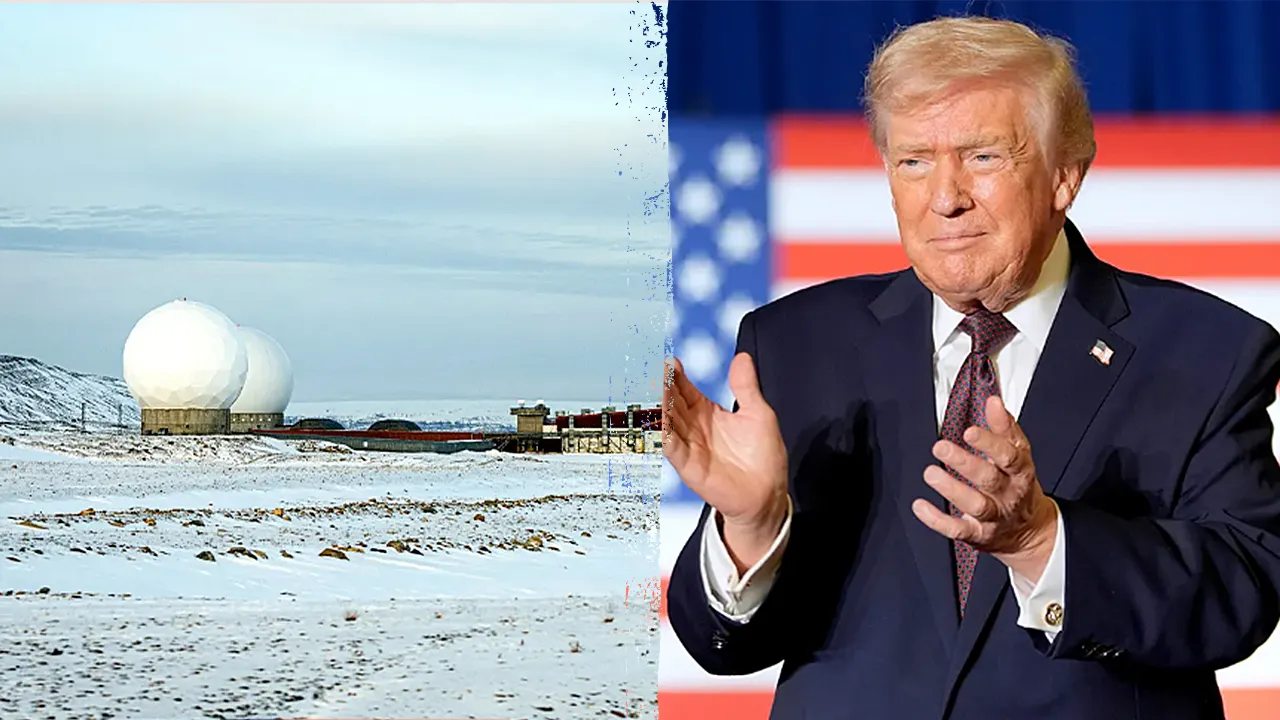
The United States already maintains a significant military footprint on the island through the Pituffik Space Base (formerly known as Thule Air Base) under a 1951 defense agreement with Denmark. This arrangement grants U.S. forces operational rights within NATO’s collective defense framework.
Recent discussions have reportedly focused on expanding that presence, including potential access to additional sites and increased operational capabilities throughout the region. These talks come amid growing concern about Russian and Chinese activities in the Arctic.
European leaders have firmly rejected any change to Greenland’s status. Greenland is a self-governing territory within the Kingdom of Denmark, which retains responsibility for its defense and foreign policy. In December 2025, Danish and Greenlandic leaders issued a joint statement declaring, “Greenland belongs to the Greenlanders and the U.S. shall not take over Greenland.”
Greenland Prime Minister Jens-Frederik Nielsen expressed concern in a recent interview with NBC News, stating that residents “don’t feel safe” amid Trump’s continued push for American ownership of the island.
Former NATO Secretary-General Jens Stoltenberg, now Norway’s finance minister, emphasized the alliance’s commitment to Greenland’s defense. “NATO is there to protect all allied territory, including Greenland,” Stoltenberg told Fox News Digital, pushing back against suggestions that the West is losing its strategic edge in the Arctic to Russia and China. “We are scaling up our presence and our capabilities in the Arctic to make sure there is no room for misunderstanding,” he added.
Denmark has already responded to the situation by expanding its military presence in Greenland, while European allies have increased Arctic exercises and coordination in response to the president’s statements.
The dispute unfolds against a backdrop of intensifying Arctic competition. Russia has significantly expanded its military footprint across the region, reopening and modernizing Cold War-era bases along its northern coast while increasing air and naval patrols. China, which has declared itself a “near-Arctic state,” has established research stations and expanded its icebreaker fleet while pursuing joint projects with Russia on energy development and shipping routes.
The tensions over Greenland come amid broader strains within NATO, recently highlighted by the Iran conflict where Trump accused European allies of failing to support U.S. operations. “NATO wasn’t there for us, and they won’t be there for us in the future!” Trump wrote on social media Tuesday.
As Arctic ice continues to melt, opening new shipping lanes and access to natural resources, the region’s economic and strategic value will likely continue to grow. This evolution makes the resolution of the current diplomatic tensions over Greenland’s status particularly significant for the future of transatlantic security cooperation and Arctic governance.
Representatives for Denmark’s and Greenland’s governments did not immediately respond to requests for comment.
Fact Checker
Verify the accuracy of this article using The Disinformation Commission analysis and real-time sources.

20 Comments
This story highlights the complex interplay between national security, economic interests, and sovereignty issues in the Arctic. It will be interesting to see how the negotiations unfold.
Agreed. The US, Denmark, and Greenland will need to find a way to address their respective concerns while respecting the principles of self-determination and territorial integrity.
Interesting that the negotiations seem to be progressing well despite the public tensions. I wonder what specific national security interests the US has in Greenland that are being discussed.
Greenland’s strategic location for defense and missile warning systems in the Arctic is likely a key factor. The talks appear to be focused on managing that while respecting Greenland’s sovereignty.
This situation underscores the geopolitical importance of the Arctic region and the complex dynamics involved. I’ll be following this story closely to see how the negotiations unfold.
Agreed, the Arctic is becoming an increasingly strategic area as the climate changes. The balance between national interests and respecting sovereignty will be crucial.
It will be important to follow this story closely as the negotiations progress. The strategic importance of Greenland is clear, but the sovereignty issues are complex and must be handled carefully.
Absolutely. This situation underscores the need for thoughtful, nuanced diplomacy to find a solution that respects the rights and interests of all stakeholders.
The White House’s optimistic tone is interesting given the previous public tensions. It suggests they may be making progress behind the scenes on a mutually beneficial arrangement.
Yes, the shift in tone is noteworthy. Keeping discussions private while working towards a solution seems prudent, rather than debating it publicly.
I’m curious to see how the negotiations around Greenland’s sovereignty and the US national security interests will be resolved. It’s a delicate balance that requires nuance on all sides.
Absolutely, this will be a complex issue to navigate. Maintaining open and constructive dialogue between the US, Denmark, and Greenland will be crucial to reaching an agreeable outcome.
The White House’s optimism about the negotiations is encouraging, but the history of territorial disputes in the Arctic region suggests this won’t be an easy process.
That’s a good point. Balancing the competing interests and sensitivities in this region will require a delicate diplomatic approach from all parties involved.
The White House’s pursuit of Greenland is an intriguing move, given the history of territorial disputes. I wonder what specific benefits they see in gaining control of the island.
Based on the content, it seems the US is primarily interested in Greenland’s strategic location for national security purposes, particularly around missile defense and Arctic operations.
This situation highlights the geopolitical importance of the Arctic region as climate change opens up new strategic opportunities. Both economic and security interests are at play.
You’re right, the Arctic is becoming increasingly valuable given changing environmental conditions. It will be important for all parties to find a balanced approach that addresses their respective interests.
It’s good to see that the discussions are progressing well, despite the public tensions. Maintaining open communication between all parties will be key to finding a mutually acceptable solution.
Absolutely. The Arctic is a sensitive geopolitical region, and any agreements will need to carefully balance the various interests at play.